
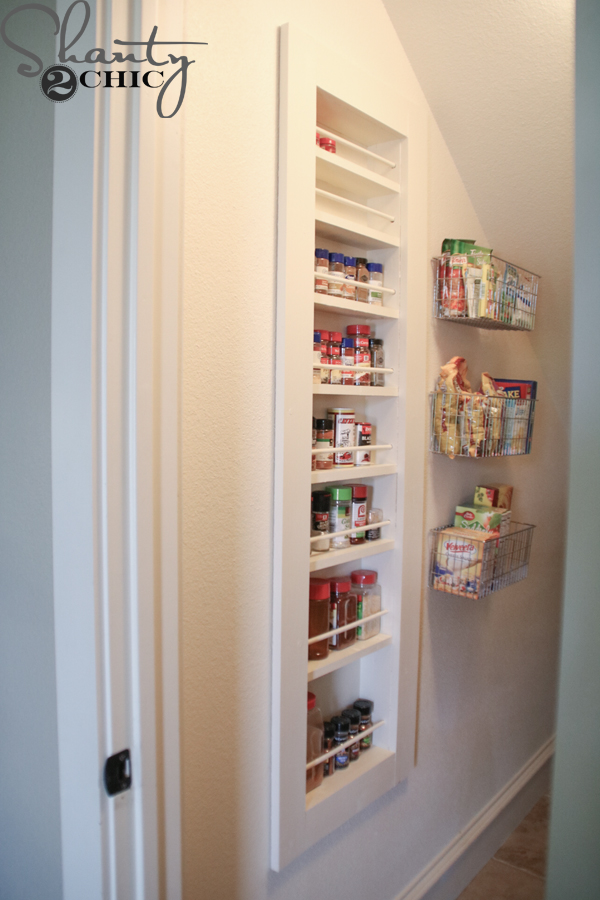
I finally got around to building something I’ve wanted in my pantry since we moved into our house! My pantry is large but very narrow, so I wanted a way to organize all of my spices without taking up more shelf space. This DIY built-in spice rack fits right between the wall studs, and I LOVE how it turned out!
Cutting a big hole in your wall might sound intimidating, but once you’ve confirmed the wall is safe to work on, building the spice rack itself is pretty straightforward. The trim around the front even helps hide those not-so-perfect drywall cuts!
Table of Contents
Why I Love This Built-In Spice Rack
This project has made such a difference in my pantry! Here’s why:
- It saves space. The shelves fit inside the wall instead of sticking out into my narrow pantry.
- Everything is easy to find. I can see all my spices without digging through cabinets.
- It can be customized. You can adjust the height, width, and shelf spacing to fit your space and spice jars.
- It uses basic lumber. I built mine with 1×4 pine boards, plywood, and dowel rods.
- The trim gives it a finished look. It matches the rest of my pantry trim and looks like it belongs there.
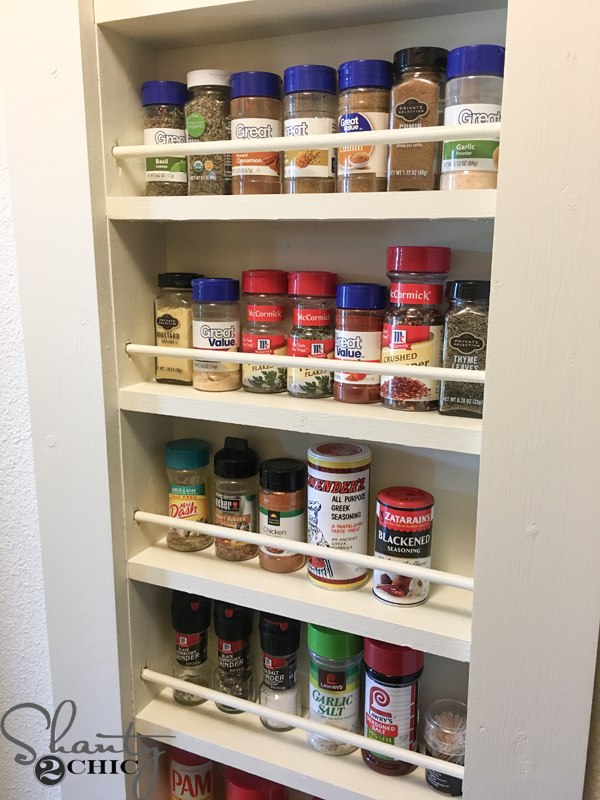
Supplies and Tools
I’m sharing the measurements I used for my spice rack, but remember that your wall opening may be different. I built mine between two studs with a 14 3/4″ opening, and the height is 57″.
Supplies
- 3 – 1×4 pine boards at 10 ft.
- 1 – 1×4 pine board at 6 ft.
- 1 – scrap piece of 1/4″ plywood, cut to fit (mine was 57″ x 14 3/4″)
- 3 – 3/8″ dowel rods at 4 ft. each
- Wood glue
- Wood filler
- 1 1/4″ pocket hole screws
- 2″ wood screws
- 3/4″ staples or finishing nails
- 1 1/4″ brad nails
- Paint (I used Ivory Lace by Valspar)
Tools
- Miter saw
- Drill
- Kreg Jig (I used my Kreg Jig K5)
- Rotary drywall cutter
- Forstner bit
- Stud finder or MultiScanner
- Level and measuring tape
- Brad nailer (or hammer and finish nails)
- Stapler (or hammer and finish nails)
- Sander
- Rubber mallet (optional)
A Few Important Things Before You Start
Before cutting into any wall, you need to know exactly what is behind the drywall.
I knew there were no plumbing pipes or electrical wires in this wall because I built the house. If you aren’t sure what’s behind yours, use a MultiScanner that detects studs, metal, and live electrical wiring, but don’t rely on a scanner alone to confirm the cavity is clear.
Make sure you’re working in a suitable interior wall and that there are no pipes, wires, ducts, blocking, or other obstructions. Don’t cut or modify any studs. If you can’t confirm what’s inside the wall, or if it’s a fire-rated or exterior wall, have a qualified professional check it before cutting.
Also, make sure you have enough depth for your spice rack and plywood backing!
How to Build a DIY Built-In Spice Rack
Now, let’s get to building! I’ll walk you through exactly how I made mine. You can follow the same steps and adjust the measurements to fit your own pantry.
Find the Wall Studs
I started by using my stud finder to locate the two studs that I wanted to build the spice rack between.
Once I found them, I marked their inside edges on the wall. These marks gave me the width of my opening.
I had exactly 14 3/4″ between the studs.
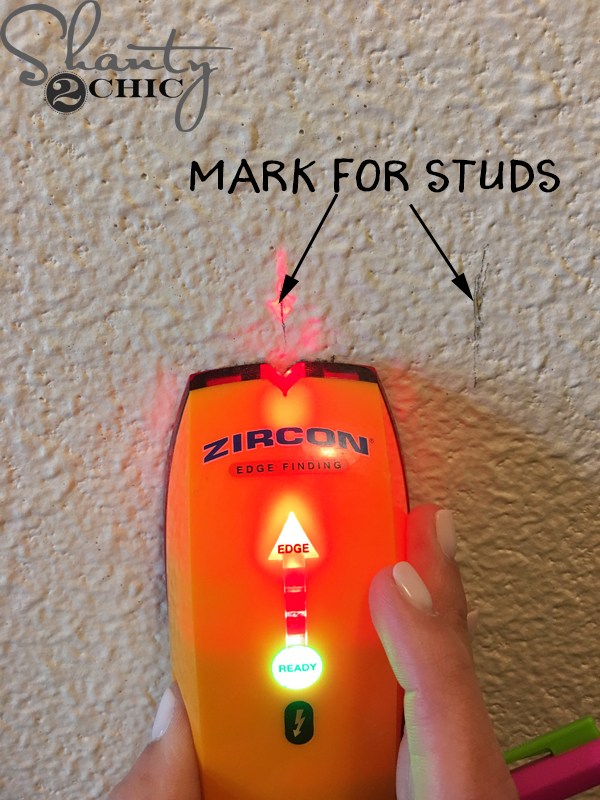
Mark the Opening for the Spice Rack
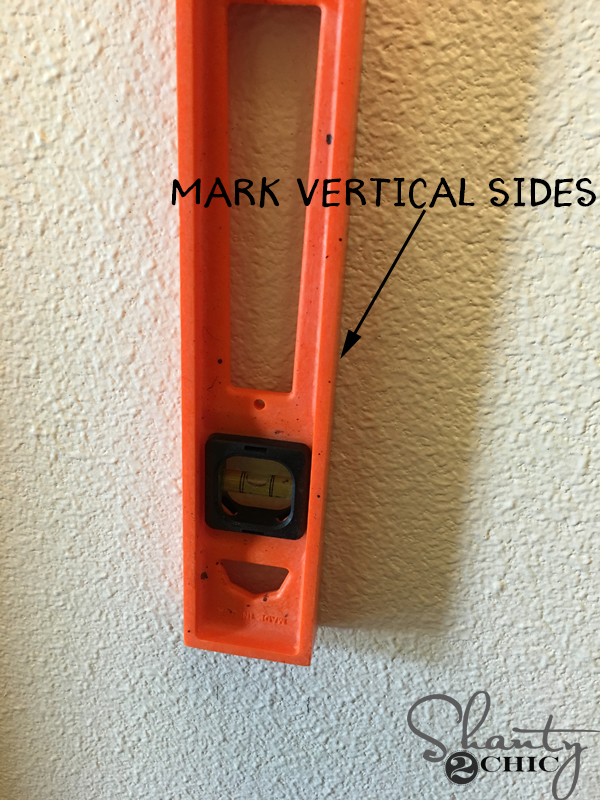
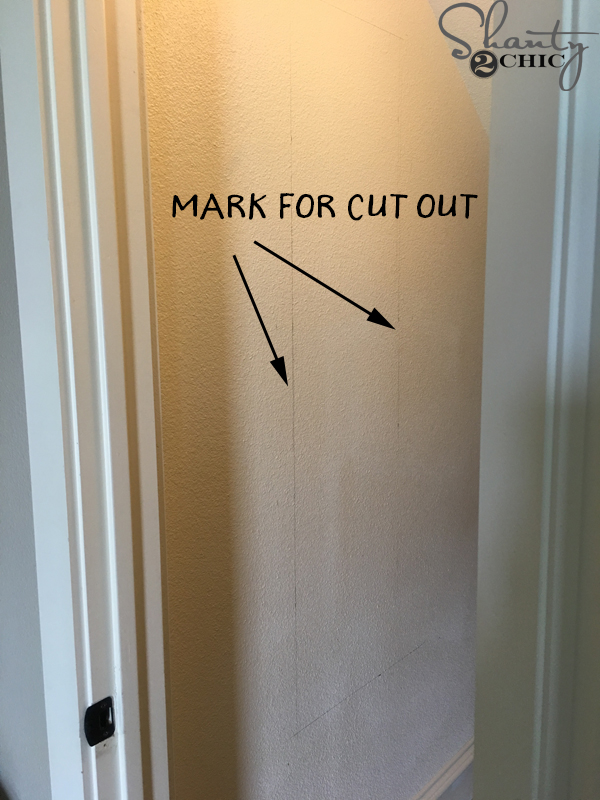
Next, I used my level to draw a vertical line along the inside of each stud. I decided to make my spice rack 57″ tall.
Then, I marked the horizontal top and bottom lines between the studs.
Now, you should have a rectangle drawn on your wall. My opening measured 57″ tall x 14 3/4″ wide.
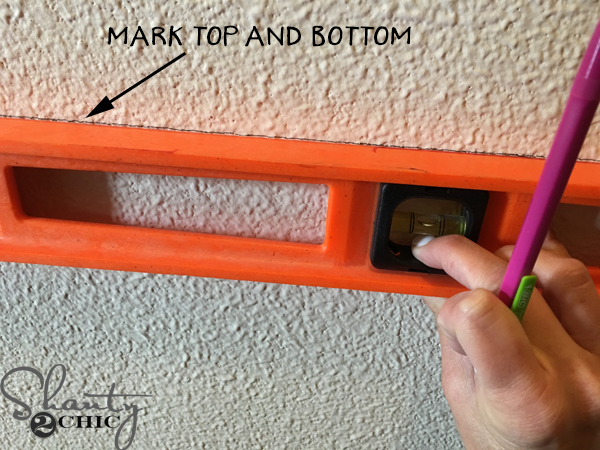
Make sure your lines are level and the opening is square before making any cuts.
Cut the Drywall Opening
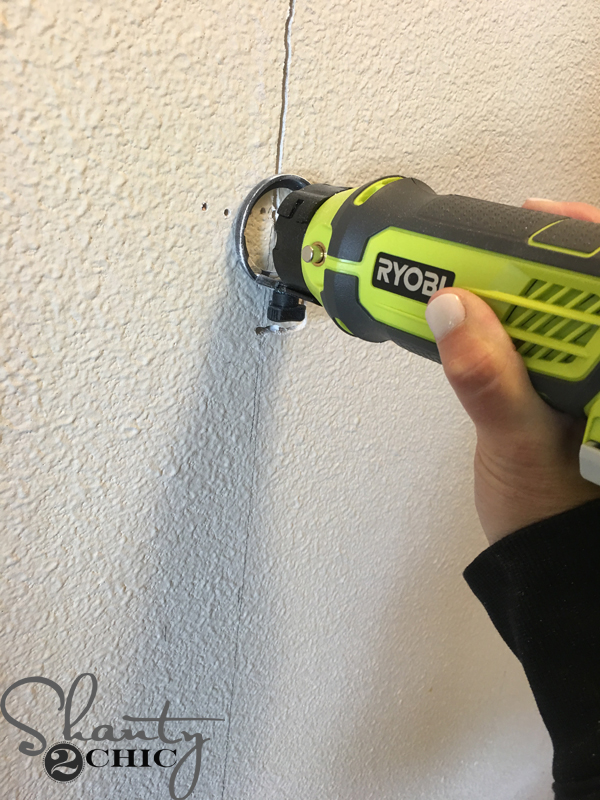
To cut the drywall, I used my Ryobi Rotary Cutter.
I started with the vertical cuts, running the blade along the inside edge of each stud. Then, I made the horizontal cuts across the top and bottom.
Be careful to cut only the drywall and avoid anything behind it.
The cut doesn’t have to be completely smooth because the trim will cover the edges, but try to keep everything as straight and level as possible.
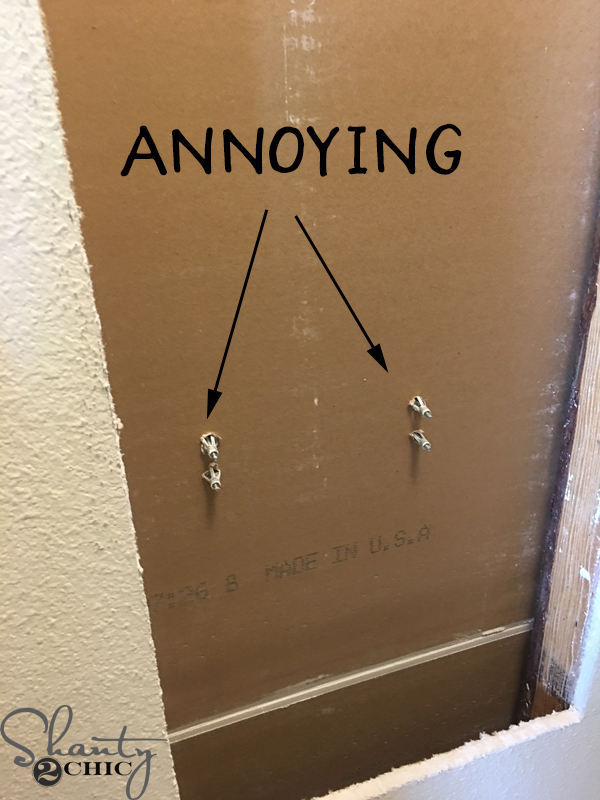
Once the cuts were finished, I pulled the drywall section out.
And this is where I had a little surprise!
I realized that I had installed a toilet paper roll holder on the other side of the wall in our half bath. Those anchors were sticking right into my new opening. Annoying!
So, I had to stop what I was doing and move the toilet paper holder to another wall. Problem solved 🙂
With the drywall removed and the cavity checked, I could measure the opening again and start building the spice rack.
Cut the Side Boards
I started by cutting two 1×4 pine boards at 57″ long. These will be the vertical sides of the spice rack.
Before cutting the other pieces, double-check your opening measurements. Even if your studs look evenly spaced, the opening may not be exactly the same width from top to bottom.
I always recommend measuring the actual opening before making the final cuts so you don’t end up with a spice rack that won’t fit!
Drill the Holes for the Dowel Rods
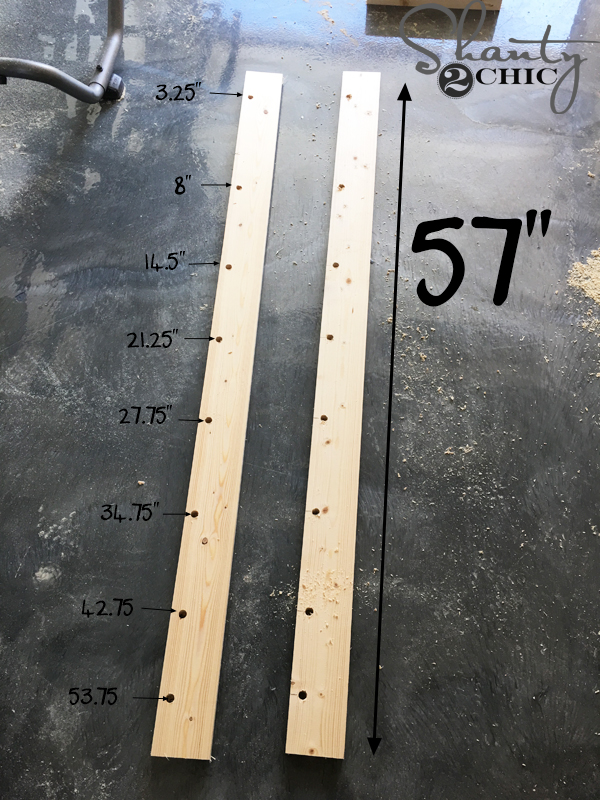
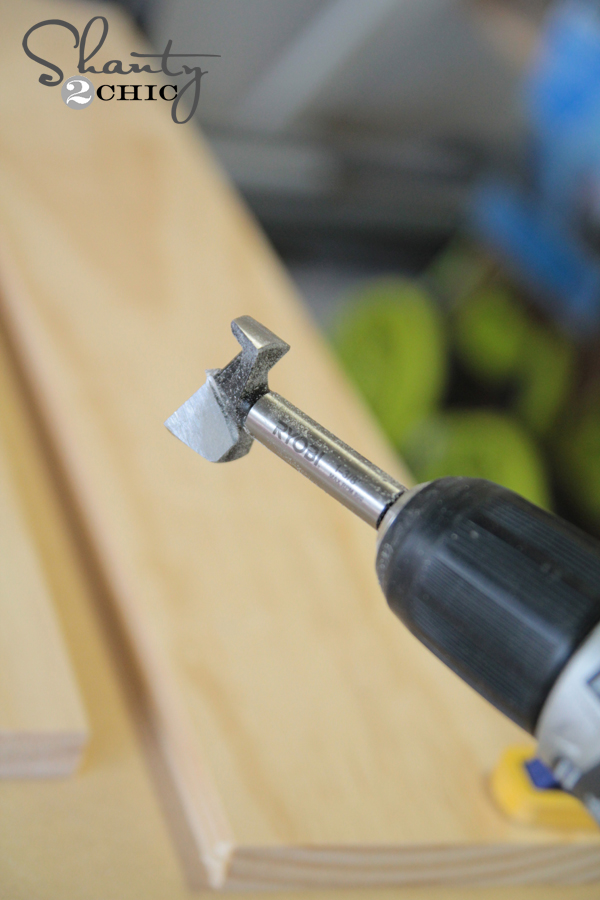
Next, I used a Forstner bit to drill holes into both side boards for the dowel rods.
I positioned the holes approximately 3/4″ from one edge of each board.
You can see the placement of each hole in the photo above. All of my vertical measurements were taken from the top of the boards.
Make sure the holes on both side boards line up. These will hold the dowel rods that keep the spice jars from falling off the shelves.
Cut the Shelf Boards and Drill Pocket Holes
Next, I cut nine 1×4 boards at 13 1/4″ long.
Here’s how I calculated that measurement:
- Opening width: 14 3/4″
- Thickness of both side boards: 1 1/2″ total
- Shelf length: 13 1/4″
The two side boards are each 3/4″ thick, so I subtracted 1 1/2″ from the overall width.
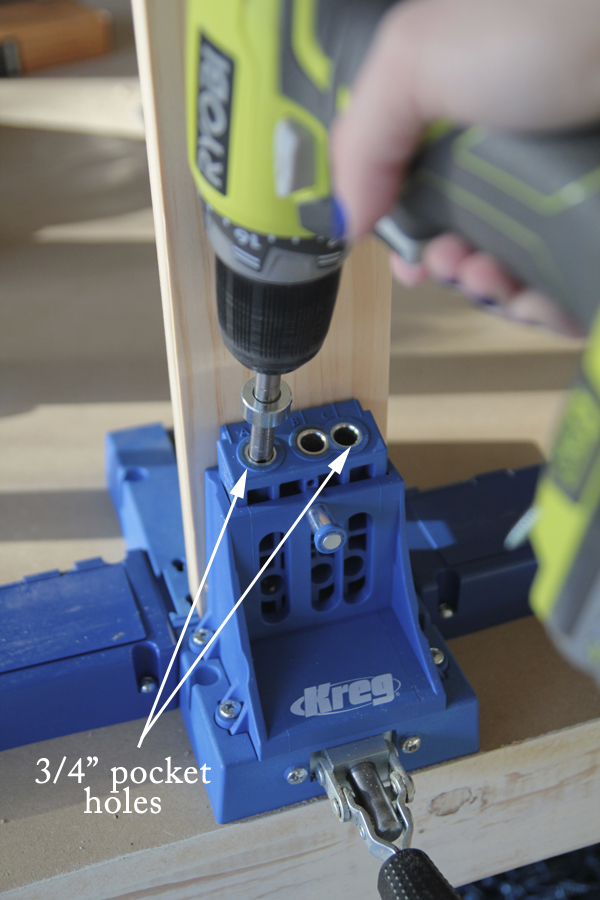
I used my Kreg Jig K5 to drill 3/4″ pocket holes into each end of the nine shelf boards.
If you’re new to pocket holes, check out our How to Use a Kreg Jig video tutorial.
TIP
Before drilling all your pocket holes and assembling the rack, take your boards inside and do a dry fit in the opening. This is a great time to trim the short boards if needed. You don’t want to assemble everything and then realize it’s too tight!
Attach the Shelves to the Side Boards
Now, it’s time to put the frame together!
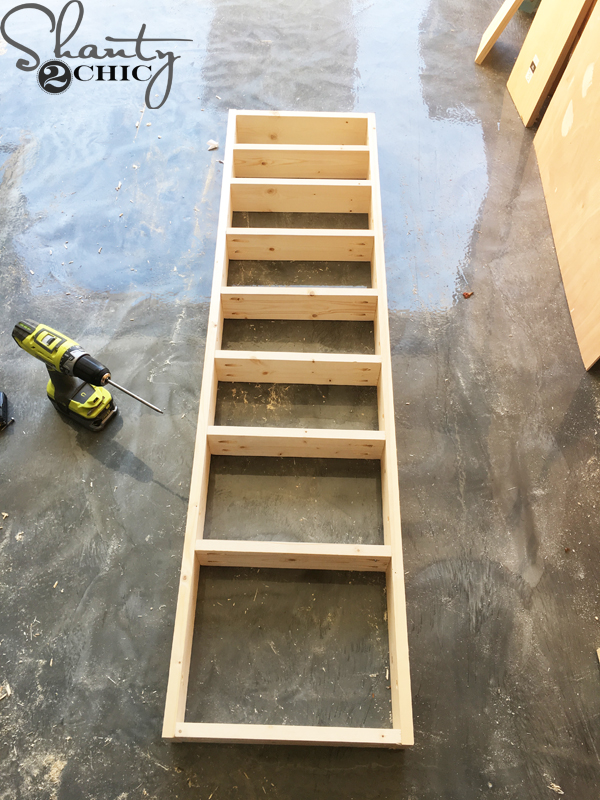
I started by attaching the short shelf boards to one of the long side boards using 1 1/4″ pocket hole screws.
Start at the top and work your way down, following the shelf placement measurements shown in the photo above. I measured from the top of the board for every shelf position.
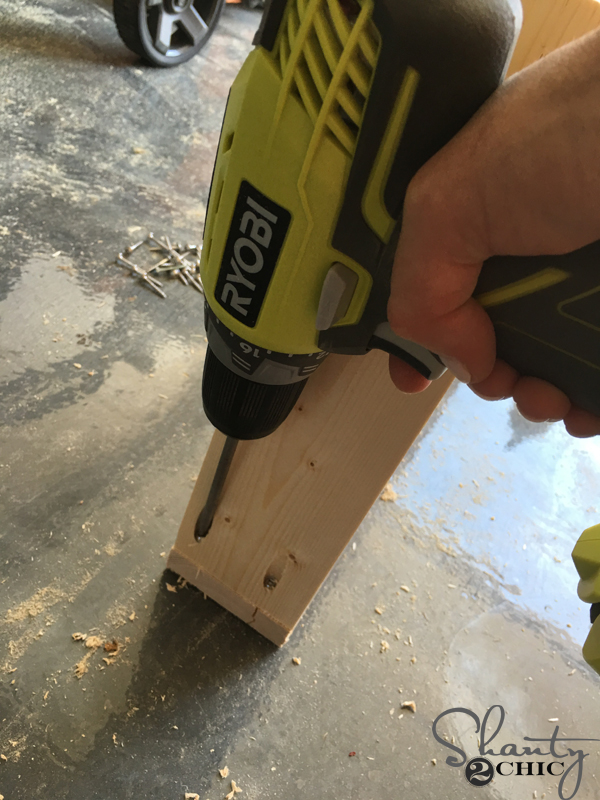
The top and bottom boards should be flush with the ends of the long side board.
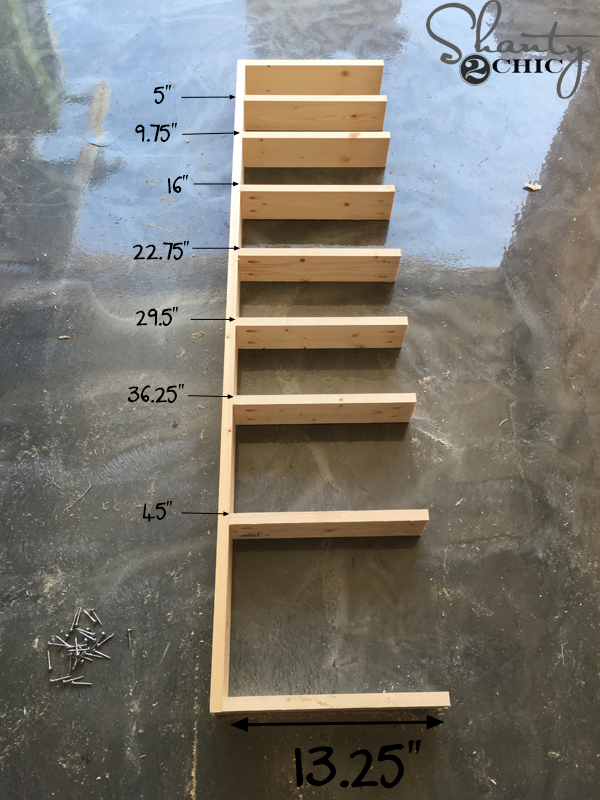
Once all nine boards were attached, I added the second long side board the same way.
One important thing here: Make sure the second side board is facing the correct direction so that the dowel holes line up with the holes on the opposite side.
Trust me, you’ll be glad you checked before attaching everything! 🙂
Attach the Plywood Back
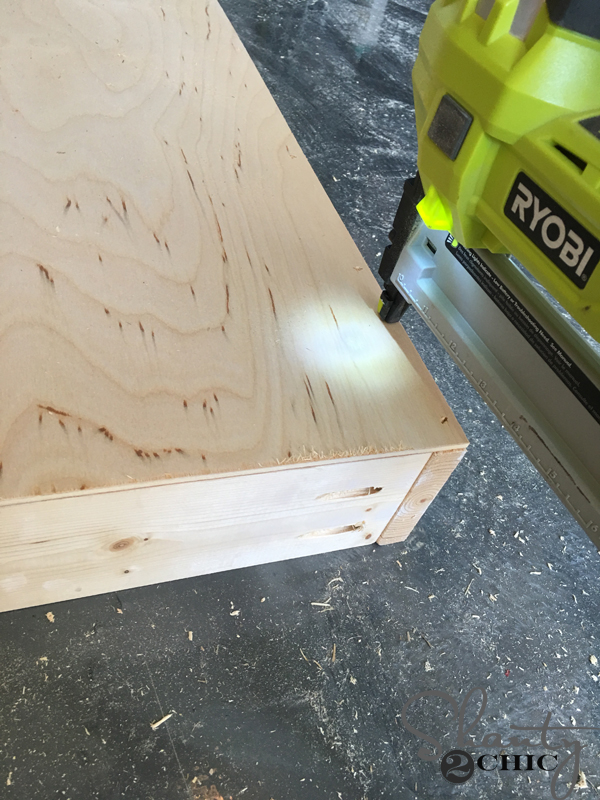
With the frame assembled, I flipped the spice rack over so the side with the dowel holes was facing down.
Next, I measured and cut a piece of 1/4″ plywood to fit the back of the rack.
My plywood measured approximately 57″ x 14 3/4″, but you’ll want to measure your finished frame before cutting yours.
I applied wood glue along the back of the frame and attached the plywood using 3/4″ staples and my Ryobi 18V stapler.
You can also use a hammer and finishing nails for this step.
Cut and Install the Dowel Rods
Now, flip the spice rack back over.
I used 3/8″ dowel rods for the front of the shelves to keep the spice jars in place.
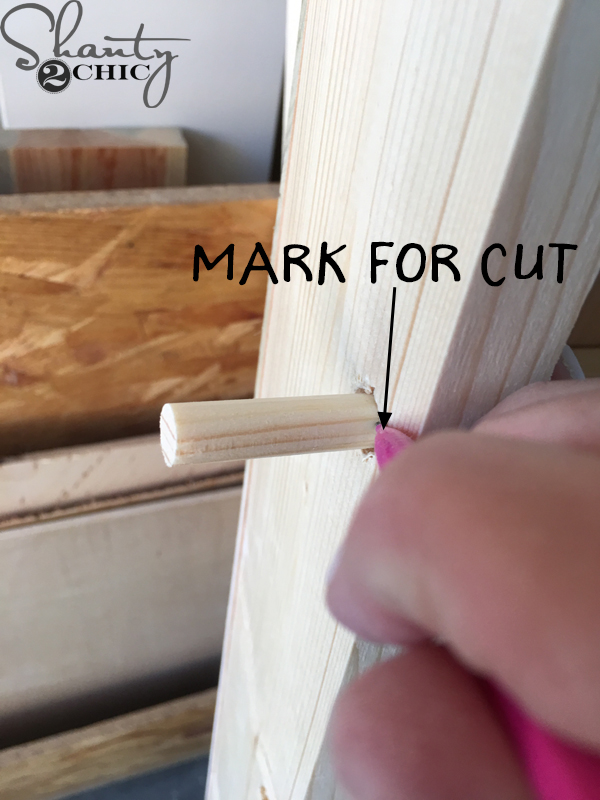
Instead of cutting all the dowels to one measurement, I fitted each one into its holes, made one end flush, and marked the opposite end where it needed to be cut.
Then, I cut each dowel to fit and repeated the process for all the sets of holes.
This helped me get the right fit for each dowel.
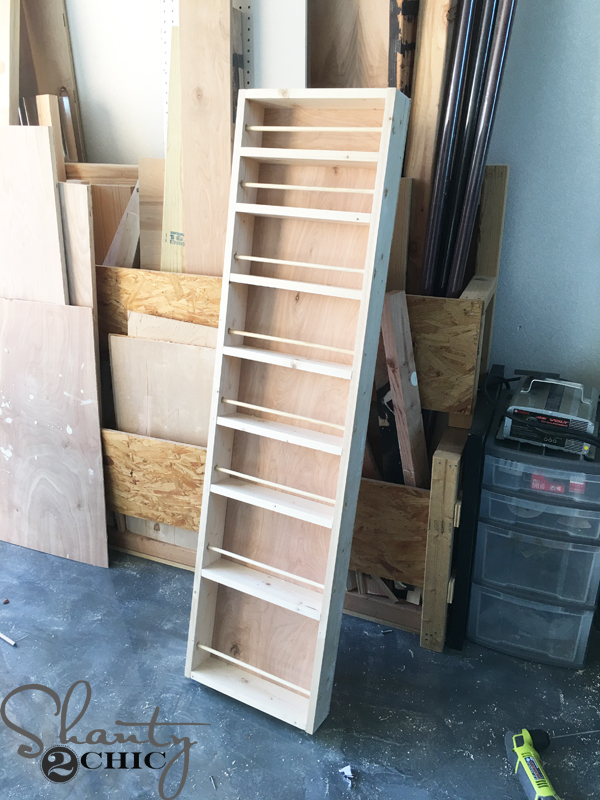
And just like that, the spice rack was ready for the wall!
Install the Spice Rack Between the Studs
I carefully placed the finished spice rack into the opening in my pantry wall.
If the fit is a little snug, you can use a rubber mallet to gently tap it into place. Just don’t force it if the frame is too large for the opening.
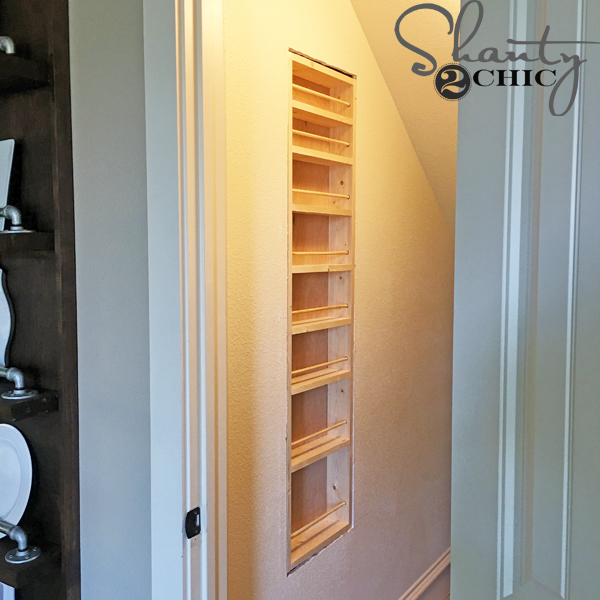
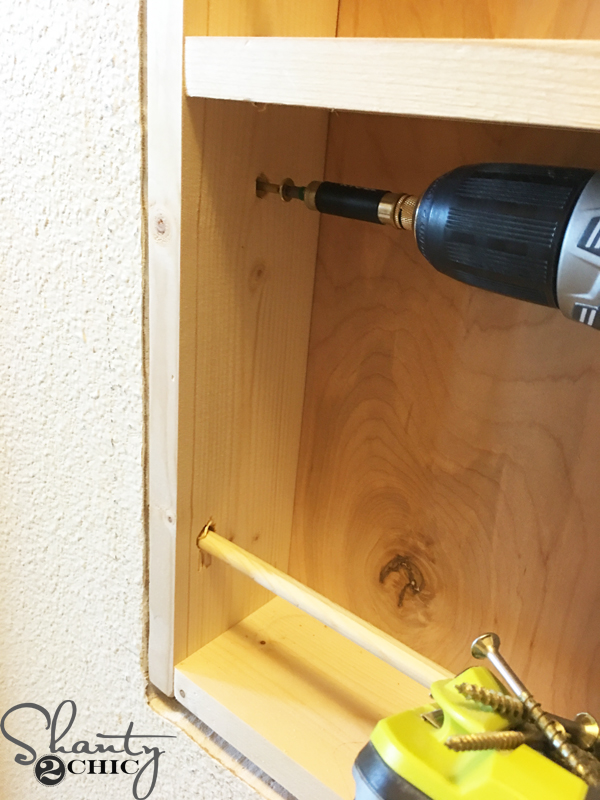
Once it was positioned correctly, I secured the spice rack to the wall studs using 2″ wood screws.
I used three screws on each side of the spice rack, for a total of six screws.
Make sure the rack is level and properly secured before moving on to the trim.
Add the Front Trim
Now for the part that makes this built-in spice rack look finished!
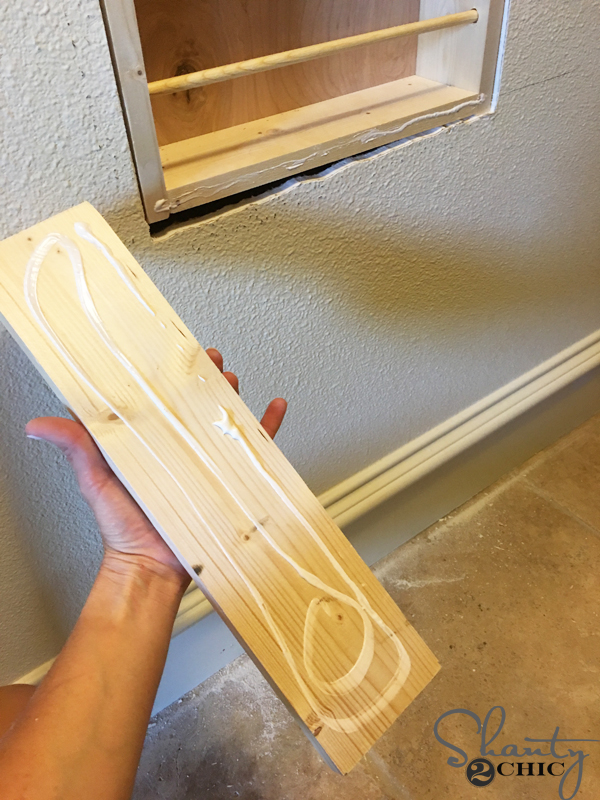
I started by cutting two 1×4 boards the same length as my shelf pieces, 13 1/4″.
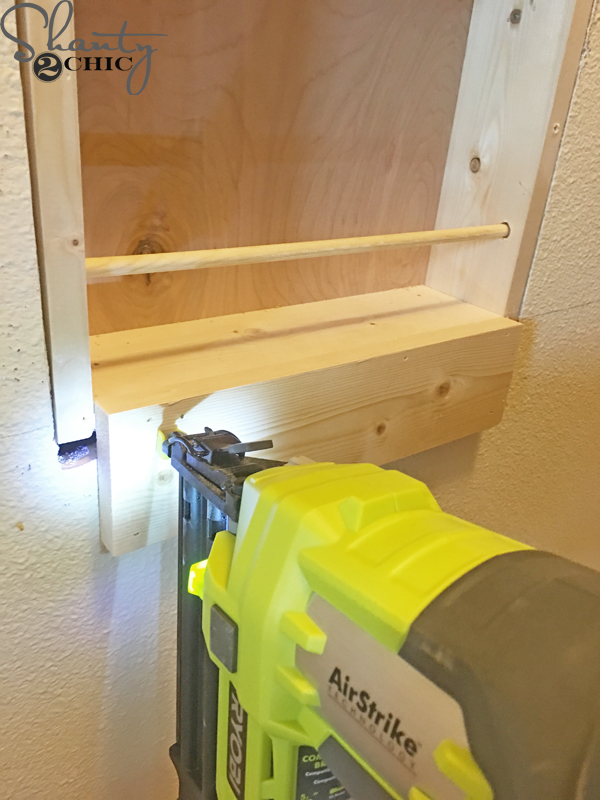
I applied wood glue to the back of the boards and attached them to the top and bottom of the spice rack using 1 1/4″ brad nails and my Ryobi 18-gauge nailer.
Make sure the nails go through the trim and into the shelf framing behind it.
Position the trim so it covers the exposed 3/4″ edges of the top and bottom boards. You can also add a few nails near the corners to hold everything in place.
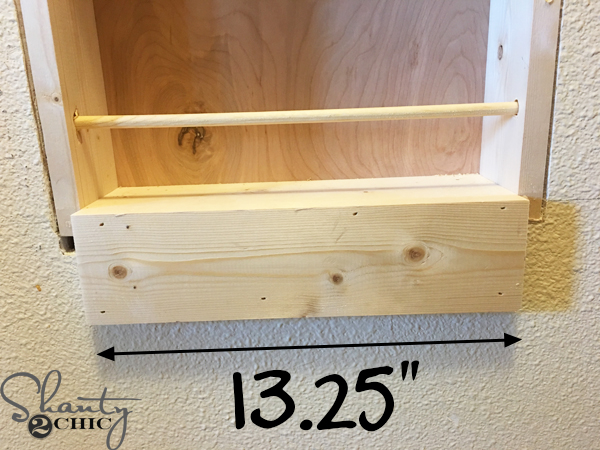
Next, I measured from the top of the upper trim piece to the bottom of the lower trim piece.
I cut two more 1×4 boards to that measurement for the vertical side trim.
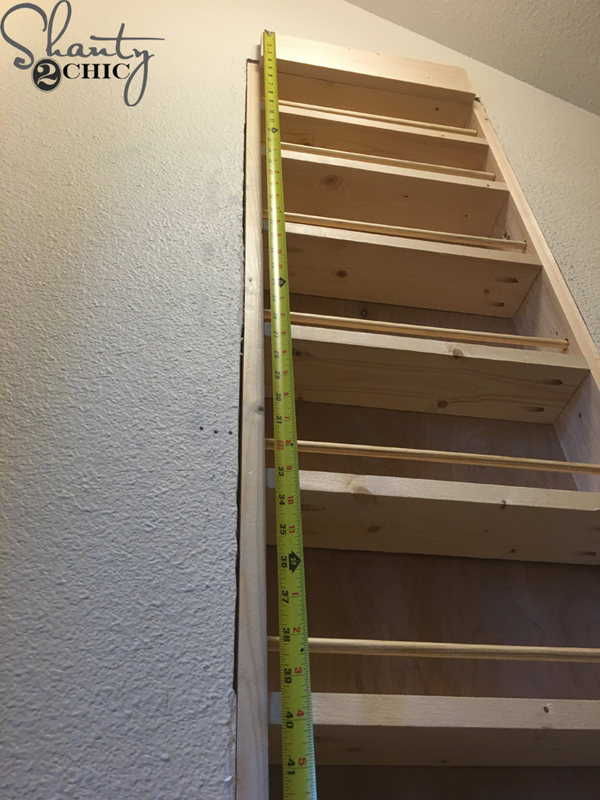
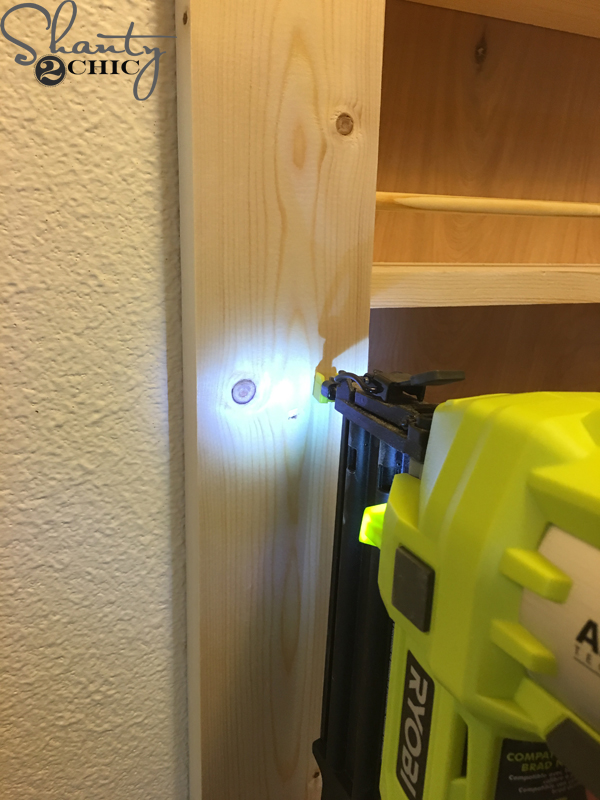
Then, I attached both side pieces with wood glue and 1 1/4″ brad nails.
The studs are behind the side trim, so you can nail along the corners and edges to secure the pieces.
I love how the trim frames the entire spice rack and covers those imperfect drywall edges!
Fill the Holes and Paint
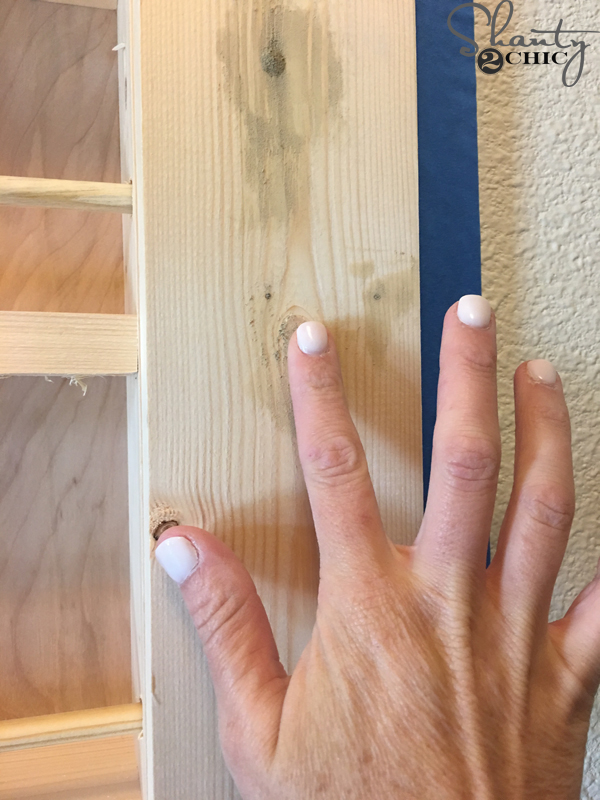
Once all the trim was attached, I filled the nail holes and wood screw holes with wood filler.
If you can see any of the pocket holes underneath the shelves, you can fill those too.
I let the wood filler dry completely, then sanded the filled areas smooth to prepare everything for paint.
I painted my built-in spice rack with two coats of Ivory Lace by Valspar to match the trim in my pantry.
Let the paint dry as directed between coats and allow the finish to cure as recommended before loading the shelves with spice jars.
And that was it!
I was so excited about my new spice rack that I couldn’t resist giving it a little test drive while the wood filler was drying.
My hubby even snapped a picture of me filling it up and shared it on his social media page. He knows me well! #myhappyplace
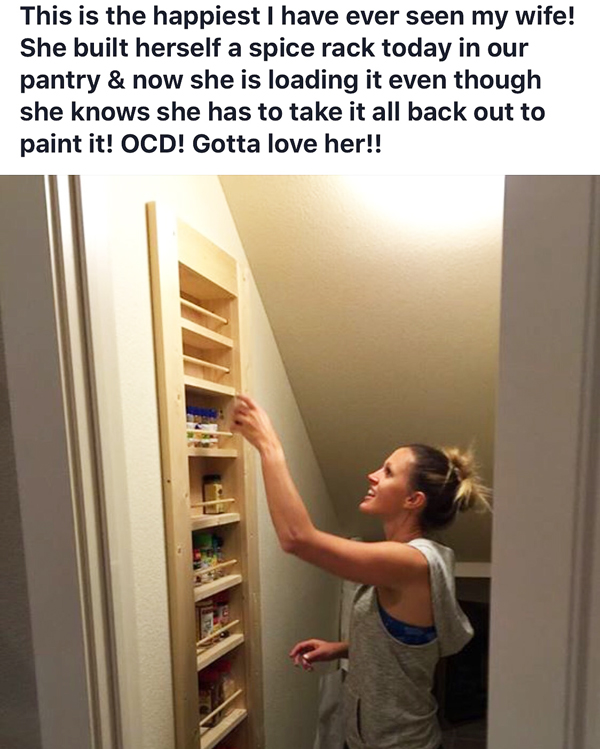
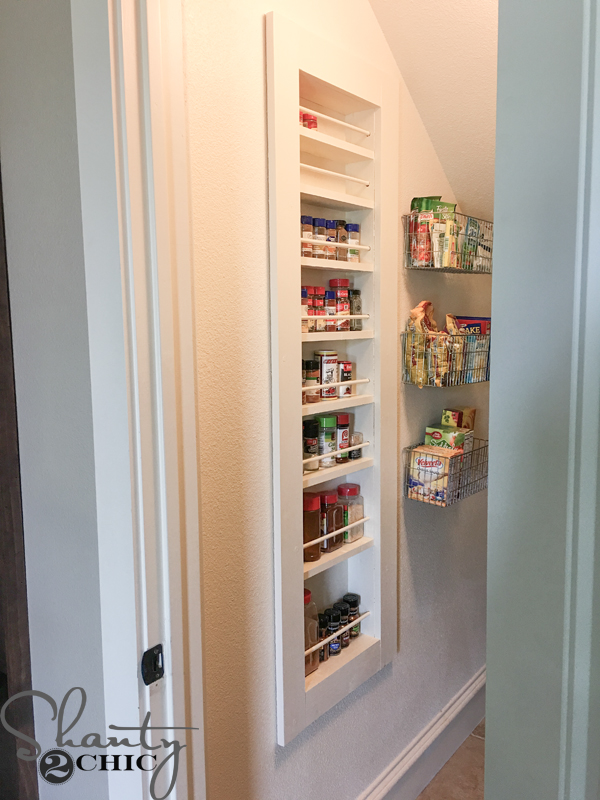
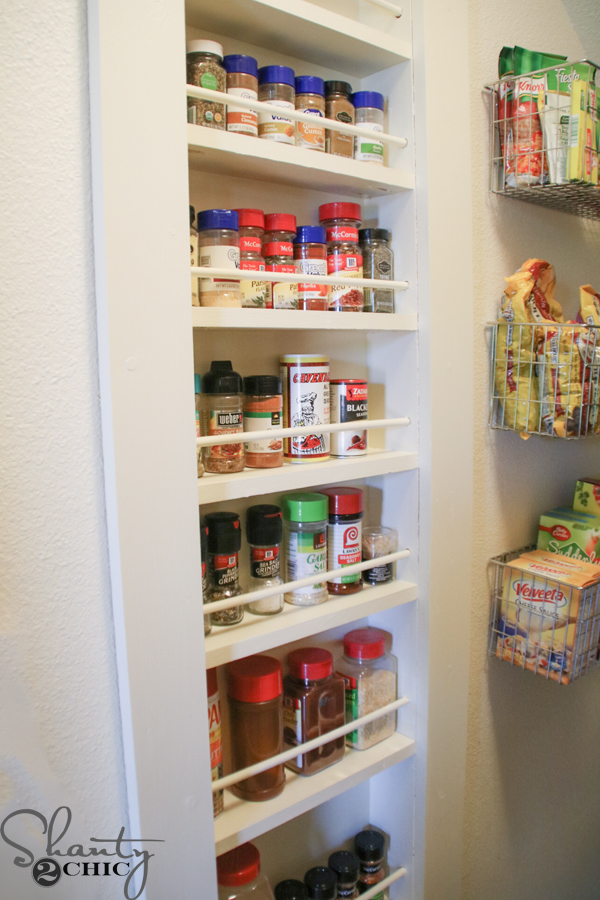
Once the paint was ready, I put all my spices back in and my pantry has never been the same since!
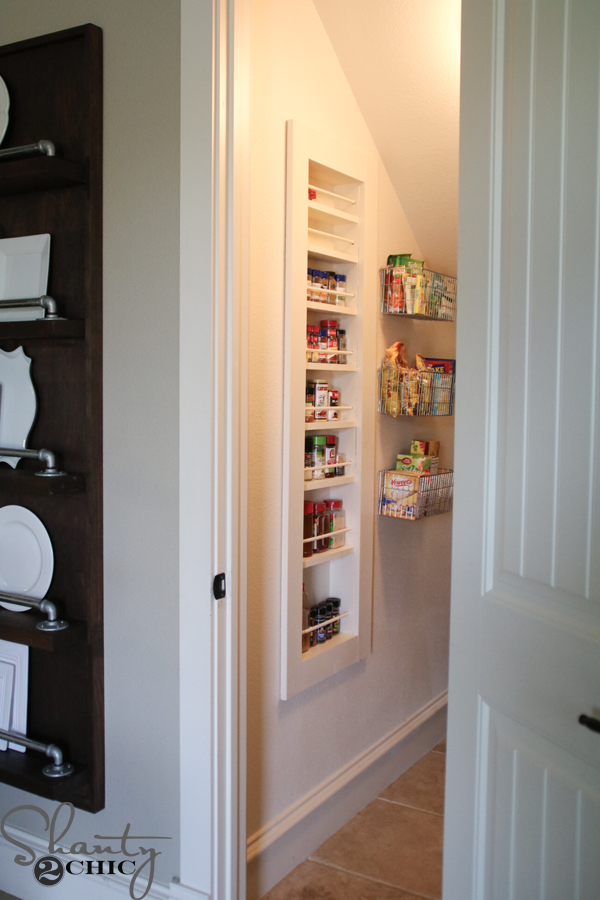
I couldn’t be happier with how this project turned out! It gave me a place for all my spices without taking up any of the shelf space in my narrow pantry.
I also found those hanging pantry baskets for the wall next to the spice rack, and they’ve been great for adding even more storage. I think I could actually use a few more! 🙂
Expert Tips
A few little things made this project much easier.
- Check the wall first. Make sure there are no hidden utilities, obstacles, or other restrictions before cutting into the drywall.
- Measure the opening more than once. Your actual stud spacing determines the width of the rack, not my measurements.
- Dry fit before assembly. It’s much easier to adjust the shelf lengths before drilling pocket holes and putting the frame together.
- Pay attention to the dowel holes. Keep both side boards oriented correctly so every dowel lines up.
- Cut your plywood and dowels to fit. Small differences in measurements can add up, so I prefer to measure these pieces after the frame is assembled.
Ways to Customize Your DIY Spice Rack
One of my favorite things about this project is that you can change the design to fit your pantry.
You could add a sliding door with a chalkboard front for writing grocery lists. I actually thought about doing that on mine, but I didn’t want to lose the usable wall space next to the spice rack.
A hinged door could also work if you have enough room for it to swing open.
You can adjust the height and spacing of the shelves to fit larger spice containers, or paint the rack to match your cabinets instead of the trim.
You could even make a deeper version if your wall construction safely allows it, but you’ll need to adjust the dimensions, backing, and installation to fit the available space.
I decided to leave mine open because I love being able to see all my spices at a glance!
Frequently Asked Questions
Not every wall is suitable for a recessed spice rack. You need a cavity with enough space and depth, and you must check for electrical wiring, plumbing, ducts, blocking, and any fire-rating or structural requirements. This design doesn’t require cutting the studs, and you shouldn’t modify them to make the rack fit.
I used my Kreg Jig K5 with 3/4″ pocket holes and 1 1/4″ pocket hole screws to assemble the frame. That’s the method I used for this build, and it made attaching the shelves to the sides easy.
Yes! The measurements I shared are specific to my wall. You’ll need to adjust the side boards, shelf lengths, plywood backing, dowels, and trim to match your opening. You can also adjust the shelf spacing based on the spice jars you want to store.
More DIY Pantry and Kitchen Storage Ideas
If you’re looking for more ways to organize your kitchen, we have a few other projects you might like! Our DIY Countertop Spice Rack is a smaller option for keeping your favorite spices close while cooking. We also built a DIY Pantry Door Spice Rack that adds storage to the inside of a pantry door. And if you’re trying to free up more cabinet and drawer space, check out our DIY Foil and Kitchen Organizer!
I hope this gives you a few ideas for your own pantry! If you build one, we’d love to see it. Share your project with us and tag #shanty2chic so we can check it out.
Thanks so much for stopping by, and Happy Building, friends!
🛠️ Printable Tutorial
DIY Built-In Spice Rack Between Wall Studs
Tools
- Stud finder or MultiScanner
- Measuring tape
- Level
- Miter Saw
- Drill
- Kreg Jig
- Rotary drywall cutter
- Forstner bit (sized for dowels)
- Brad nailer or hammer
- Stapler or hammer
- Sander
- Rubber mallet (optional)
Supplies
- 3 – 1×4 pine boards at 10 ft.
- 1 – 1×4 pine board at 6 ft.
- 1 – 1/4″ plywood sheet cut to fit (approximately 57″ x 14 3/4″)
- 3 – 3/8″ dowel rods at 4 ft. each
- Wood glue
- Wood filler
- 1 1/4 ” pocket hole screws
- 2 ” wood screws
- 3/4 ” staples or finishing nails
- 1 1/4 ” brad nails
- Paint Ivory Lace by Valspar
Instructions
- Locate two wall studs using a stud finder. Confirm the wall cavity is safe and free of electrical wiring, plumbing, ducts, or other obstructions before cutting.
- Mark a level rectangle between the studs. My opening measured 57″ tall x 14 3/4″ wide. Adjust these measurements to fit your space.
- Use a rotary drywall cutter to carefully cut along the marked lines, cutting only the drywall. Remove the drywall section and check the opening.
- Cut two 1×4 boards to 57″ for the vertical sides of the rack. Adjust the length if your opening is different.
- Use a Forstner bit to drill matching dowel holes in both side boards, approximately 3/4″ from one edge. Follow the hole placement shown in the tutorial photos.
- Cut nine 1×4 boards to 13 1/4″ for the shelves. Dry fit the pieces in the wall opening before assembly, adjusting the lengths as needed.
- Drill 3/4″ pocket holes into both ends of each shelf board using a Kreg Jig.
- Attach the shelves to one side board using 1 1/4″ pocket hole screws, following the spacing shown in the tutorial. Keep the top and bottom boards flush with the ends.
- Attach the second side board, making sure the dowel holes line up on both sides.
- Measure and cut the 1/4″ plywood backing to fit the assembled frame. Secure it with wood glue and 3/4″ staples or finishing nails.
- Insert the 3/8″ dowel rods into the matching holes. Mark and cut each dowel to fit across the front of the shelves.
- Place the assembled spice rack into the wall opening. Check that it is level and secure it to the studs using three 2″ wood screws on each side.
- Cut two 1×4 trim boards to 13 1/4″ for the top and bottom. Attach them with wood glue and 1 1/4″ brad nails, covering the exposed shelf edges.
- Measure and cut two vertical 1×4 trim pieces to fit between the outer edges of the top and bottom trim. Secure with wood glue and 1 1/4″ brad nails.
- Fill all visible nail holes, screw holes, and pocket holes with wood filler. Let dry, then sand smooth.
- Apply two coats of paint, allowing the recommended drying time between coats. Once the paint has cured sufficiently, fill the shelves with your spice jars.
Notes
- Always inspect the wall cavity before cutting. A stud finder or MultiScanner alone cannot guarantee that the wall is free of hidden utilities. Do not cut or modify wall studs.
- All measurements are based on my 57″ x 14 3/4″ opening. Measure your own space and adjust the boards, plywood, dowels, and trim accordingly.
- Dry fit the frame before assembly to make sure it slides into the opening without forcing it.
- Check that the dowel holes are aligned before attaching the second side board.
- Follow the wood filler and paint manufacturer’s instructions for drying and curing times. The estimated additional time may vary.
- A hammer and finishing nails can replace the nailer and stapler for this project.

What do you do if the stud is right where you would want to put it?! How do you know if a wall is load bearing?!
It goes between the studs. It wouldn’t matter if the wall is load bearing. Just cut out the Sheetrock between the studs.
This is nice an simple. Like the design.
Love the idea. but sad family hate the idea
I love these shelves! You have inspired me to try my hand at building! I would like to use the same concept for these shelves to build shelves in my dd’s wall at the end of her closet for books and what not’s. What do you think? Any advice?