
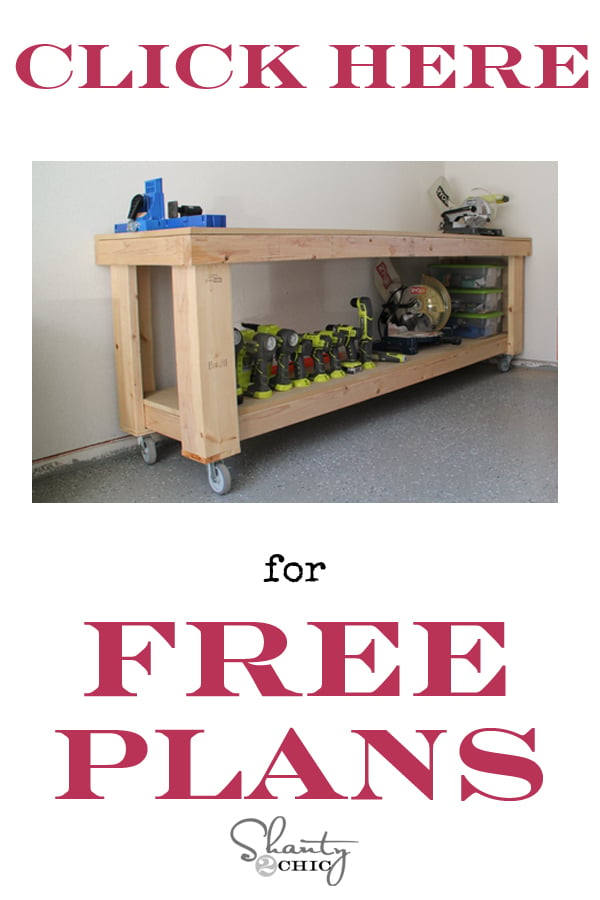
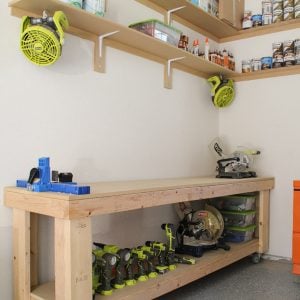
I’m so excited to share the small DIY workbench I built for the shop in my new house! I wanted a sturdy work surface that wouldn’t take up too much room, and this narrower design was exactly what my shop needed. It has a bottom shelf for storage, locking casters so I can move it around, and I built it for about $100, including the wheels!
Table of Contents
Why I Love This Small DIY Workbench
My shop is about the size of a standard one-car garage, so I needed a workbench that would give me plenty of room to build without taking up all my floor space.
Here’s what I love about this design:
- Narrower work surface: Leaves more room to move around the shop and work on larger projects.
- Rolling design: Four locking casters make it easy to move the bench where I need it.
- Extra storage: The open bottom shelf is great for keeping tools and supplies close by.
- Budget-friendly: I spent about $100 on the original build, including the casters. Material prices will vary.
- Free printable plans: We’ve included the complete plans with the lumber list, measurements, and assembly diagrams.
I actually modified the larger workbench Whitney built to make this one fit my space. If you have a bigger garage or want more room for assembling furniture, check out our DIY Rolling Workbench with Plans.
Key Supplies for This Workbench
The full lumber list and measurements are included in the free plans, but here are a few of the main supplies I used.
- 2×4 and 2×6 pine boards: I used these to build the legs and frames.
- 3/4-inch MDF: I used one 4×8 sheet for the workbench top and bottom shelf. I had Home Depot rip it down for me, which made the project much easier to get started.
- 2 1/2-inch pocket-hole screws: These secure the leg assemblies and frames.
- 2 1/2-inch wood screws: I used these to connect the frames to the legs and attach the foot pads.
- Four 4-inch locking casters: These let me roll the workbench out of the way when I need more floor space and lock it in place while I’m working.
- Wood glue and brad nails: I used these to attach the MDF shelf and top to the frames.
I also used my Kreg Jig, drill, saw, and brad nailer for the assembly.
How to Build a Small DIY Workbench
This is a pretty straightforward build! The complete free printable workbench plans have all the cuts and measurements, and I’m sharing my step-by-step photos below to help you along the way.
Make the Cuts and Drill Pocket Holes
I had Home Depot rip down my MDF sheet for the top and bottom shelf. Then, I made all my lumber cuts according to the plans.
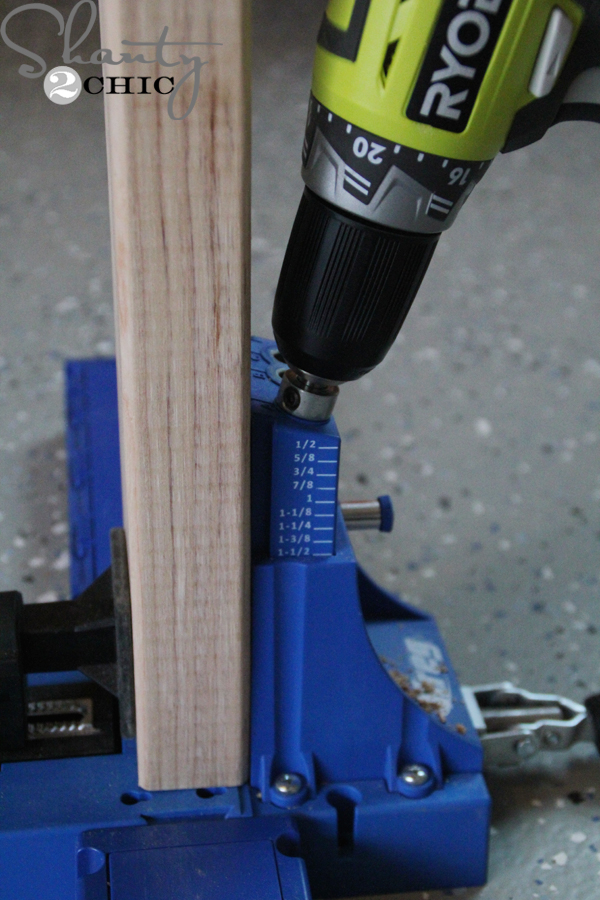
I started by using my Kreg Jig to drill pocket holes in the leg pieces and the boards for the frames.
Make sure to follow the pocket-hole locations shown in the printable plans.
Assemble the Workbench Legs
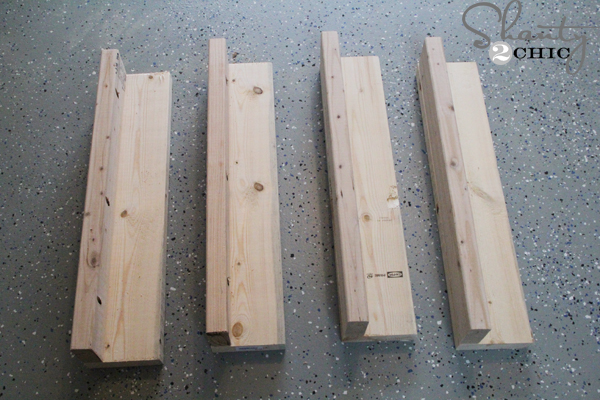
Next, I assembled the legs using wood glue and 2 1/2-inch pocket-hole screws.
You’ll build two left legs and two right legs, so pay attention to the orientation of the pieces as you put them together.
Here is what the assembled legs look like!
Build the Top and Bottom Frames
Next up, the frames!
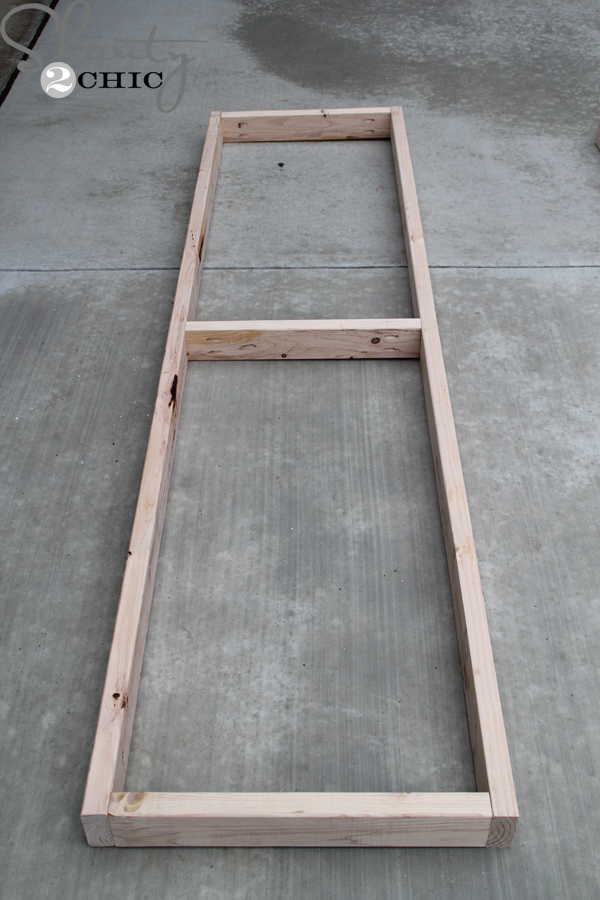
I built the top and bottom frames with wood glue and 2 1/2-inch pocket-hole screws. Both have the same basic shape, but they are different sizes, so be sure to follow the measurements in the plans.
It’s also a good idea to check that both frames are square before moving on.
Attach the Legs to the Top Frame
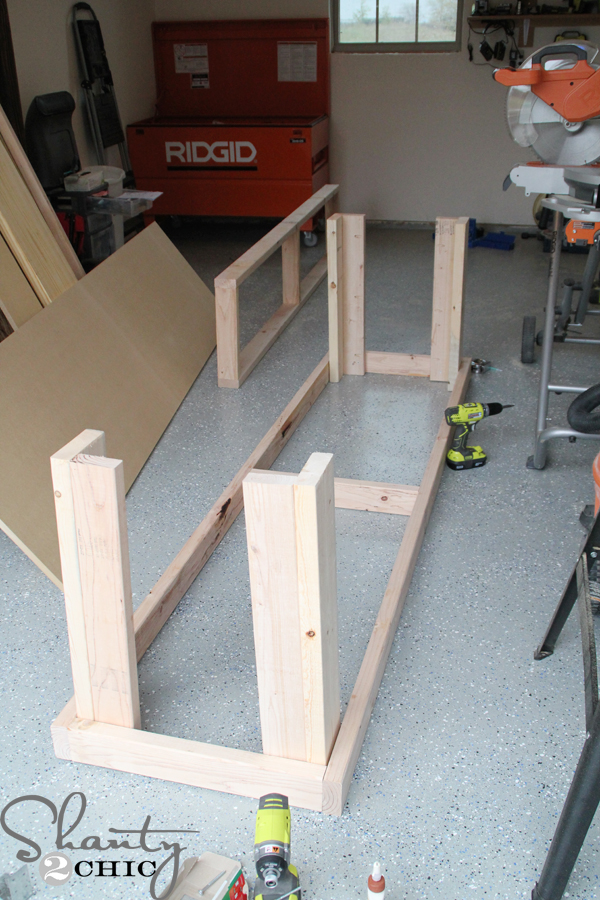
Next, I attached the legs to the top frame using wood glue and 2 1/2-inch wood screws.
Make sure the legs are positioned correctly and everything is square before securing them.
Add the Foot Pads and Bottom Frame
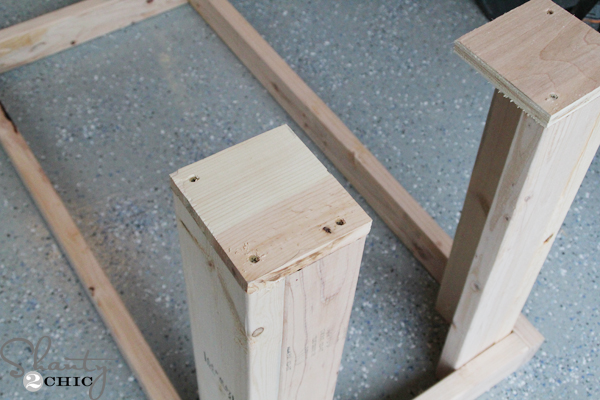
Next, I added the foot pads to the bottom of each leg. These give the casters a solid surface for mounting.
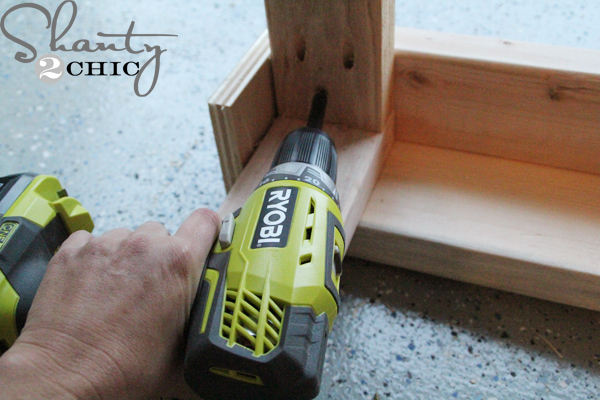
Then, I attached the bottom frame using 2 1/2-inch wood screws, driving them from the inside of the frame into the legs.
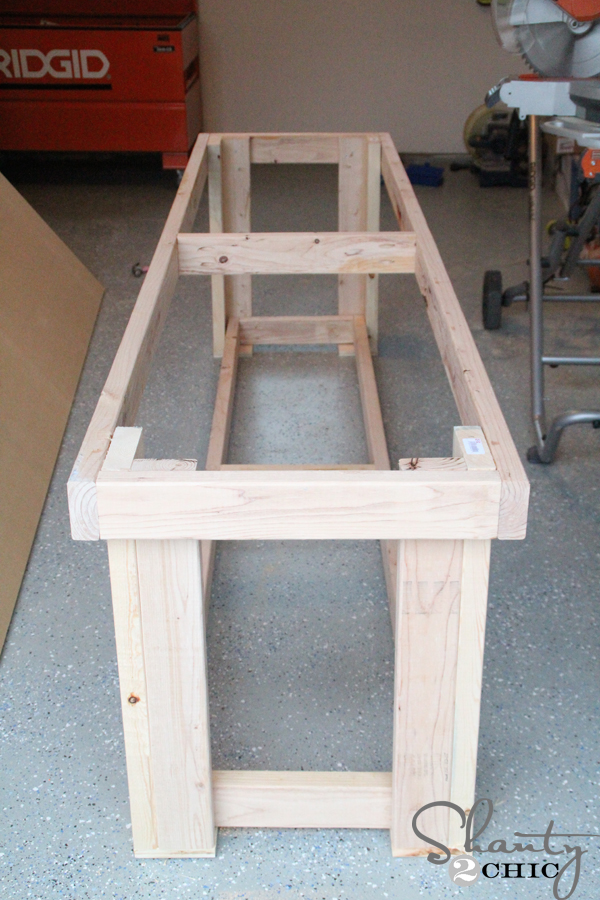
Here’s what the workbench looks like with both frames attached!
Before moving on, attach your four locking casters to the foot pads. Trust me, it’s much easier to do this now before the workbench gets too heavy!
Make sure to use mounting screws that are appropriate for your casters and foot pads.
Attach the MDF Shelf and Workbench Top
Almost done!
I used my brad nailer and wood glue to attach the bottom MDF shelf to the frame.
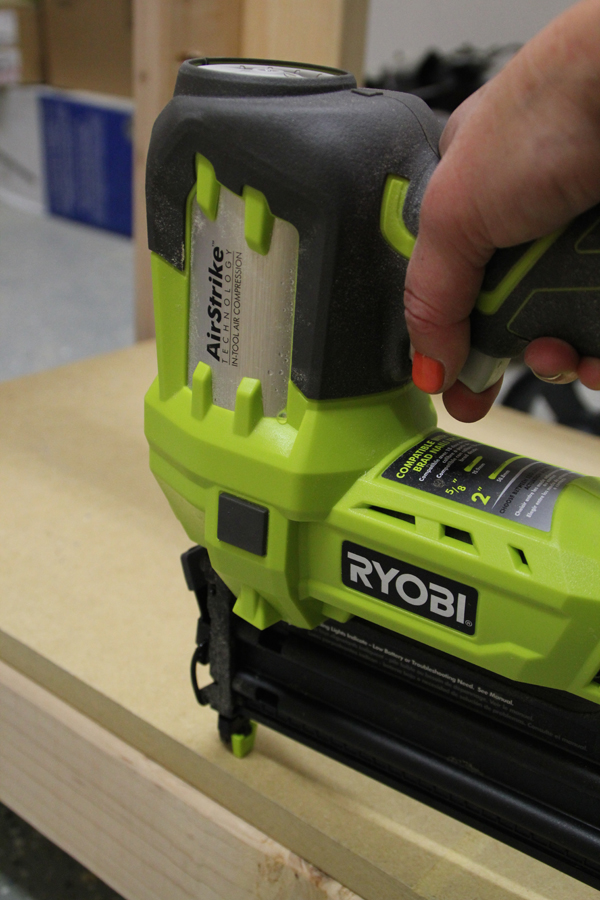
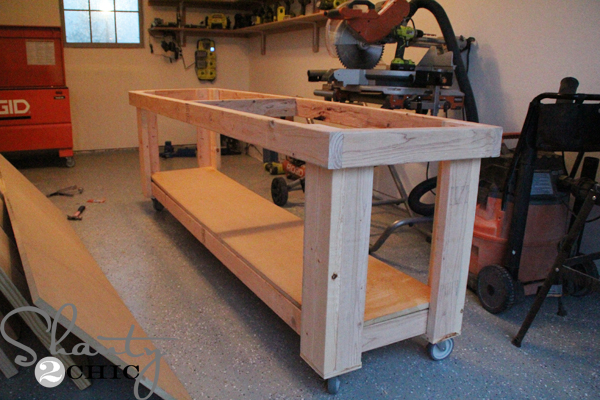
Then, I attached the MDF top the same way, using wood glue and brad nails.
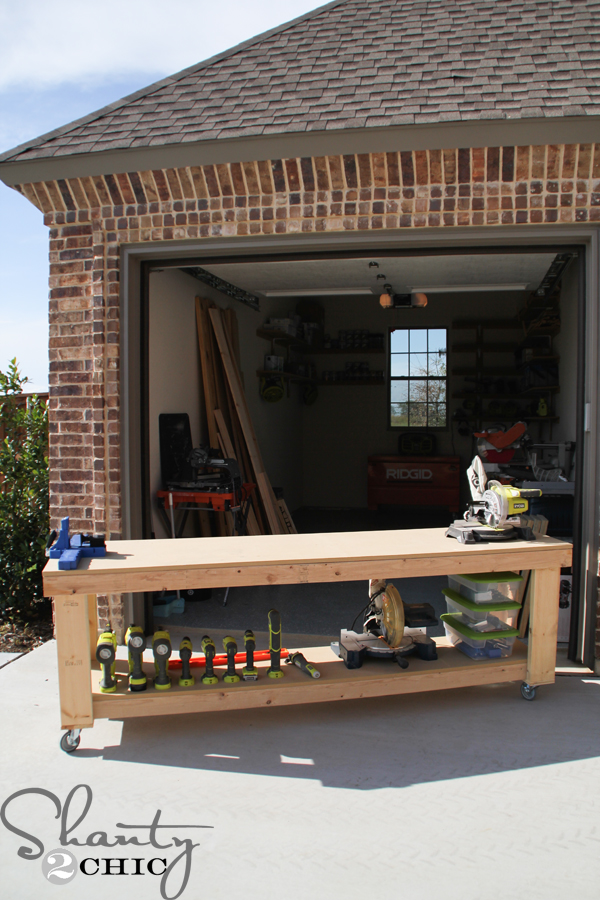
And that’s it! My new rolling workbench is ready to use!
Expert Tips
A few things to keep in mind while building yours:
- Have the MDF cut at the store. I had Home Depot rip down my MDF sheet, which saved me from handling a large, heavy sheet at home.
- Check your frames for square. It’s much easier to make adjustments before connecting everything together.
- Use wood glue at the joints. The plans call for glue along with the screws throughout the frame assembly.
- Attach the casters before adding the MDF. The bench gets heavy, and it’s easier to work on the underside before the top and shelf are installed.
- Choose the right caster hardware. Make sure the screws are suitable for the mounting plates and don’t extend through the foot pads.
Ways to Customize Your Workbench
I built this workbench specifically for my shop, but there are a few things you can change to make it work better for yours.
- Adjust the height. You can change the leg length if you prefer a taller work surface. Remember to account for the caster height and update the leg measurements.
- Add an overhang to the top. The original top sits close to the frame. A wider top can give you more room to attach clamps, but you’ll need to adjust the MDF dimensions.
- Paint or seal the workbench. You can leave it unfinished like mine or add a suitable protective finish for your shop.
- Add storage to the bottom shelf. Toolboxes and storage bins can help keep your supplies organized without taking up more floor space.

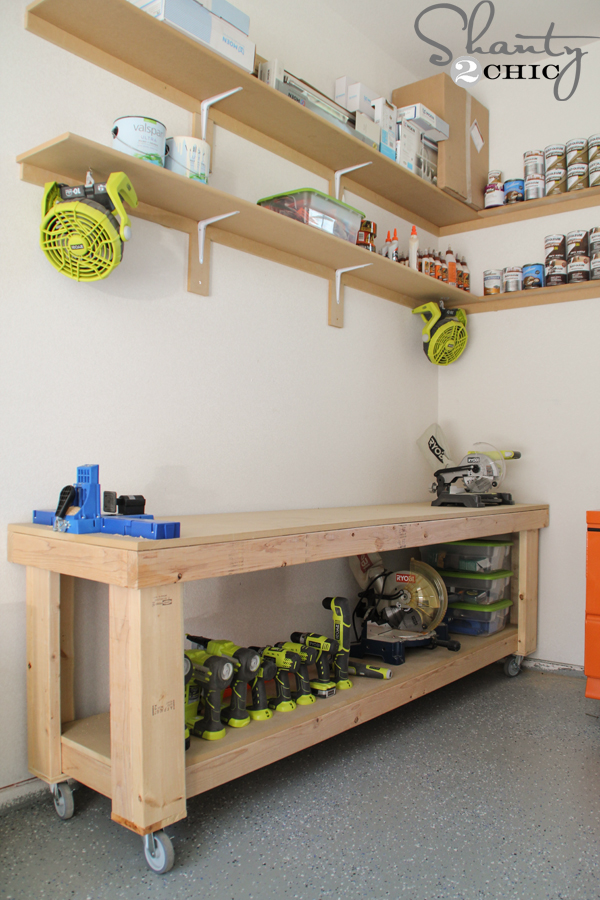
I love how this turned out! I’ve outfitted it with some of my favorite Ryobi power tools and even mounted my K5 Kreg Jig right to the top.
One of my favorite things is being able to roll it right out of my shop on pretty days. I can work on a project outside and still keep an eye on the kiddos while they play.
And because it has a narrower footprint, I still have plenty of room to move around my one-car garage workshop.
Frequently Asked Questions
It has worked great in my shop, which is about the size of a standard one-car garage! I wanted a narrower bench because I also like having open floor space for working on larger projects.
If you have more room and prefer a larger work surface, our full-size rolling workbench might be a better fit.
Yes! The height can be adjusted by changing the length of the legs. I’m about 5’3″, so I designed mine at a height that works well for me, especially when I have tools sitting on top.
Be sure to include the height of your casters when figuring out your final working height.
The original MDF top doesn’t have much overhang, which can make attaching certain clamps difficult.
If you regularly clamp boards to your work surface, consider extending the top slightly beyond the frame. You’ll need to adjust the top dimensions in the plans.
No! I had Home Depot rip my MDF sheet down for me. You can ask your local lumber or hardware store if they offer cutting services.
More DIY Workshop Projects
If you’re getting your workshop set up, we have several other projects you can build! Our DIY Rolling Workbench with Plans has a much larger work surface for furniture building, and our DIY Miter Saw Workbench gives your saw a dedicated spot in the shop. Both are great options depending on the space you have and the projects you like to build.
I’m so happy with how much more functional my little shop is now. Having a workbench I can move around makes such a difference, and I’m already putting it to good use!
If you build one, we’d love to see it! Share your photos and tag us on Instagram at @Shanty2Chic or use #shanty2chic. You can also leave any questions below!
~Ashley
🛠️ Printable Tutorial
DIY Small Workbench with Free Plans
Tools
- Miter Saw
- Kreg Jig (pocket-hole jig)
- – Drill/driver
- Brad Nailer
- Measuring tape
- – Clamps
- Square
Supplies
- 1 3/4-inch MDF 4×8-foot sheet
- 7 ×4×8-foot pine boards
- 2 ×6×8-foot pine boards
- 36 2 1/2-inch pocket-hole screws
- 2 1/2-inch wood screws Handful
- Brad nails Handful
- Wood glue As needed
- 4 4-inch locking casters
- Caster mounting screws As needed
Instructions
- Cut the Lumber and Drill Pocket Holes. Cut the boards and MDF according to the printable plans. Drill the pocket holes in the leg and frame pieces using your Kreg Jig.
- Build the Legs. Assemble two left legs and two right legs using wood glue and 2 1/2-inch pocket-hole screws.
- Build the Frames. Assemble the top and bottom frames with wood glue and 2 1/2-inch pocket-hole screws, following the measurements in the plans.
- Attach the Legs to the Frame. Secure the legs to the frame using wood glue and 2 1/2-inch wood screws. Check that everything is square.
- Add the Foot Pads and Second Frame. Attach the foot pads to the legs. Secure the remaining frame using wood glue and 2 1/2-inch wood screws driven from inside the frame into the legs.
- Install the Casters. Attach four locking casters to the foot pads using suitable mounting screws before adding the MDF pieces.
- Attach the Bottom Shelf. Carefully turn the workbench upright. Secure the MDF bottom shelf with wood glue and brad nails spaced approximately 10–12 inches apart.
- Attach the Workbench Top. Position the MDF top and secure it using wood glue and brad nails. Allow the glue to cure according to the manufacturer’s instructions before using the workbench.
Notes
- These times are estimates, not documented build times. The additional hour allows for glue setting and handling; follow the glue manufacturer’s directions before putting the workbench under load. A complete cure may take longer.
- Have the hardware store cut the large MDF sheet if you don’t have the tools or space to handle it safely.
- Make sure the frames are square before securing all the screws.
- Use locking casters to keep the workbench from rolling while you’re working.
- Attach the casters before installing the MDF top and shelf to make assembly easier.
- The original workbench cost approximately $100 in 2014, including casters. Current material costs will vary.
- You can adjust the workbench height by changing the leg length, but remember to account for the caster height.