
I designed this DIY farmhouse console table for my entryway because I wanted a narrow piece that gave me more room to decorate without taking over the space. The entire table is built from eight 2×6 boards, and I love how the chunky base and simple planked top turned out.
This farmhouse console table works well in an entryway, behind a sofa, or along an empty wall. You can watch the full build video below, and the free printable plans and How-To Card are at the bottom of the post.
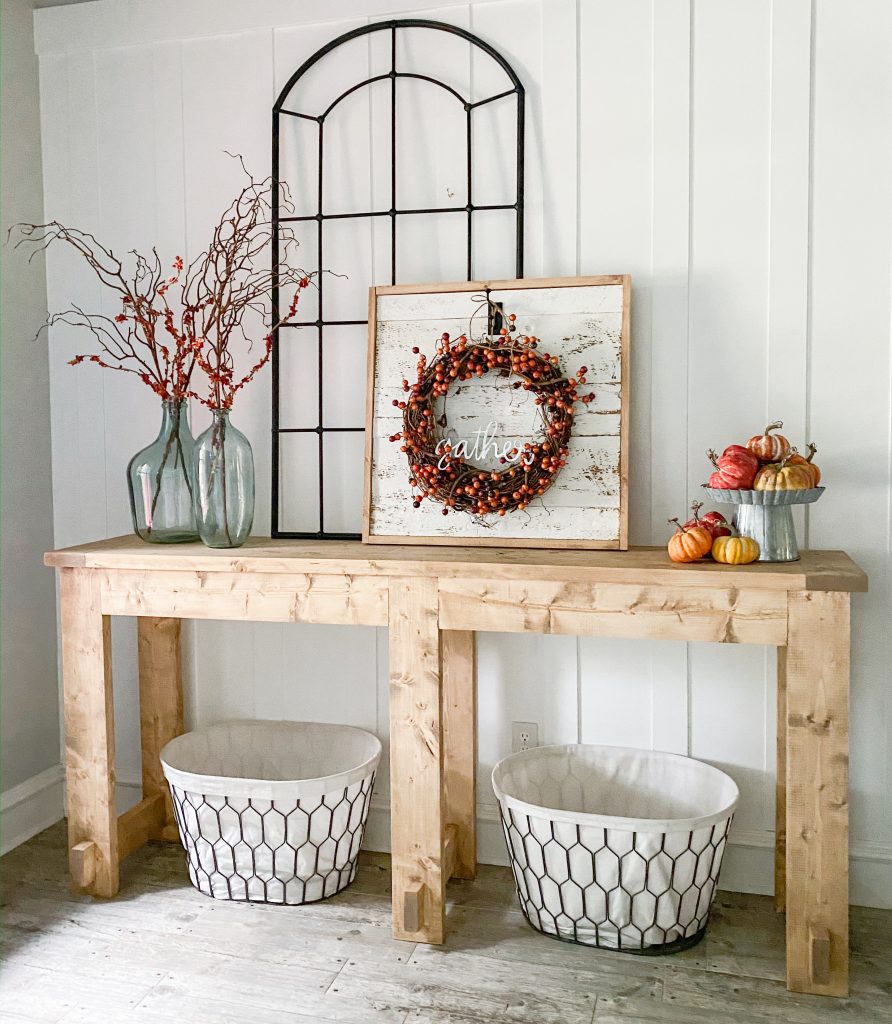
Table of Contents
Why You’ll Love This Console Table
This design gives you a substantial piece of furniture without requiring a long lumber list.
- It uses only eight 2×6 boards.
- The narrow shape works well in entryways and smaller spaces.
- The chunky legs give it a farmhouse-style look.
- The simple top leaves plenty of room for decorating.
- You can stain or paint it to match your home.
- Free printable plans and a build video are included.
Key Supplies and Tools
Eight 2×6 boards: I designed the entire table around this one lumber size to keep the materials simple. The boards are ripped to different widths for the base, supports, decorative pieces, and tabletop.
Table saw: The 2×6 boards are ripped to either 4″ or 5″ wide. I like to make the crosscuts first and then rip the shorter pieces because they are easier to guide through the table saw.
Pocket-hole jig: The base and tabletop are assembled with 1 1/2″ pocket holes and 2 1/2″ pocket-hole screws. Pocket-hole joinery keeps the connections strong while hiding most of the fasteners.
Wood glue: I use wood glue along with the screws and nails throughout the build. The glue helps create stronger joints once it has fully dried.
Brad or finish nailer: The decorative pieces at the bottom of each leg are attached with 2″ brad or finish nails.
How to Build a Farmhouse Console Table
The complete printable plans and How-To Card are below, but I’ll walk you through the full build first.
Cut and Rip the Boards
Make all of the crosscuts according to the printable plans. Then rip each board to either 4″ or 5″ wide.
I like to make my crosscuts first and rip the shorter boards afterward. This makes the pieces easier to push through the table saw and gives me more control during the cut.
Check the width of each piece before moving on because the different sections of the table use different ripped board widths.
Build the Two End Assemblies
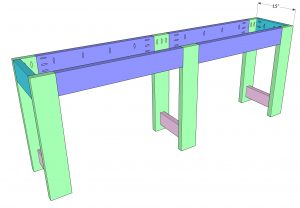
Each end of the console table is built in an “E” shape. Build two identical end assemblies.
The boards used for this section are ripped to 5″ wide. Drill 1 1/2″ pocket holes in each apron according to the plans.
Attach the aprons to the legs with wood glue and 2 1/2″ pocket-hole screws. The tops of the legs should sit flush with the tops of the aprons.
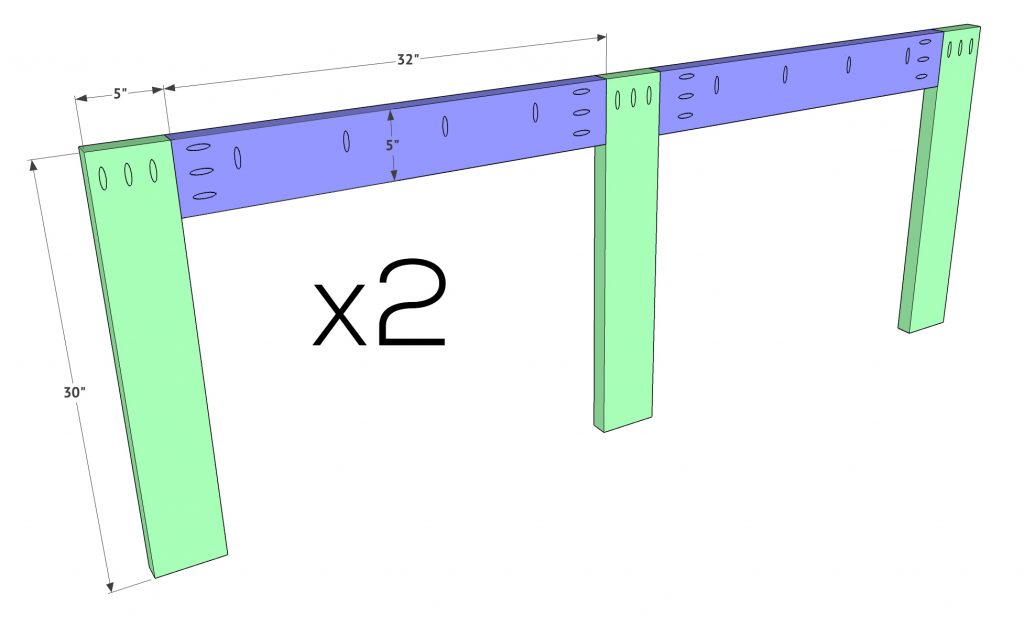
Check each end assembly for square before tightening all of the screws. Since these two sections form the sides of the table, keeping them identical will make the rest of the assembly much easier.
Attach the Small Aprons
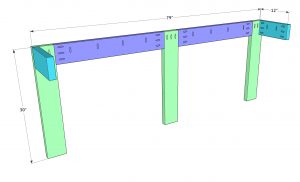
Attach the smaller aprons to one of the completed “E” assemblies.
These aprons should sit flush with the top and side edges of the outside legs. Secure them with wood glue and 2 1/2″ pocket-hole screws.
Make sure the pocket holes face toward the inside or back of the table where they will be less visible.
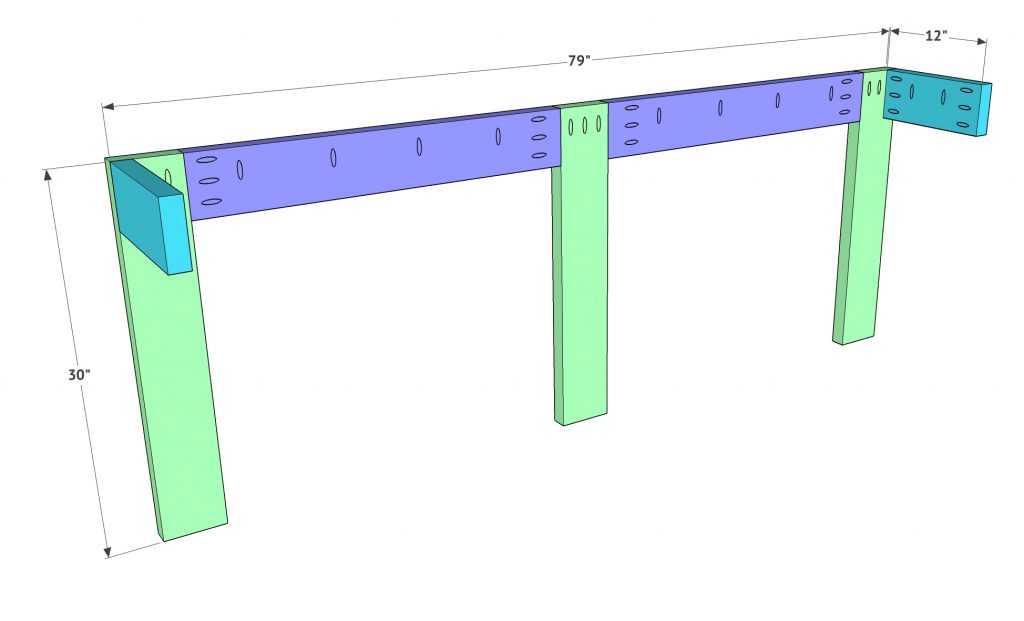
Attach the smaller aprons to one of your “E” shapes. These aprons will be flush with the top and side of the outside legs. Attach the apron using wood glue and 2.5” pocket hole screws.
Connect the Second End Assembly
Attach the second “E” assembly to the opposite ends of the small aprons.
You can connect it with wood glue and 2 1/2″ pocket-hole screws, or you can use wood screws. This part of the table is narrow, so I found it easier to drive wood screws through the back legs and into the small aprons.
The screws are positioned on the back of the table, so they won’t be visible once the table is in place.
I also set the small leg supports in position during this step. They helped hold the assembly at the correct height while I connected the two sides.
Before driving all of the screws, check that the base is square and that both end assemblies are lined up evenly.
Add the Leg Supports
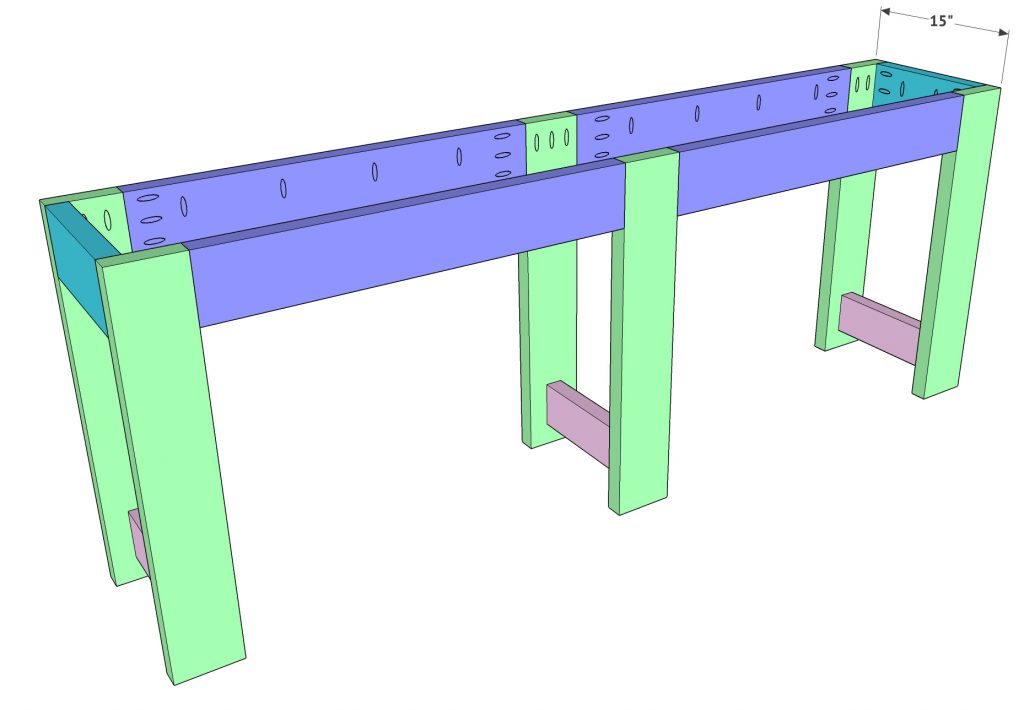
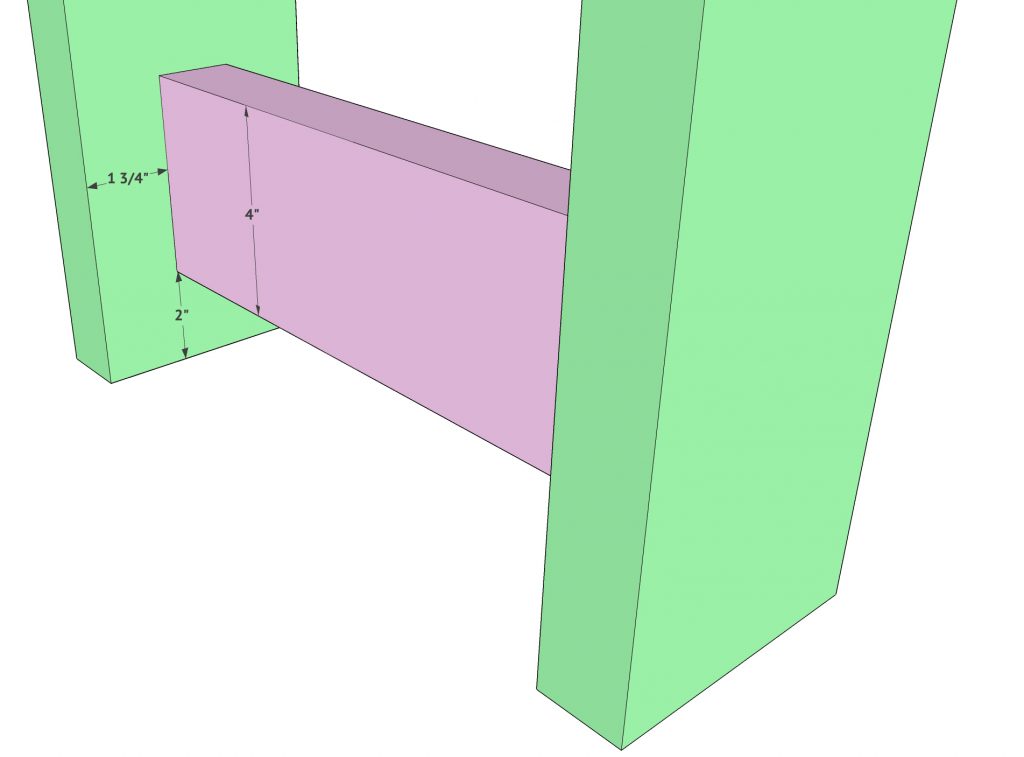
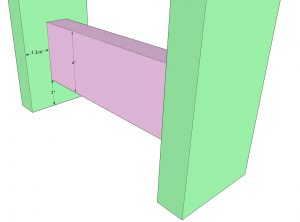
The leg support boards are ripped to 4″ wide and cut to 12″ long.
Place each support between the legs and use a pencil to mark its position. Attach the supports with wood glue and 2 1/2″ wood screws driven through the legs and into the support boards.
The screws will show temporarily, but don’t worry. They will be covered by the decorative trim pieces in the next step.
Drilling pilot holes before adding the screws can help prevent the ends of the boards from splitting.
Attach the Decorative Pieces
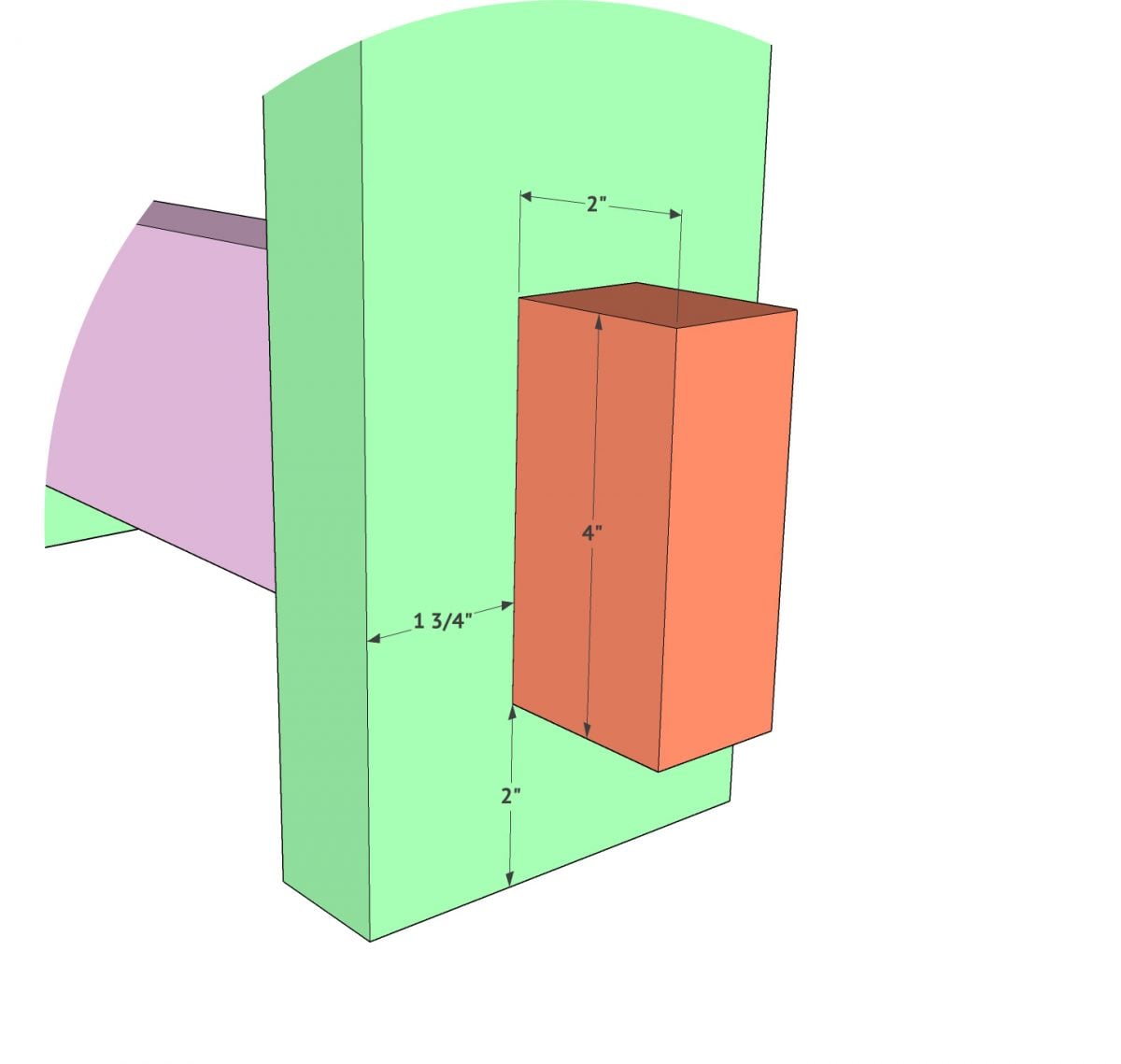
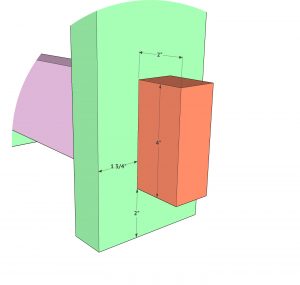
Attach the small decorative pieces to the bottom of each leg. There are six pieces total, with one attached to each leg.
These pieces add detail to the farmhouse-style base and cover the screws used to attach the leg supports.
Secure them with wood glue and 2″ brad or finish nails. Line up each piece before nailing so the trim sits evenly around the base.
Assemble the Planked Tabletop
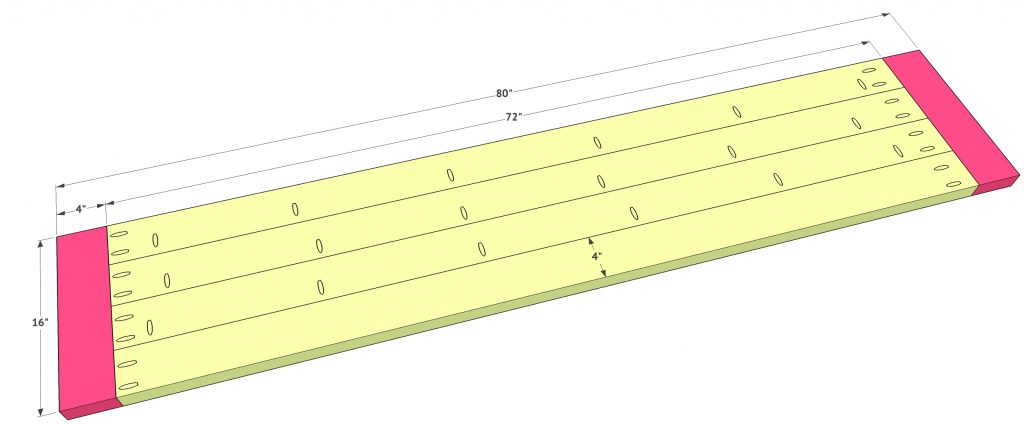
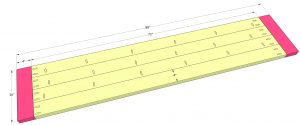
The boards for the tabletop are ripped to 4″ wide.
Drill 1 1/2″ pocket holes in the locations shown in the printable plans. Join the tabletop boards with 2 1/2″ pocket-hole screws.
Place the boards on a flat work surface and line up the ends before tightening the screws. Clamps can help keep the boards from shifting while the top is assembled.
Check the top as you work to make sure the boards stay flat and the seams remain tight.
Attach the Top to the Base
Center the assembled tabletop over the base.
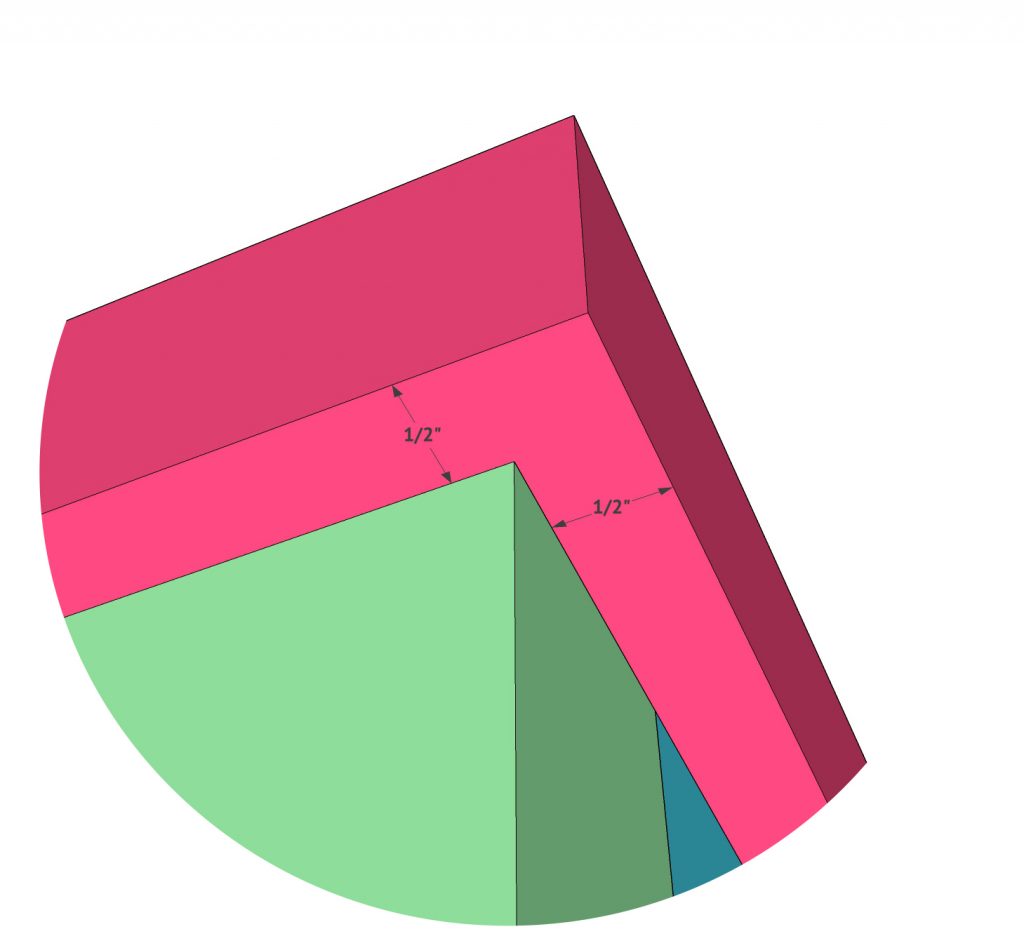
The finished top should have a 1/2″ overhang at the front, back, and both ends. Measure the overhang in several places before attaching it so the top sits evenly on the base.
Secure the tabletop with wood glue and 2 1/2″ pocket-hole screws driven through the base and into the underside of the top.
Sand and Finish the Table
Sand the entire table until the surfaces and edges feel smooth. Pay close attention to the tabletop seams, corners, and any areas where the ripped boards meet.
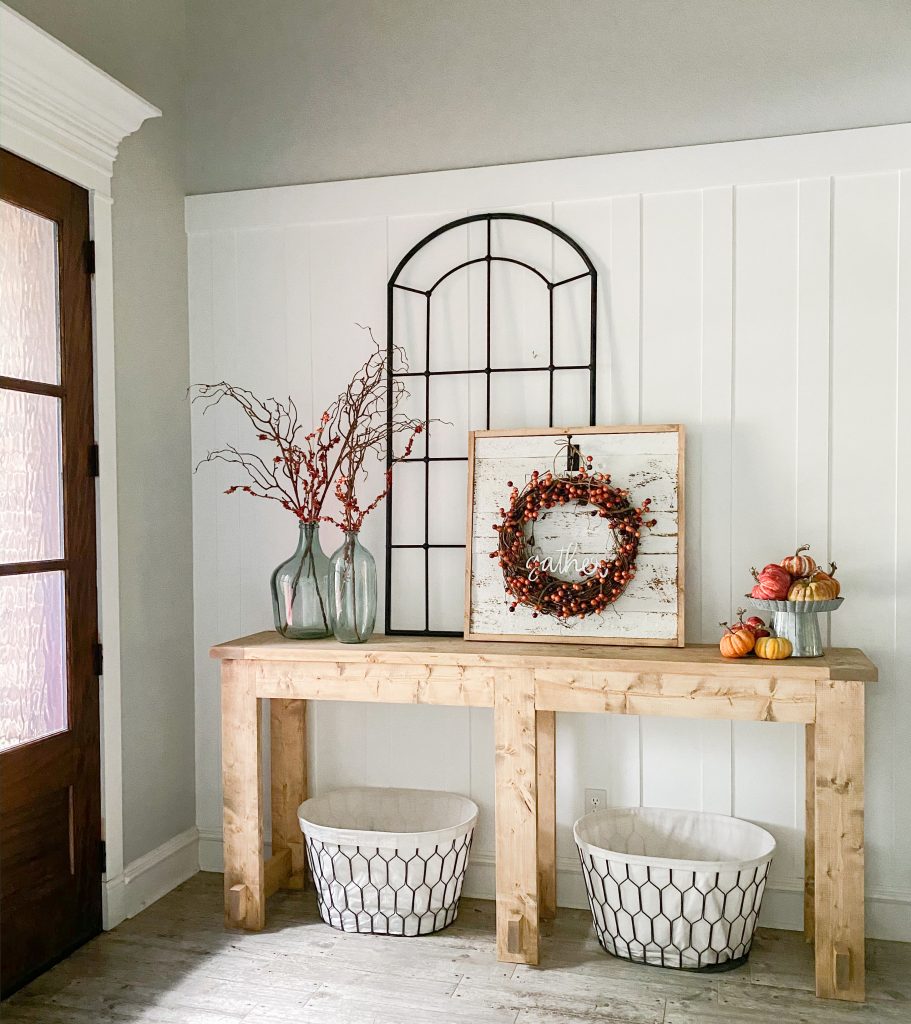
I finished my console table with an equal-parts mixture of two wood stains. I love mixing stain colors because it gives the wood a more custom look.
Stir the two stains together thoroughly and apply the mixture as you normally would.
Allow the stain to dry according to the manufacturer’s instructions before adding a protective topcoat or decorating the table.

Notes
Always test the color on a scrap from the same lumber before staining the finished table because different boards can absorb stain differently.
I love how much character this table added to my entryway. The chunky base feels substantial, but the narrow shape still leaves plenty of open space around it. I originally styled mine for fall and Thanksgiving, but it is easy to change the decorations for any season or leave it styled with everyday pieces.
Here she is all finished up!
Expert Tips
A few small checks during assembly can make a big difference in the finished table.
- Rip the boards carefully so pieces that should match are the same width.
- Build the two “E” end assemblies together and compare them before moving on.
- Check the base for square before fully tightening the screws.
- Drill pilot holes before driving wood screws near the ends of the boards.
- Assemble the tabletop on the flattest surface available.
- Measure the 1/2″ overhang on every side before attaching the top.
- Test your stain mixture on scrap wood before applying it to the table.
Ways to Customize the Console Table
The simple design makes this farmhouse console table easy to change without altering the original construction.
- Paint the base and stain the top for a two-tone finish.
- Use one stain color instead of mixing two together.
- Distress the edges lightly for a more rustic farmhouse look.
- Style it in an entryway, behind a sofa, or as a narrow accent table in a dining or living room.
You can also adjust the length to fit your space, but remember that changing the overall dimensions will require changes to the cut list and may affect the placement of the supports.
Frequently Asked Questions
The original build requires a table saw because the 2×6 boards are ripped to 4″ and 5″ widths. A lumber supplier may be able to rip the boards for you, but confirm that they can make accurate lengthwise cuts before purchasing the lumber.
Yes. Sand the table thoroughly and prepare the wood with the primer recommended for your chosen paint. Painting the base and staining the top would also give the table a two-tone finish.
Confirm that each board was ripped to the same 4″ width and that the cuts are straight. Assemble the top on a flat surface, line up the ends, and use clamps to keep the boards from moving while tightening the pocket-hole screws.
You can sand the individual boards before assembly to make some areas easier to reach, but the completed table should still receive a final sanding. This helps smooth the joints, edges, and any small differences between neighboring boards.
More DIY Console Table Projects
If you want another console table style, we have several free plans to choose from. Our DIY Rustic Modern Console Table pairs a chunky wood top with a cleaner, more modern base, while the DIY Waterfall Console Table has simple lines and a solid wood waterfall design that cost under $100 in lumber. For another versatile build made with only a few tools, check out our DIY Wood Console Table. You can also browse all of our free buffet and console table plans to find the best size and style for your space.
The free printable plans and How-To Card are below. If you build your own farmhouse console table, we would love to see it! Share a photo and tag us on Instagram or use #shanty2chic so we can check it out. You can also leave a question, comment, or project rating below. It helps us so much!
Happy Building!
DIY Farmhouse Console Table
Tools
- Table Saw
- Miter Saw
- Pocket-hole jig
- Drill or impact driver
- Brad nailer or finish nailer
- – Orbital sander
- Tape Measure
- Pencil
- Speed square or carpenter’s square
- – Clamps
- Safety glasses
- Hearing protection
- Dust mask or respirator
Supplies
- 8 – 2×6×8 framing lumber boards ripped to 4″ and 5″ widths
- 2 1/2″ pocket-hole screws Several
- 2 1/2″ wood screws Several
- 2″ brad nails or finish nails Several
- Wood glue
- 2 wood stain colors mixed in equal parts
Instructions
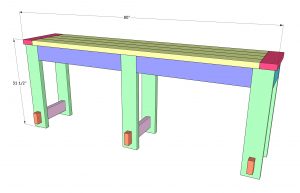
- Rip all boards to size first. I like to make my cross cuts first, and thenrip each board to either 4” or 5” to make it easier to push through the table saw. Each side will be an “E” shape. Build 2 of these that are identical. The boards on this part are ripped to 5” wide each. Add 1.5” pocket holes to each board and attach the aprons to each leg using wood glue and 2.5” pocket hole screws. The top of the legs will be flush with the top of the aprons.

- Attach the smaller aprons to one of your “E” shapes. These aprons will be flush with the top and side of the outside legs. Attach the apron using wood glue and 2.5” pocket hole screws.

- Attach the second “E” shape next. You can either attach this with 2.5” pocket hole screws and wood glue, or wood screws. The width here is narrow, so I found it easier to use wood screws through the back legs and into the small aprons. I knew they would be on the back of the table and nobody would see them. I also placed the small leg supports in place to help hold things up on this part.

- The leg supports are ripped at 4” wide each and they are 12” long. I lined them up in place and marked where I wanted them with a pencil. Attach them using wood glue and 2.5” wood screws through the legs and into the support boards. Don’t worry about the screws showing on this part because they will be covered in a later step.

- Now attach the small decorative pieces. These are so cute and will also cover up those screws we used on the last step. Attach these pieces using wood glue and 2” brad or finish nails. There will be 6 total, one on the bottom of each leg.

- The top planks are ripped to 4” each. Add 1.5” pocket holes where shown. Attach everything using 2.5” pocket hole screws.

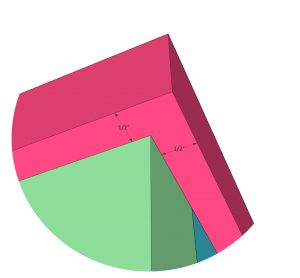
- Attach the table top to the base using wood glue and 2.5” pocket hole screws through the base and into the top. You will have a 1/2” overhang on both the front and back and sides on each corner.

- This is the spacing of the table top.


Video
Notes
Important Measurement Notes
- The original plan is designed around 2×6 boards ripped to 4″ and 5″ widths.
- Adjusting or skipping the ripping step will change the finished measurements and cut sizes.
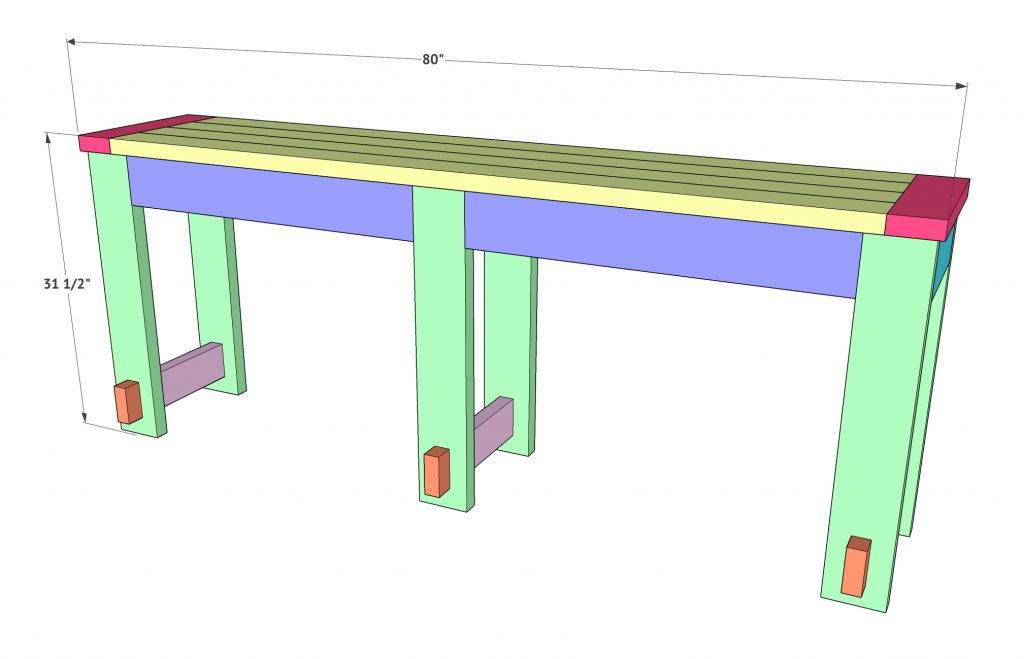
- The two matching end assemblies use boards ripped to 5″ wide. Each leg is 30″ long.
- Each long apron section is 32″ long.
- The shorter side aprons are 12″ long.
- The assembled table base is 79″ long and 15″ deep.
- The leg supports are ripped to 4″ wide and cut to 12″ long.
- The leg supports sit approximately 2″ above the bottom of the legs.
- The six decorative leg pieces are 2″ wide × 4″ long.
- The four tabletop planks are ripped to 4″ wide and cut to 72″ long.
- The tabletop end pieces are 4″ wide × 16″ long. The assembled tabletop measures 80″ long × 16″ deep.
- Center the tabletop over the base to create a 1/2″ overhang on every side.
- Drill 1 1/2″ pocket holes where shown in the plans.

This is a beautifully crafted DIY project that showcases the timeless appeal of farmhouse-style furniture. The console table has a clean, versatile design that can complement a variety of home interiors, and the detailed tutorial makes it approachable for both beginners and experienced woodworking enthusiasts.
Building furniture that lasts starts with thoughtful design and high-quality materials. For anyone planning similar DIY furniture projects, https://www.plywoodbazar.com is a useful resource to explore a wide range of plywood, boards, laminates, and other interior materials for achieving durable and professional-looking results.
Thank you for sharing such a well-explained and inspiring tutorial. It’s a great resource for anyone passionate about woodworking and handcrafted furniture.