
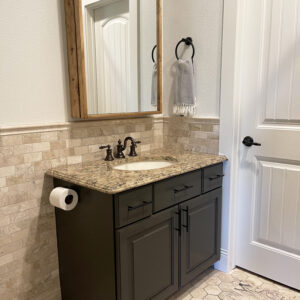
Painting a bathroom vanity cabinet is one of the most affordable ways to update a bathroom without replacing the countertops, tile, or cabinet itself. I painted my daughter’s vanity a deep bronze, added new cabinet pulls, and gave the entire space a completely different look for a fraction of the cost of a full renovation.
I had already finished updating my boys’ bathroom (you can find that bathroom renovation here), and my daughter’s bathroom was next on my list. New countertops and tile were not in the budget, so I worked with what we already had. Along with painting the vanity, I built her a custom sliding vanity mirror ( You can find the plans for the Sliding Vanity Mirror here!), and the two projects made such a HUGE difference in the room. Come check out how her new vanity looks! Check it out here!
Table of Contents
Why I Love This Bathroom Vanity Makeover
A fresh coat of cabinet paint and new hardware gave this older vanity a completely updated look without tearing anything out.
- It costs much less than replacing the vanity.
- The original countertops and tile can stay in place.
- Cabinet paint creates a durable, furniture-like finish.
- New hardware adds another update without much extra work.
- The paint color and pulls can be customized to fit any bathroom.
- Most of the work can be completed with basic painting tools.
Key Tools and Supplies:
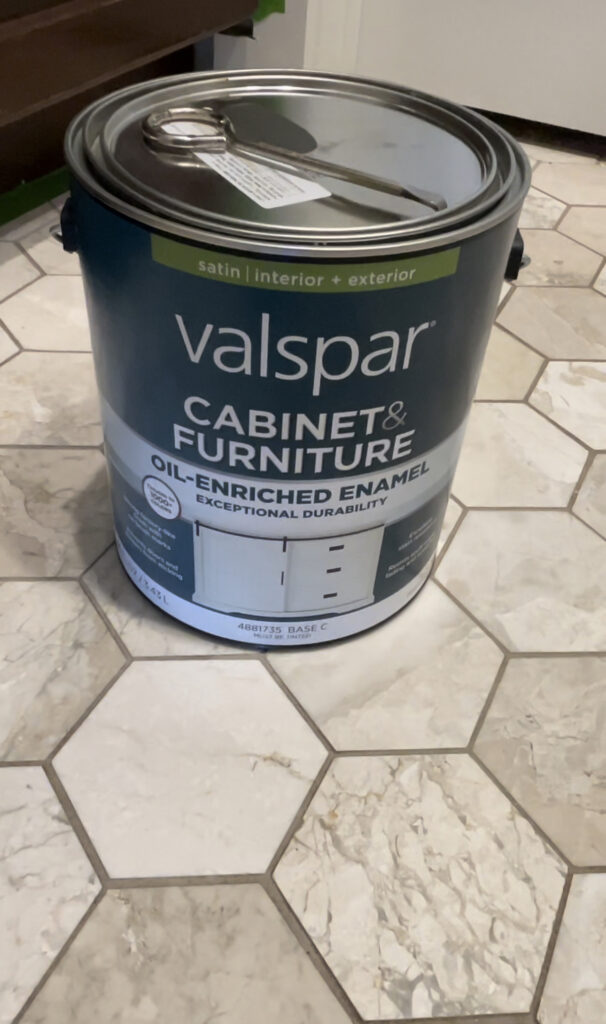
Cabinet and Furniture Paint. I used Valspar Cabinet and Furniture Paint tinted in Urbane Bronze with a satin sheen. The self-leveling formula helped create a smooth finish without noticeable brush marks, and it is made for surfaces that get regular use.
The amount of preparation needed will depend on the condition and finish of your cabinet. My vanity was in good condition, so I cleaned it thoroughly and followed the preparation directions for the paint I used. Always check the instructions on your current paint label before skipping sanding or primer.
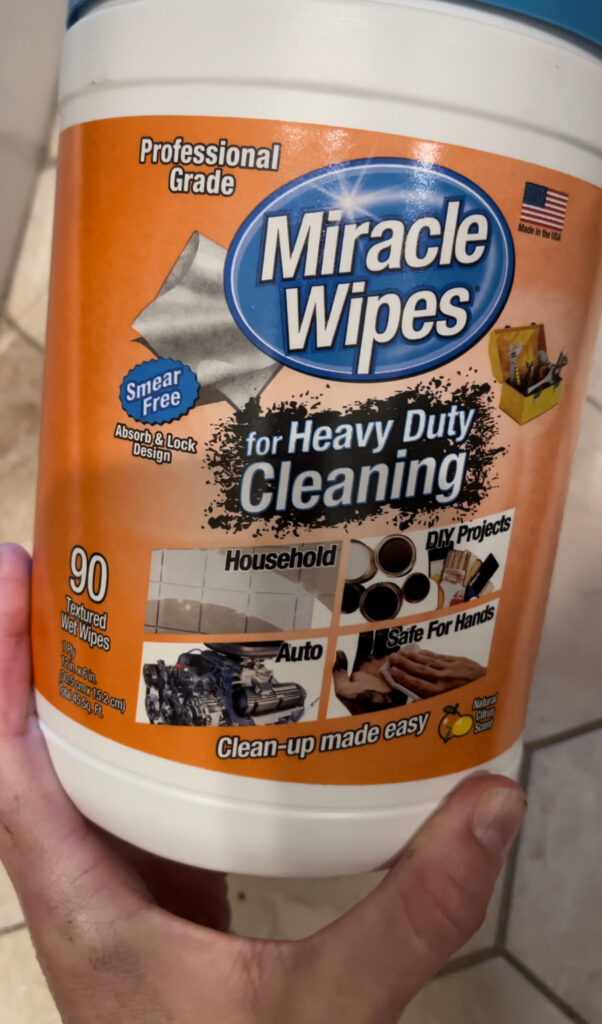
Degreasing Wipes. Cleaning is one of the most important parts of this project. Bathroom cabinets collect dust, skincare products, soap residue, and oils that can keep paint from bonding properly. I used degreasing wipes to clean the cabinet doors, drawer fronts, and vanity frame before painting. They were also helpful for cleaning small paint smears from the tile and inside the cabinet.
Paint Roller and Paint Brush. I used a brush to reach the corners, trim, and detailed areas of the vanity. A small roller worked better on the flat cabinet surfaces and helped create a smoother finish.
Kreg Project Blocks. The Kreg Project Blocks lifted the cabinet doors away from my work surface while I painted them. The adjustable tips make it easier to reach the edges without laying a freshly painted door flat on the floor or workbench.
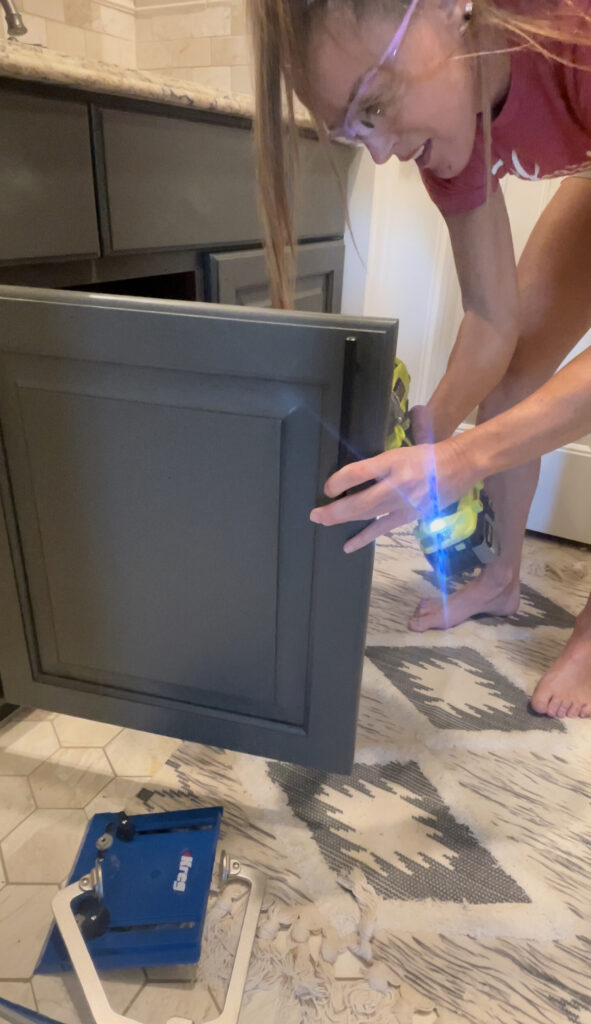
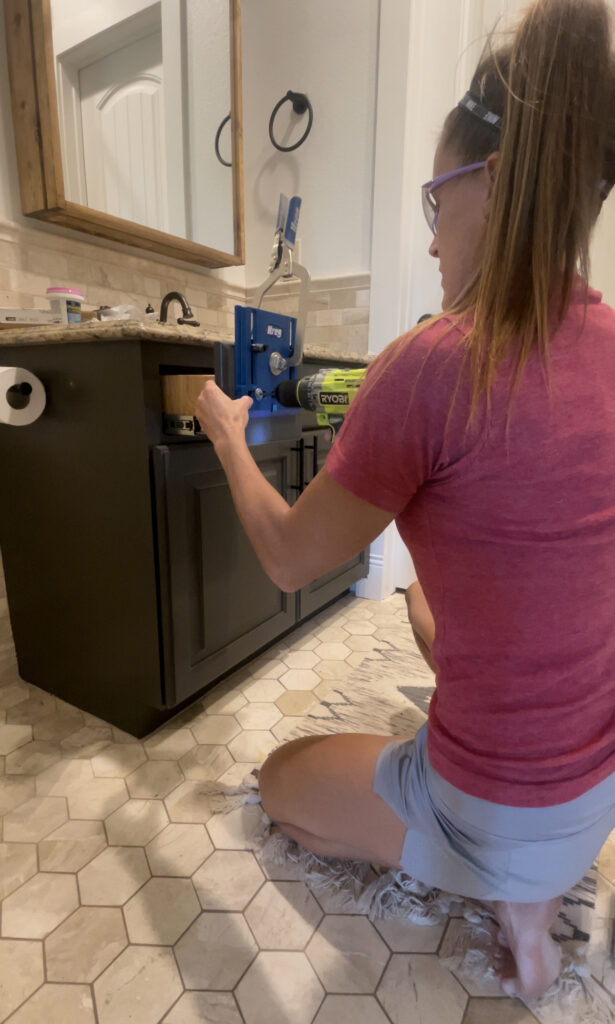
Kreg Hardware Jig. I used the Kreg Cabinet Hardware Jig to keep the new pulls straight and evenly spaced. Once the jig is adjusted for the hardware, the same hole placement can be repeated across all the doors and drawer fronts.
Other Supplies:
How to Paint a Bathroom Vanity Cabinet
I’ll walk you through the entire makeover below, from removing the old hardware to installing the new cabinet pulls.
Preparing the Bathroom Vanity for Paint
Step 1: Remove the Cabinet Hardware
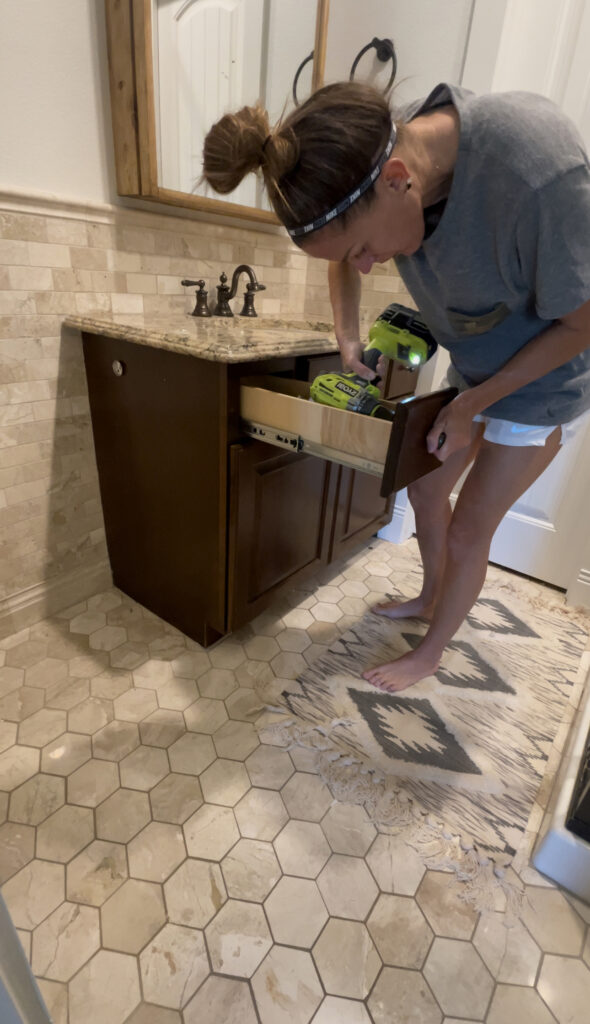
Start by removing the existing knobs or pulls with a drill or screwdriver.
Place the old screws and hardware in a container if you plan to reuse them. Even when installing new hardware, I like to keep the original pieces together until the project is finished.
I also removed the cabinet doors and hinges from the vanity. Labeling each door and hinge location can make reassembly much easier, especially on a larger cabinet.
Step 2: Protect the Countertop, Walls, and Floor
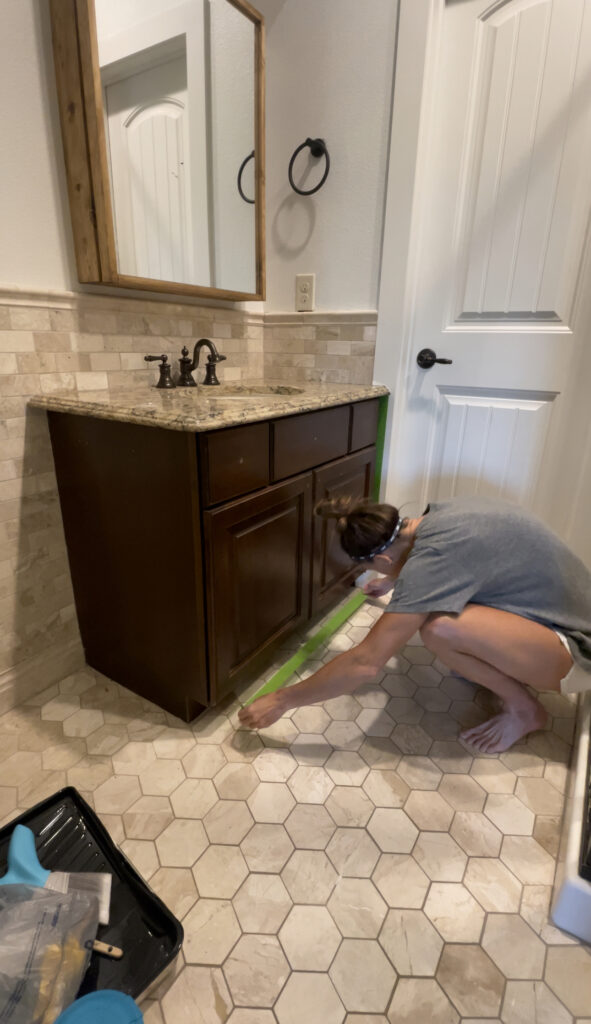
Use painter’s tape around the edges where the vanity meets the walls, tile, countertop, or floor.
I originally chose not to use a drop cloth because the tile was easy to wipe clean and I was working carefully. Still, covering the floor is the safer choice, especially when painting over carpet, wood flooring, grout, or another surface that may stain.
Press the tape down firmly along the edges so paint does not seep underneath it.
Step 3: Clean the Cabinet Thoroughly
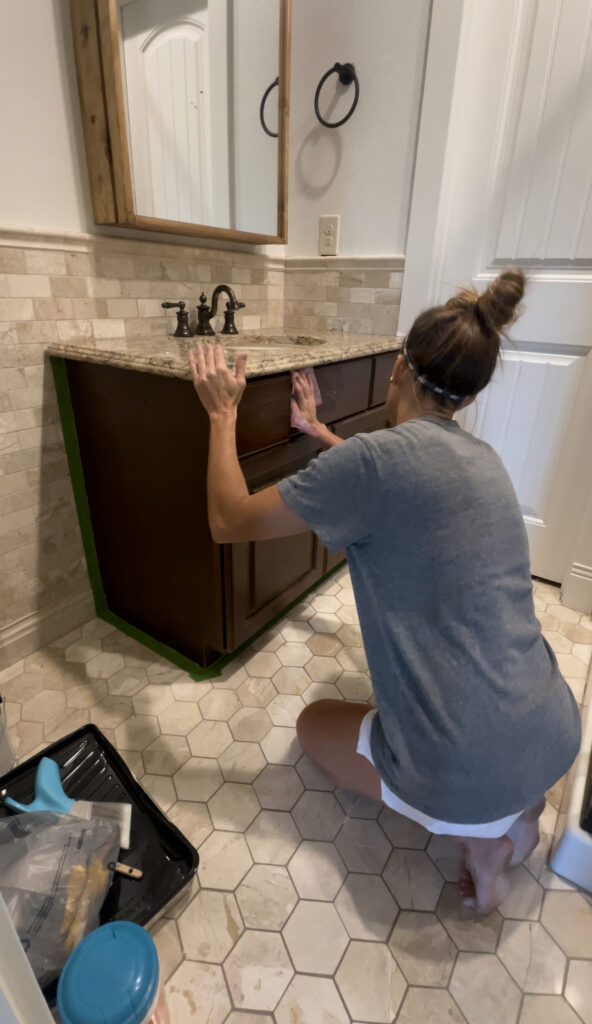
Wipe down every surface that will be painted with a degreasing cleaner. Pay close attention to the areas around the handles and the tops of the doors and drawer fronts, where residue tends to collect.
Clean the cabinet frame, doors, drawer fronts, edges, corners, and any trim. Allow everything to dry completely before moving on.
Do not paint over dust, grease, cleaner residue, or loose finish. The final paint job is only as good as the surface underneath it.
Step 4: Fill the Old Hardware Holes
My new cabinet pulls did not use the same hole placement as the old knobs, so I filled the existing holes with wood filler.
Press the filler firmly into each hole with a putty knife. Scrape away the excess and let it dry according to the product directions.
Once dry, smooth the repaired areas as needed so the filled holes do not show through the new paint.
If your new hardware will use the existing holes, you can skip this step.
Painting the Bathroom Vanity
Step 5: Paint the Vanity Frame and Drawer Fronts
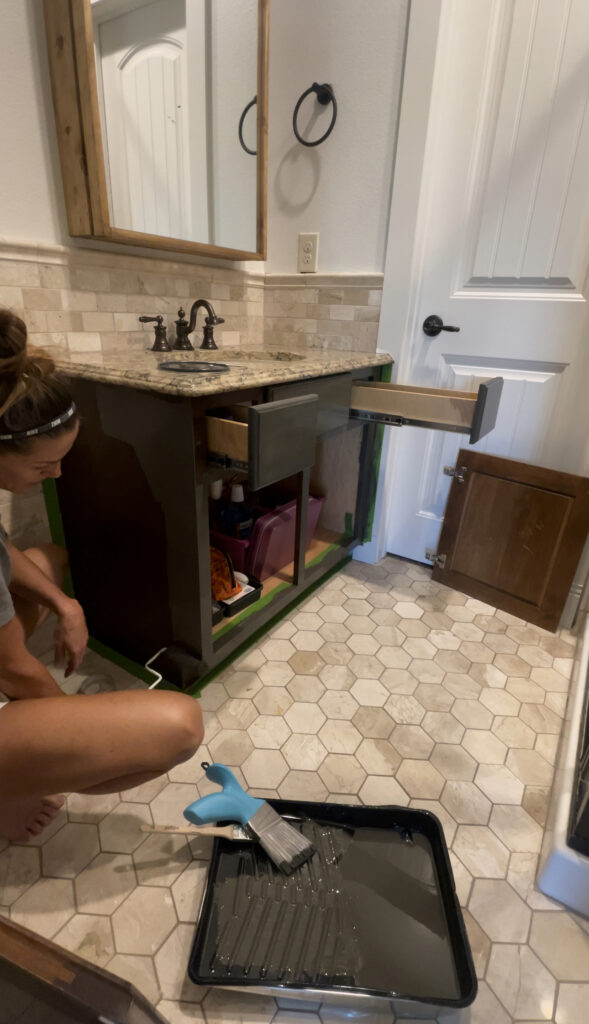
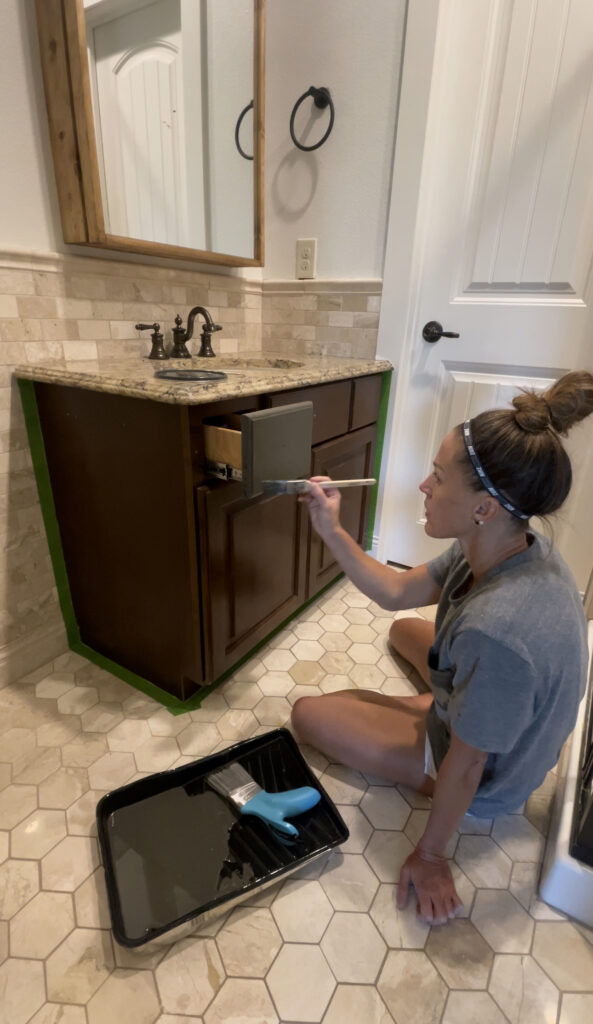
I pulled the drawers out slightly so I could paint the drawer fronts and cabinet frame without removing the entire drawer assembly.
Use a paintbrush to cut in around corners, trim, recessed areas, and anywhere the roller cannot reach. Then use a small roller on the larger flat surfaces.
Apply the paint in thin, even coats. Heavy coats are more likely to drip, collect along the edges, or take longer to dry.
Roll in the direction of the wood grain when possible, and check the corners and lower edges for drips before leaving the paint to dry.
Step 6: Paint the Cabinet Doors
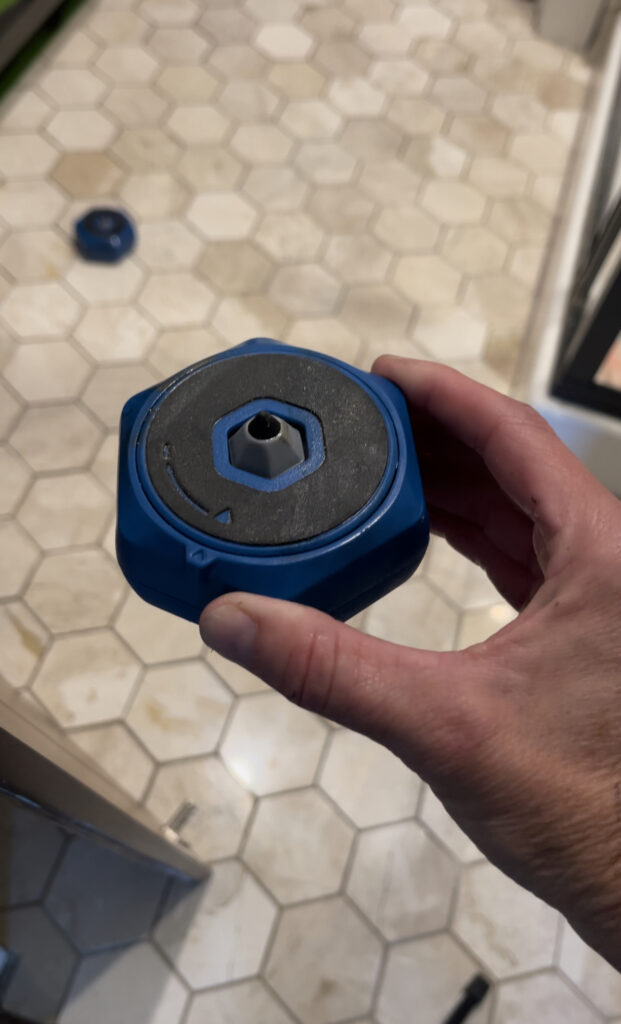
Set the cabinet doors on Kreg Project Blocks or another stable painting support. Lifting the doors off the work surface makes it easier to paint the face and edges cleanly.
You can find the Kreg Project Blocks here
I used the same brush-and-roller method on the doors. The brush worked well around the inside details, while the roller gave the flat areas a smoother finish.
Watch for paint collecting inside the corners or along the lower edge of the door. Smooth those areas before the paint begins to set.
Let the first side dry as directed before turning the doors over or handling them.
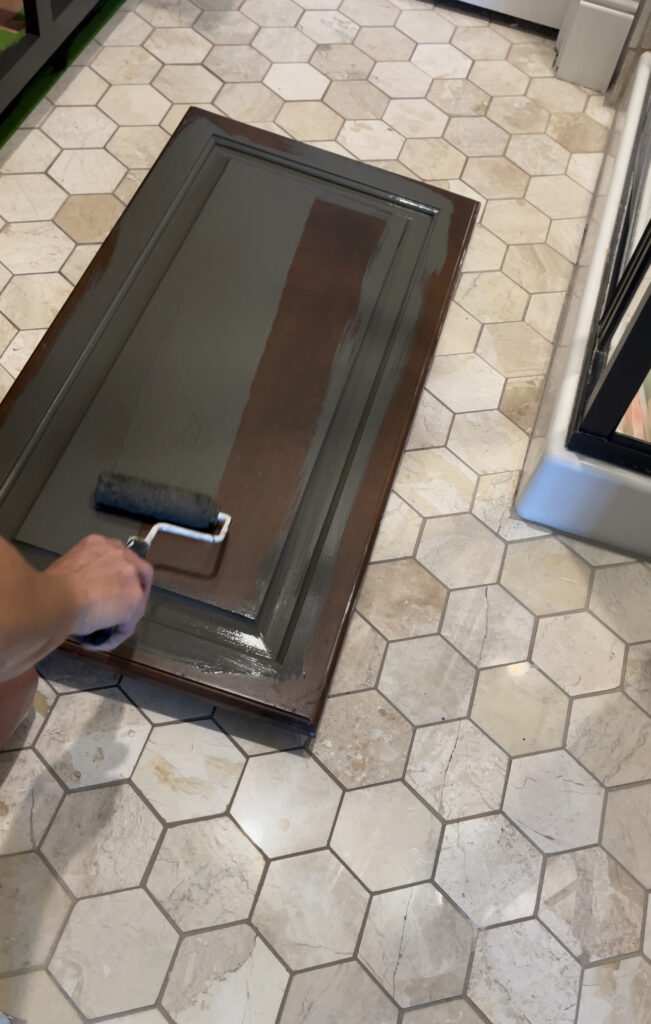
Step 7: Apply the Second Coat
Once the first coat was dry, I applied a second coat to the vanity frame, drawer fronts, and cabinet doors.
Two thin coats gave me better, more even coverage than one heavy coat. I let the final coat dry overnight before installing the new hardware.
Dry paint is not always fully cured paint. Handle the doors carefully during reassembly and follow the paint manufacturer’s current instructions for recoating, handling, and full cure time.
Reinstall the Cabinet Doors
Once the paint is dry enough to handle, reinstall the hinges and cabinet doors.
Adjust the hinges as needed so the spacing around the doors looks even. Avoid tightening hardware so aggressively that it dents or twists the freshly painted surface.
Installing the New Cabinet Hardware
Step 8: Set Up the Cabinet Hardware Jig
I used my Kreg Cabinet Hardware Jig to position the new cabinet pulls.
First, measure the distance between the two screw holes on the pull. Adjust the jig to match that measurement, then set the distance from the edge of the door or drawer front.
Test the jig placement before drilling the first hole. This is especially important after filling the original hardware holes.
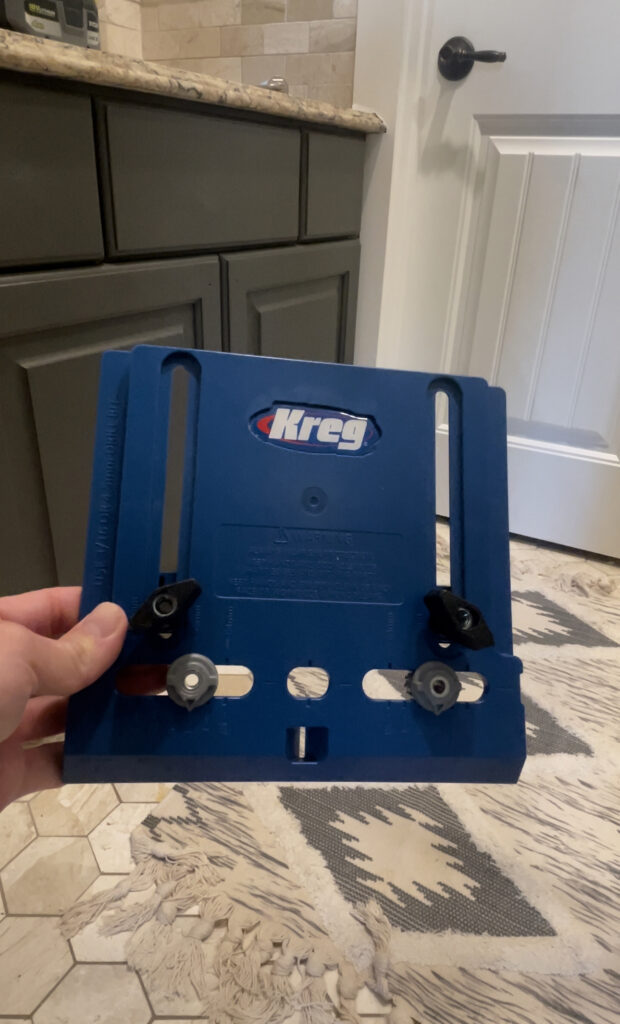
Step 9: Drill the Hardware Holes
Clamp or hold the jig securely against the cabinet door or drawer front.
You can find the Kreg Hardware Jig here
Use a drill bit that matches the diameter of the hardware screws and drill through the guide holes in the jig. Keep the drill straight so the screws will pass through cleanly.
A scrap piece of wood held against the back can help reduce tear-out as the drill bit exits the cabinet door.
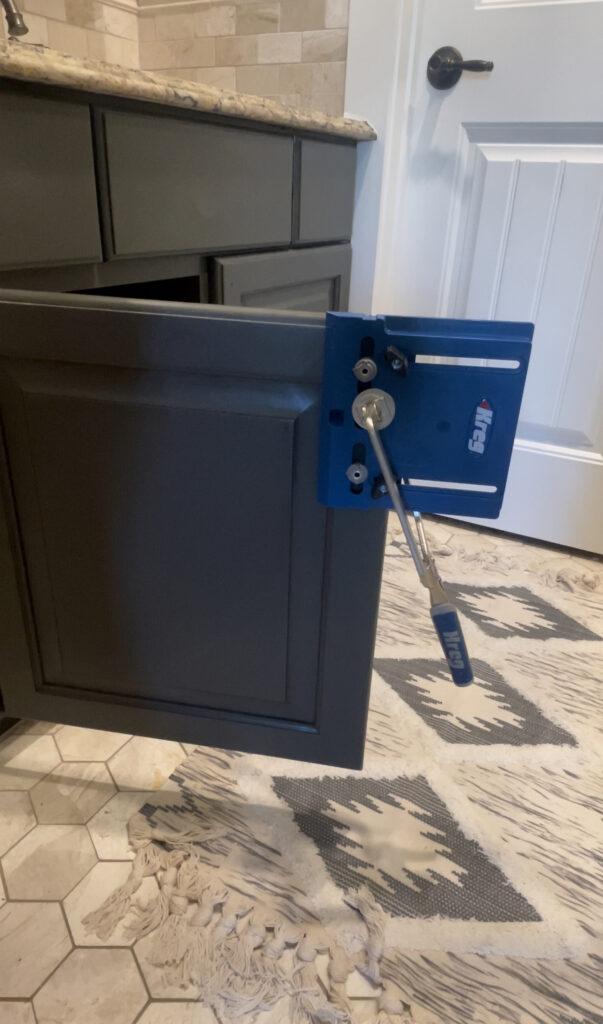
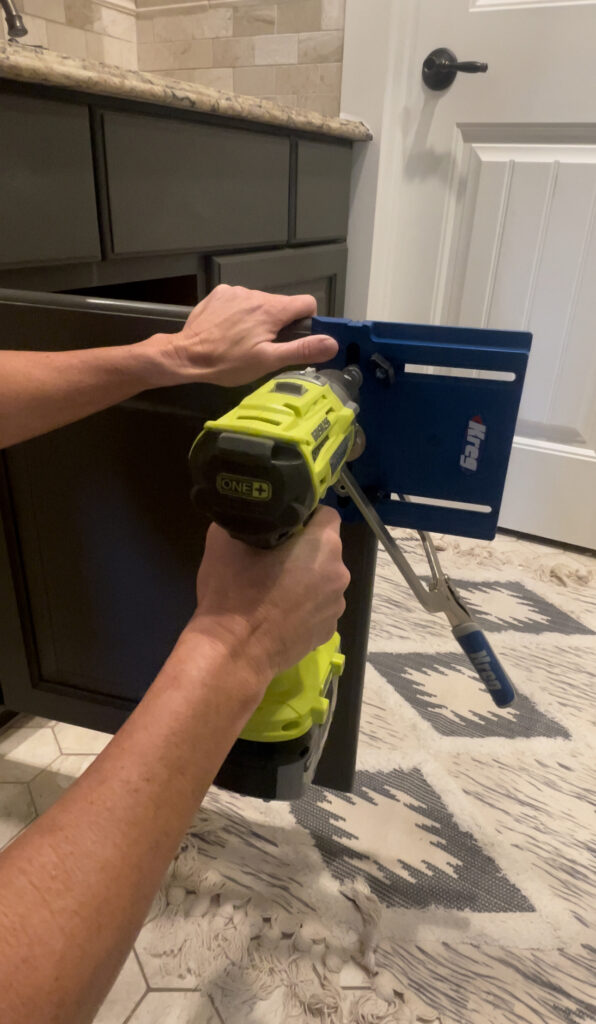
Step 10: Install the Pulls
Remove the jig and attach the cabinet pull with the included screws.
Check that the first pull is straight before drilling the remaining doors and drawers. Once the jig is set correctly, repeat the same placement across all the drawer fronts, cabinet doors, and the center faux drawer.
The Finished Bathroom Vanity
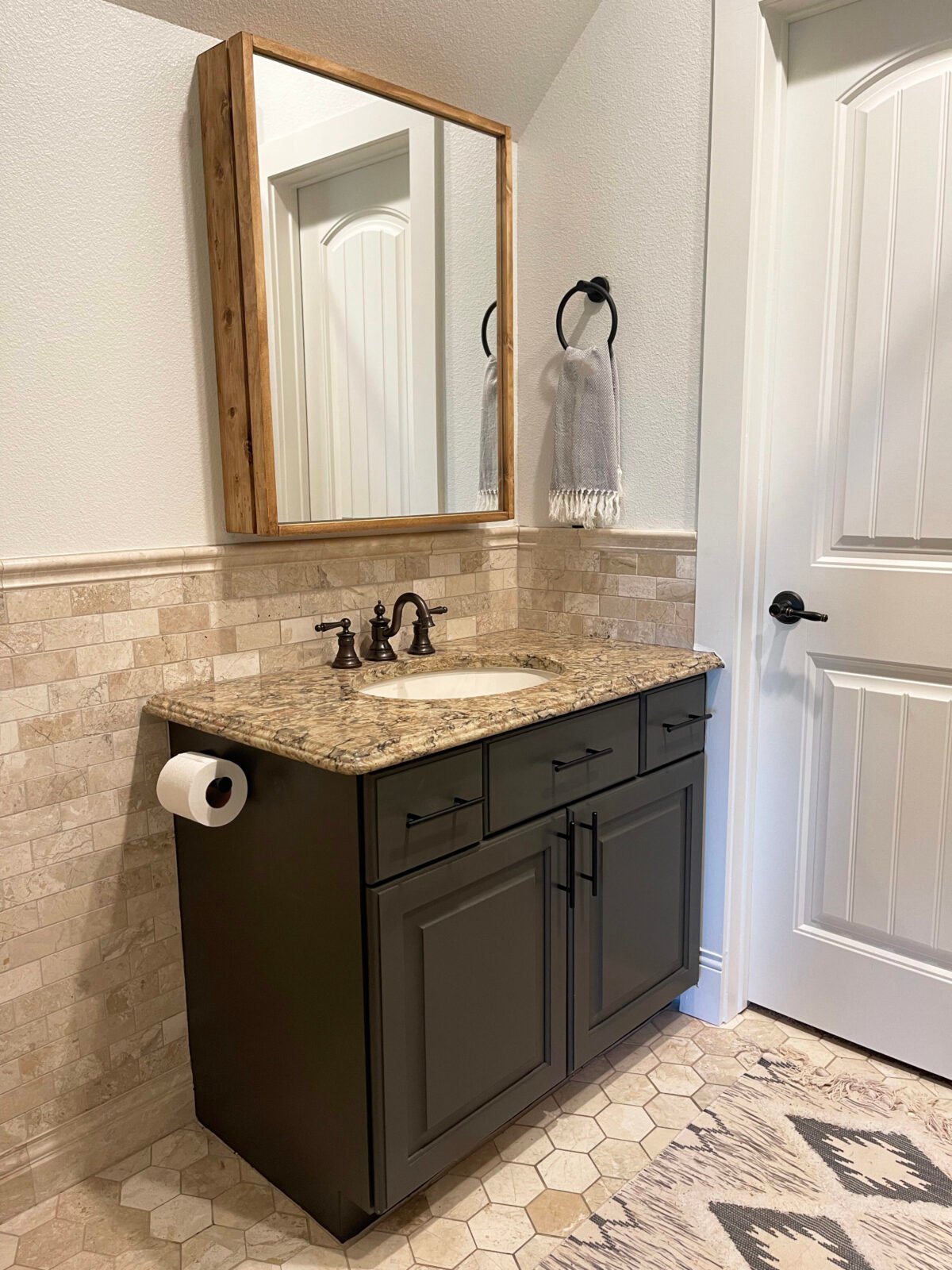
I love how much this paint makeover changed the bathroom without replacing the countertops, tile, or vanity. The Urbane Bronze paint and new cabinet pulls gave the existing cabinet a completely different look while keeping the renovation within my budget.
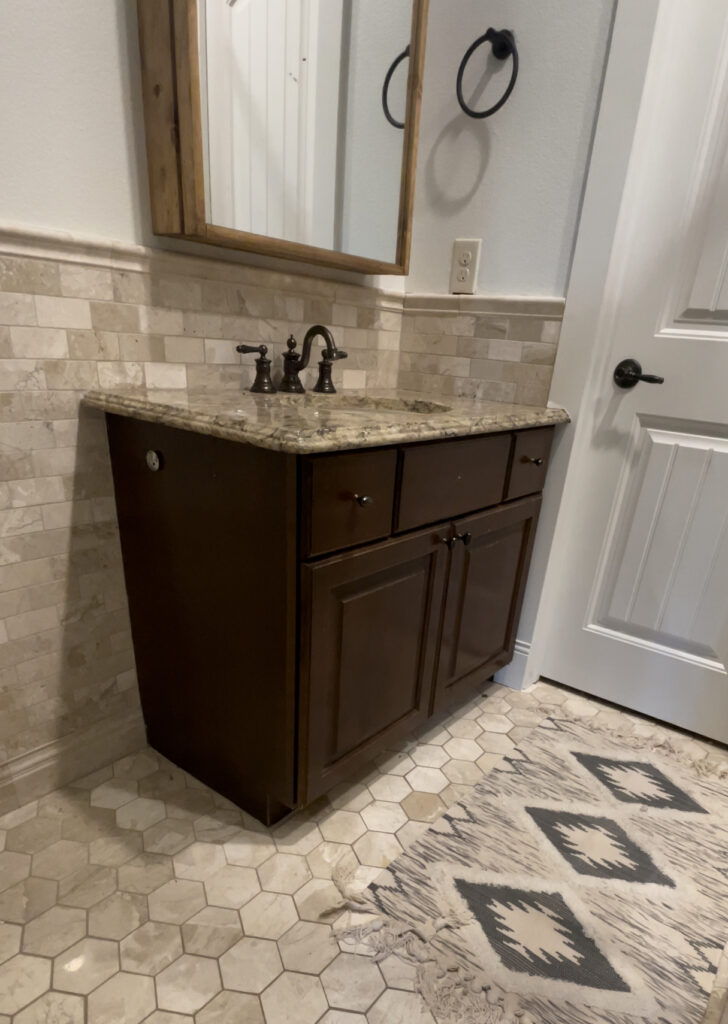
Before:
After:
Expert Tips
A few small details can make a big difference in the final result.
- Clean more thoroughly than you think you need to. Paint will not bond well over oils or cleaner residue.
- Follow the preparation directions on the specific paint can. Different surfaces may require sanding, deglossing, or primer.
- Use thin coats instead of trying to cover everything at once.
- Check corners and lower edges for drips after brushing and rolling.
- Let each coat dry completely before applying the next.
- Give the finish time to cure before heavy cleaning or daily use.
- Label the doors and hinges before removing them.
- Test the hardware jig on scrap wood before drilling into the cabinet.
- Keep a small amount of leftover paint for future touch-ups.
Bathroom Vanity Paint and Hardware Variations
This makeover can be changed easily to work with the rest of your bathroom.
- Choose satin for a softer finish or semi-gloss for a little more shine and easier wiping.
- Replace the pulls with knobs, cup pulls, or another style that matches the faucet and lighting.
- Use a lighter neutral for a bright bathroom or a darker color to create contrast with light countertops.
- Keep the existing hardware when it is in good condition and the hole spacing still works.
- Paint only the vanity and leave the countertop, tile, and mirror unchanged for a smaller update.
Frequently Asked Questions
That depends on the cabinet surface and the paint being used. The vanity in this project was cleaned and painted according to the directions for Valspar Cabinet and Furniture Paint. Glossy, peeling, damaged, or laminate surfaces may require sanding, deglossing, or primer. Follow the instructions on your paint label and test adhesion before painting the entire vanity.
Use a durable paint made for cabinets, furniture, trim, or other high-use surfaces. A self-leveling cabinet enamel can help reduce visible brush marks and create a harder finish than standard wall paint.
I used both. A brush is helpful for corners, trim, recessed details, and edges. A small roller creates a smoother finish on larger flat surfaces.
Removing them makes it easier to paint the doors and vanity frame cleanly. It also helps prevent paint from building up around the hinges.
I used two coats. Coverage can vary depending on the original cabinet color, the new paint color, the paint formula, and how thinly each coat is applied.
Yes. Reusing the current hardware is the simplest option when you like the style and it is still in good condition. If the new hardware uses different hole spacing, fill the old holes before painting and drill new ones after the paint has dried.
More DIY Bathroom Projects
Paint and new hardware made a big difference in this bathroom, but the custom mirror helped bring the entire update together. Take a look at my Sliding Vanity Mirror plans to see how I built the mirror above this cabinet. You can also see my boys’ bathroom renovation for more budget-friendly bathroom ideas.
Share your finished bathroom vanity with us on social media and use #shanty2chic so we can see and share your project too. Leave any questions below, and don’t forget to rate the tutorial if you found it helpful.
🛠️ Printable Tutorial
How to Paint a Bathroom Vanity Cabinet
Tools
- Drill or screwdriver
- Putty knife
- Paintbrush
- Small paint roller
- Paint tray
- Kreg Project Blocks or painting supports
- Kreg Cabinet Hardware Jig
- Drill bit sized for the hardware screws
Supplies
- Painter’s tape
- Drop cloth or floor protection
- Degreasing cleaner or wipes
- Wood filler
- Valspar Cabinet and Furniture Paint
- Cabinet pulls or knobs
Instructions
Remove the Hardware and Doors
- Remove the old cabinet hardware, doors, and hinges. Label the doors and hinges so they are easier to reinstall in the correct positions.
Protect the Surrounding Surfaces
- Tape around the countertop, walls, tile, and floor. Cover the floor with a drop cloth or another protective material.
Clean the Vanity
- Clean the cabinet frame, doors, and drawer fronts thoroughly with a degreasing cleaner. Let all surfaces dry completely.
Fill the Old Hardware Holes
- Fill any hardware holes that will not be reused with wood filler. Let the filler dry, then smooth the repaired areas as needed.
Paint the Vanity Frame
- Use a brush to paint the corners, trim, and detailed areas. Apply paint to the flat surfaces with a small roller.
Paint the Cabinet Doors
- Place the cabinet doors on Kreg Project Blocks or painting supports. Use a brush and roller to apply a thin, even coat.
Apply a Second Coat
- Let the first coat dry according to the paint directions. Apply a second thin coat to the cabinet frame, doors, and drawer fronts.
Drill for the New Hardware
- Adjust the cabinet hardware jig to match the spacing of the new pulls. Position the jig and drill the new hardware holes.
Install the Hardware
- Attach the new cabinet pulls or knobs with the included screws.
Reassemble the Vanity
- Once the paint is dry enough to handle, reinstall the doors and hinges. Adjust the hinges until the doors are straight and evenly spaced.
Notes
- The exact drying and curing time will depend on the paint, temperature, humidity, and number of coats applied.
- Follow the preparation, drying, recoating, and curing directions on the specific paint can.
- Some glossy, damaged, peeling, or laminate surfaces may require sanding or primer.
- Apply two thin coats instead of one heavy coat to help prevent drips.
- Check the corners and lower edges for paint buildup before each coat begins to dry.
- Cabinet paint may feel dry before it has fully cured.
- Handle the doors carefully and avoid heavy cleaning until the finish has hardened.
- Test the hardware jig placement before drilling all the doors and drawer fronts.
- Keep a small amount of leftover paint for future touch-ups.

Great tips! I loved how you broke down the process step-by-step. I’m excited to give my bathroom cabinet a fresh look using your techniques. Thanks for sharing!
Great tutorial! I love the step-by-step instructions and the photos really help visualize the process. I can’t wait to try this on my own bathroom cabinet. Thanks for the inspiration!
Great tips! I love the step-by-step approach you provided. Can’t wait to try this on my old bathroom cabinet—it’s in desperate need of a makeover! Thanks for the inspiration!
I loved your detailed step-by-step guide on painting a bathroom cabinet! The tips on prep work and choosing the right paint really helped me feel confident about tackling my own project. Can’t wait to see how mine turns out! Thanks for sharing!
I love the tips you shared for painting bathroom cabinets! The step-by-step instructions were super helpful, especially the part about prepping the surfaces. Can’t wait to give it a try in my own bathroom. Thanks for the inspiration!
Great tips! I love the idea of using chalk paint for a bathroom cabinet makeover. Can’t wait to try this out and give my space a fresh look!
I absolutely love the tips you shared in this post! Painting a bathroom cabinet seemed like such an intimidating task, but your step-by-step guide makes it feel achievable. I can’t wait to try this out in my own bathroom. Thanks for the inspiration!
This post is so helpful! I’ve been looking to refresh my bathroom cabinet, and your step-by-step guide makes it seem so doable. I especially love the tips on prep work—can’t wait to try it out! Thank you!
Great tips! I love how you broke down the process step by step. Can’t wait to try this on my own bathroom cabinet. Thanks for the inspiration!
I loved your detailed guide on painting bathroom cabinets! The step-by-step instructions made it so easy to follow. I can’t wait to try this out in my own bathroom. Thanks for sharing such practical tips!
I loved your step-by-step guide on painting bathroom cabinets! The tips on prepping the surfaces really made a difference, and I appreciate the product recommendations. Can’t wait to tackle my project using your advice!
Great tips! I love the idea of using a bright color to freshen up the space. Can’t wait to try this on my old cabinet. Thanks for sharing!
I’m unfortunately stuck in the brown phase. Haven’t redecorated since. The colors are always changing. What paint color did you use. It seemed to match the brown tile
Great transformation! I wonder if I could use that type of paint on my baseboards? If it’s a harder finish, that might work. I’ve used enamel paint but I want something better, stronger.
Love the transformation! I did have to laugh when you said the Kreg tool is “full-proof” because you don’t know me, I would mess it up! Then I re-read that sentence…the saying is actually “fool-proof” meaning even a fool could do it (again, I’d mess it up). Maybe it was just a typo? Either way it made me laugh.