
I built this DIY farmhouse crib while I was pregnant with my son, and it was definitely a labor of love! I wanted a lower-profile crib that was easier for me to reach into, with the chunky farmhouse look I love and a price tag much lower than buying a similar crib.
I built the entire crib for under $300 at the time, finished it in Varathane Briarsmoke, and used it through my son’s toddler years before passing it along to a friend. You can download the free plans below with the measurements, cut list, and diagrams I used for the original build.
Safety Notes
I built this crib in 2017 and used it through my son’s toddler years, but crib safety standards are very specific and can change over time. Before building or using any DIY crib, review the current CPSC requirements and make sure your finished crib meets all applicable safety standards for dimensions, slat spacing, mattress fit, hardware, mattress support, openings, finishes, and structural performance.
These plans share how I built my crib and my experience with it, but they have not been independently tested or certified to the current federal crib standard.
Table of Contents
Read This Before You Start
- Skill level: Intermediate (comfortable with basic power tools)
- Tools required: ** Drill, miter saw, Kreg Jig, nailer, sander, and table saw for the ripped boards (optional)
- Approximate build time: 1–3 days
- Cost at time of build: Under $300
- What I’d do differently today: See notes below
- Who this project is (and isn’t) for: ** DIYers who are comfortable making precise cuts, using a Kreg Jig, and assembling furniture while carefully following the plans and current crib-safety requirements.
Would I Build This the Same Way Today?
I built this crib in 2017, and I loved both the design and the finished piece. It held up through my son’s toddler years and was still a solid piece when I passed it along to a friend.
If I were building it again today, I would probably choose a lighter stain to give it a more modern look. And I might build it a little earlier in my pregnancy 😂. This one was definitely a labor of love!
Because crib safety standards are very specific, I would also review the current CPSC requirements before starting the build rather than relying only on an older set of plans.
Best part? I was able to build the original crib for under $300, and we have the free printable plans below!
Why I Love This DIY Farmhouse Crib
I designed this one around what I wanted in a crib for my own nursery.
- Lower-profile design – I wanted a crib that didn’t require me to reach as far down to pick up my baby.
- Under $300 when I built it – I got the chunky farmhouse look I wanted without buying an expensive crib.
- Free printable plans – the original plans include the measurements, diagrams, shopping list, and cut list.
- Farmhouse details – the barn-door-style headboard and metal corner hardware give this crib so much character.
How to Build a DIY Farmhouse Crib
You can download the complete printable plans below with the measurements, diagrams, shopping list, and cut list. I’ll walk you through how I built mine step by step here.
Step 1: Download and Review the Free Crib Plans
Start by downloading the free printable farmhouse crib plans. I recommend looking through the entire plan and cut list before making your first cut so you know how all of the pieces come together.
Build the Headboard
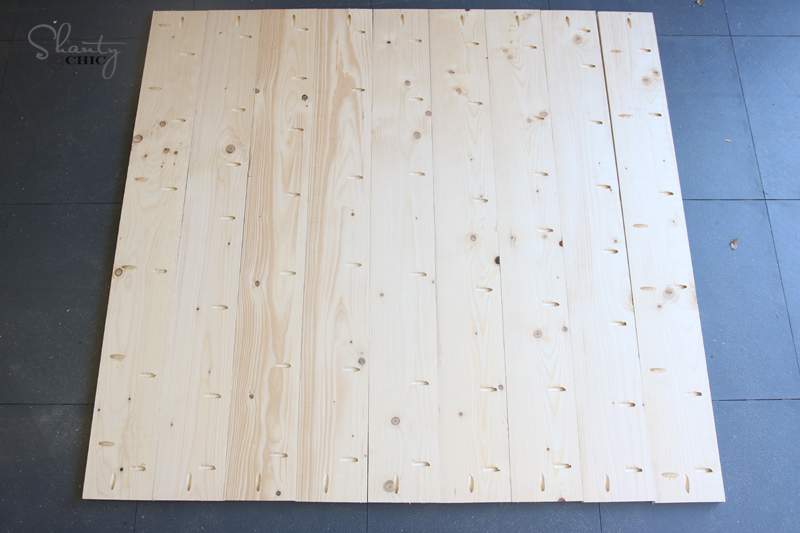
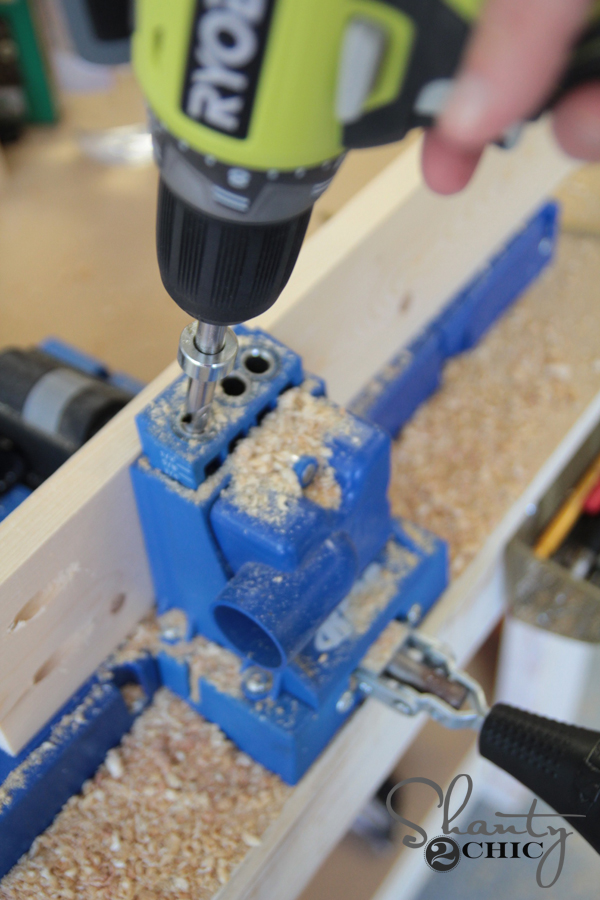
I started with the back of the crib. I used 1×6 boards for the planked headboard and joined the pieces with my Kreg Jig.
I also ripped the rounded edges from the 2×6 and 2×4 boards. This gives the boards straighter edges and creates cleaner joints when everything is assembled.
Follow the dimensions and layout in the printable plans when cutting and assembling these pieces.
Add the Barn Door Trim
Once the main headboard was assembled, I added the trim pieces to create the barn-door-style design.
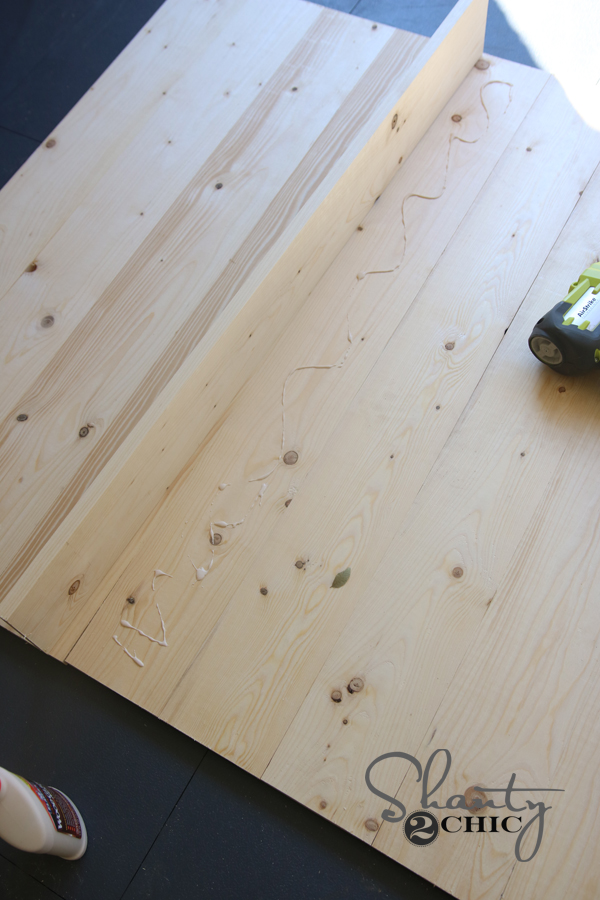
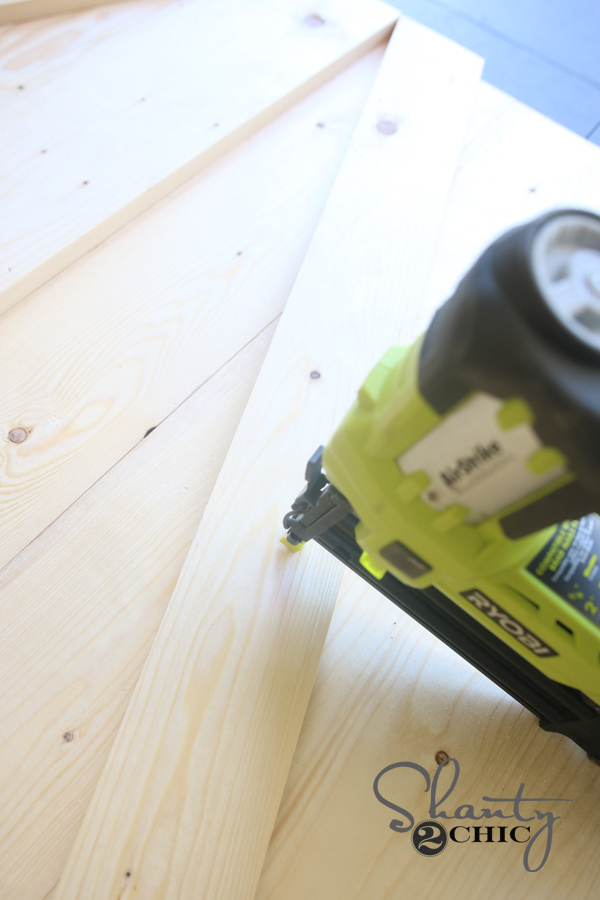
I attached these pieces with wood glue and finish nails.
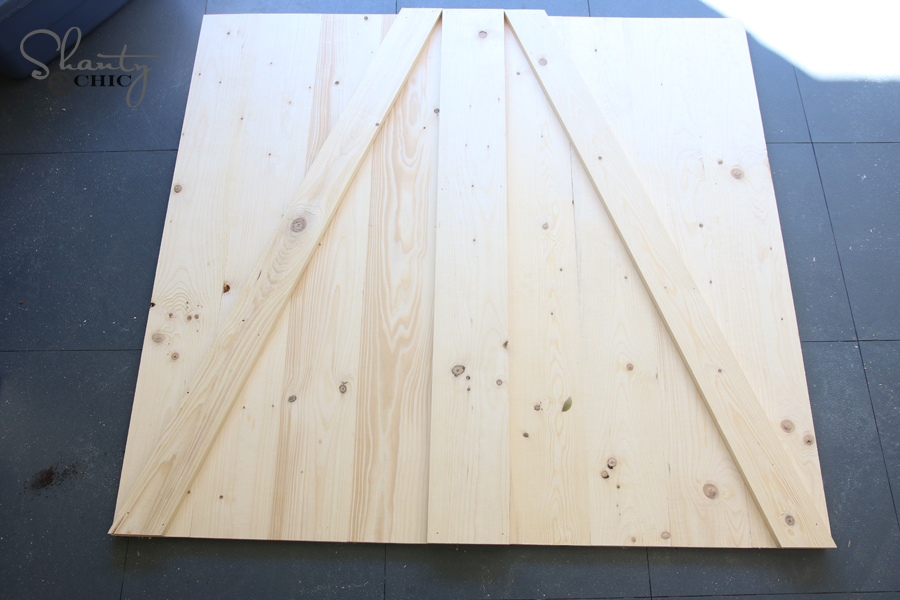
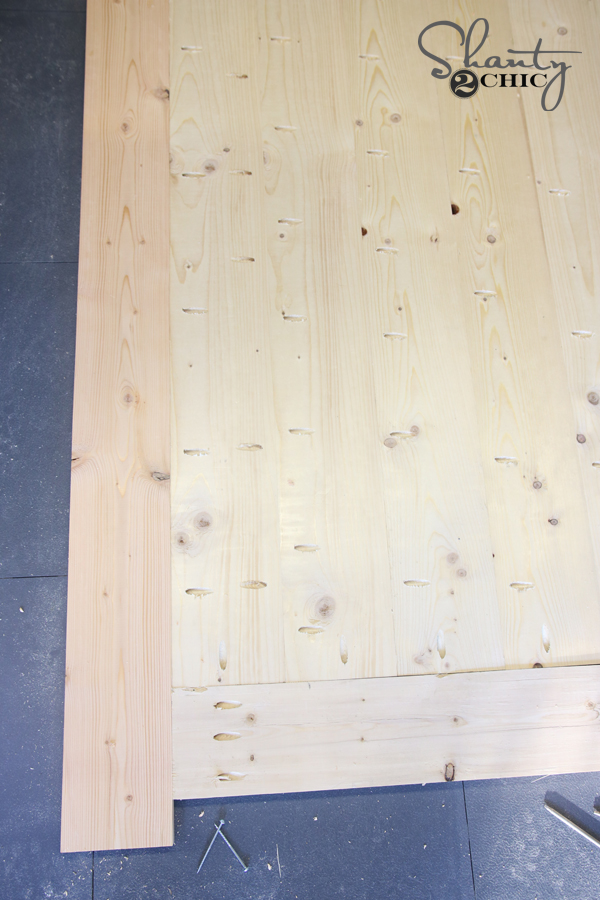
I love how much character these simple trim pieces add to the back of the crib!
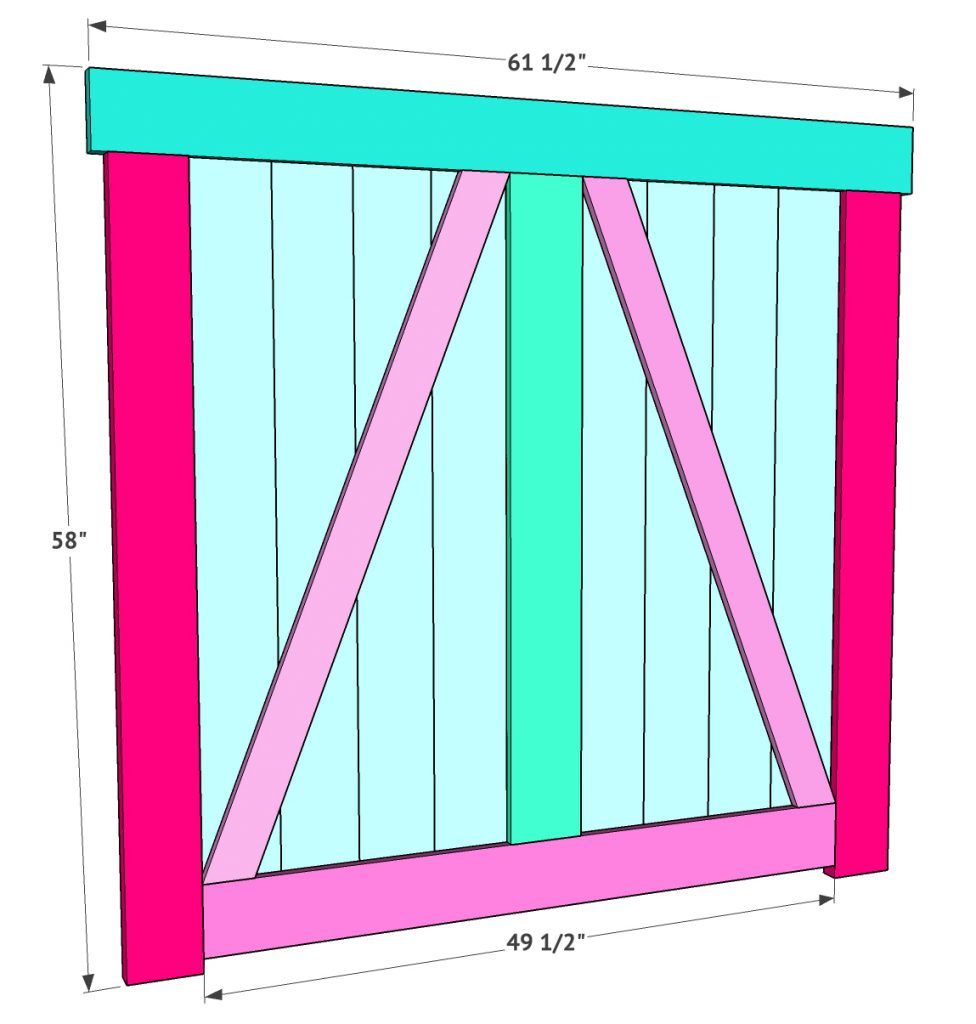
If you’re planning another bed build and want a larger-scale example, our DIY platform bed plans walk through similar measurement and structural decisions for a different mattress size.
Build the Side Panels
Next, I moved on to the two side panels.
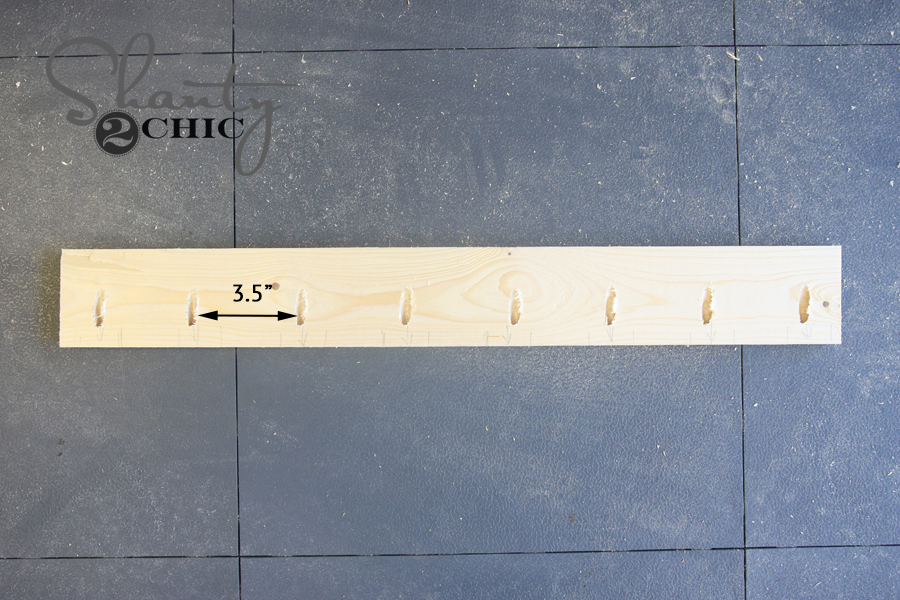
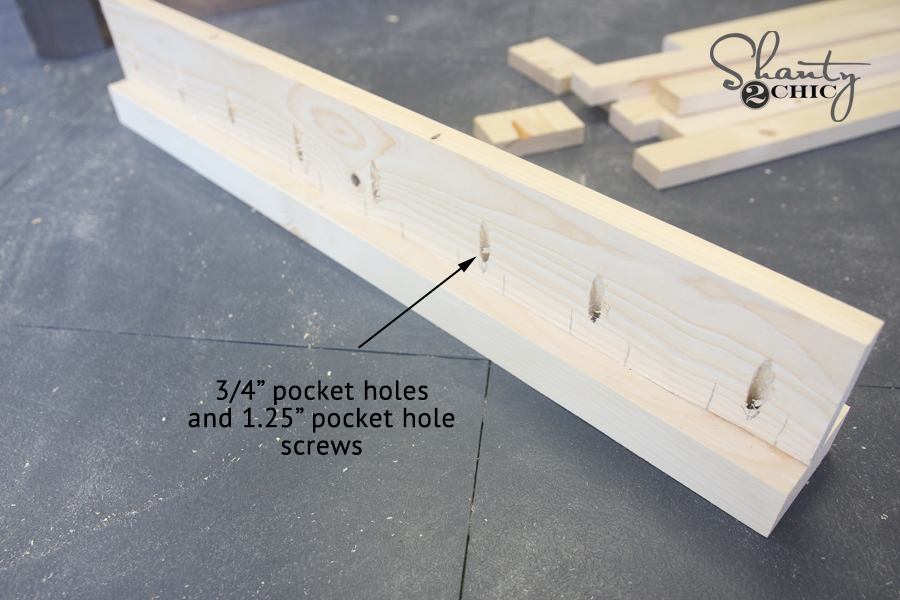
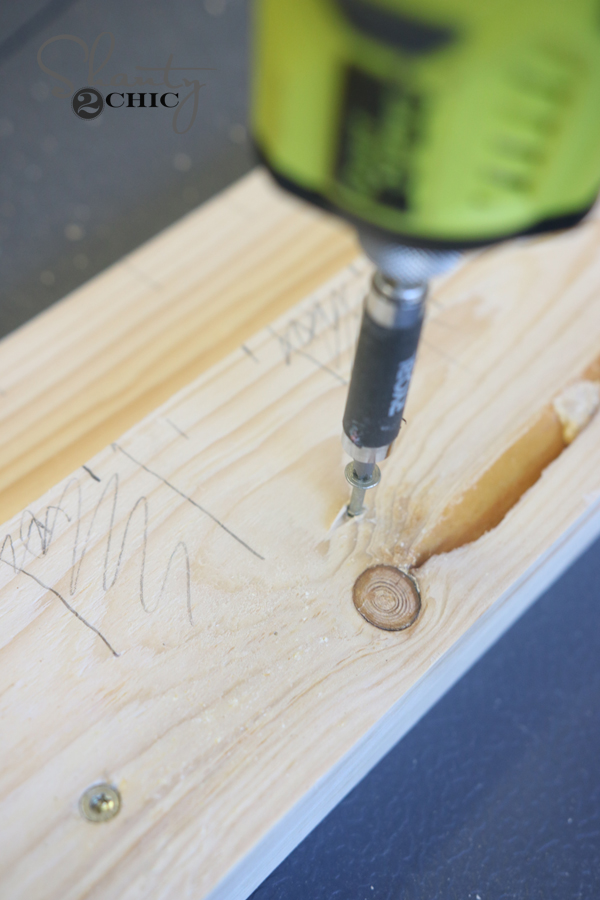
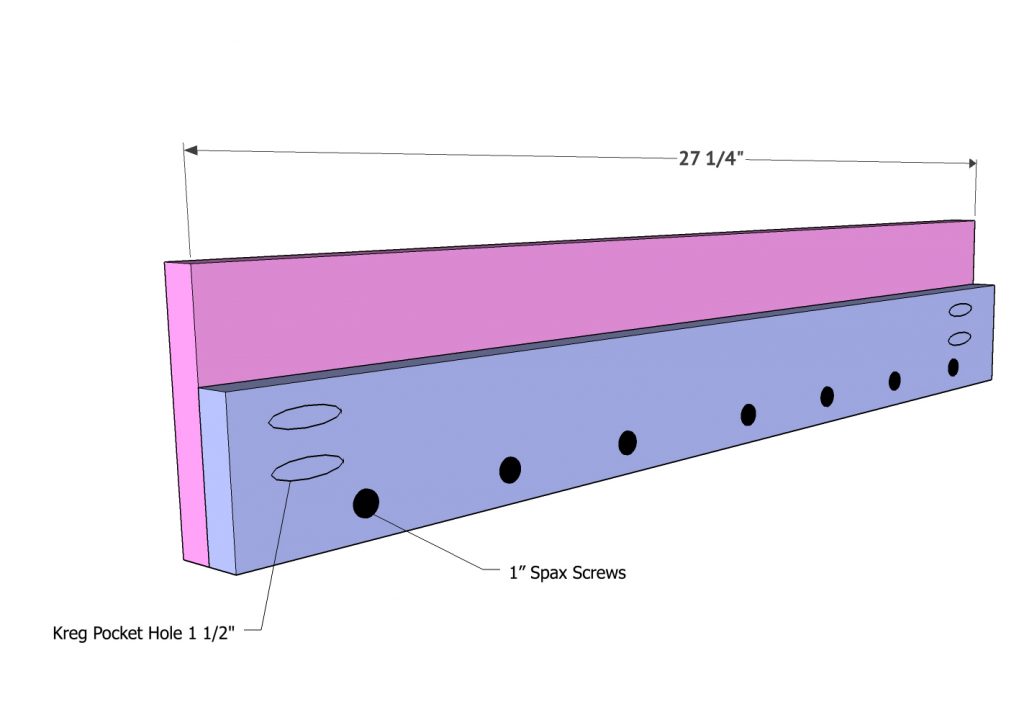
I drilled 3/4″ pocket holes where shown in the plans. Pay attention to where you place the pocket holes so they can be hidden once the remaining pieces are attached.
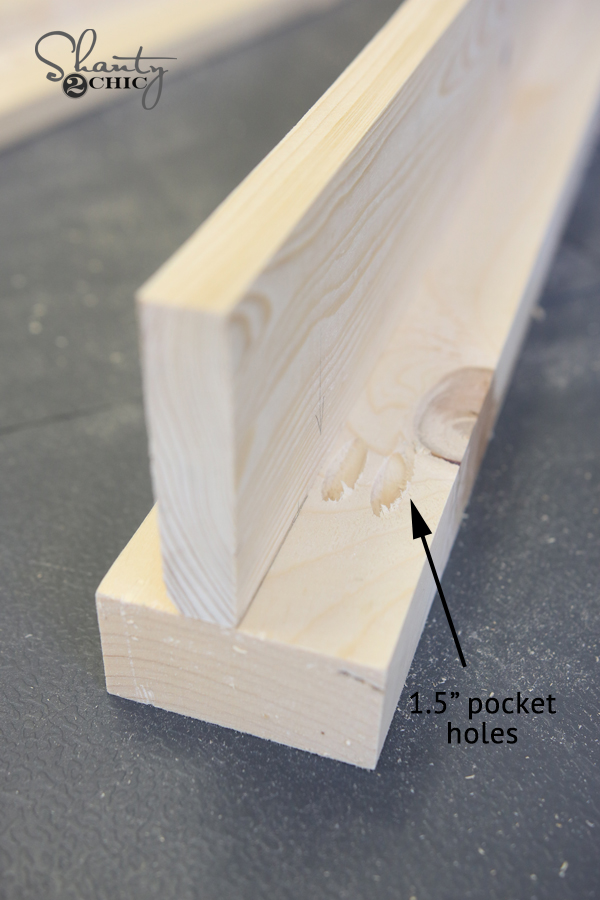
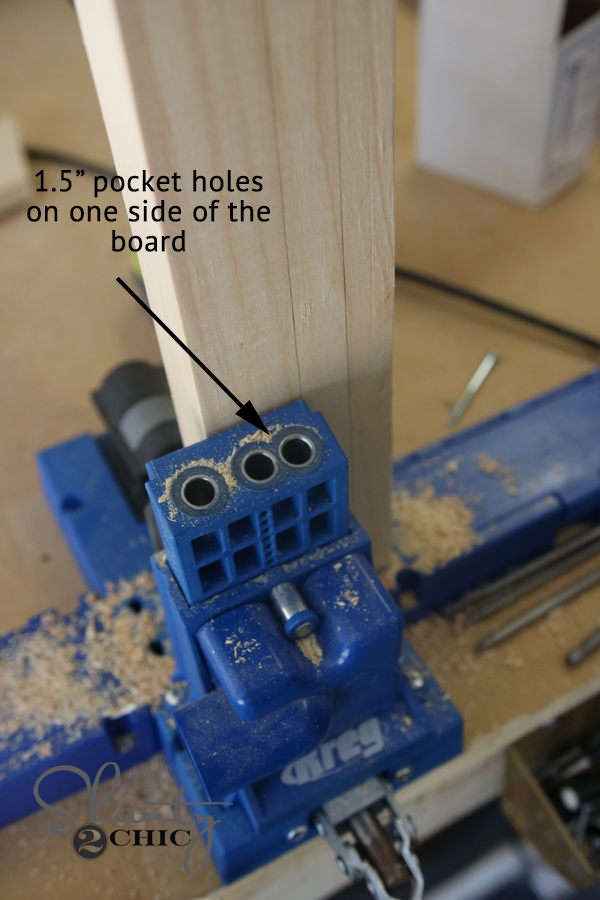
Here is the bottom board. I also marked where my slats would line up to help me keep everything straight when I nailed them in.
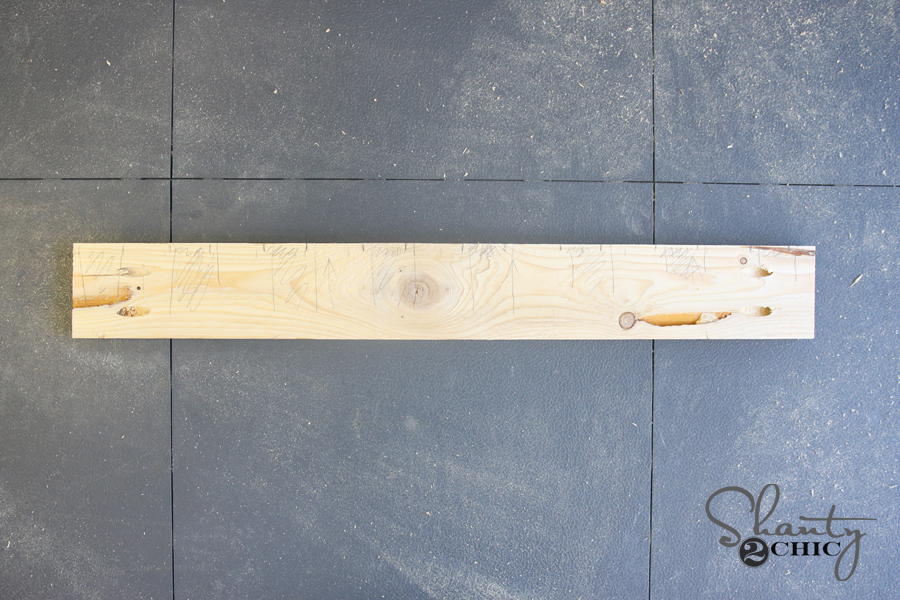
I attached this board to the outside bottom trim piece using wood glue and 1″ Spax screws.
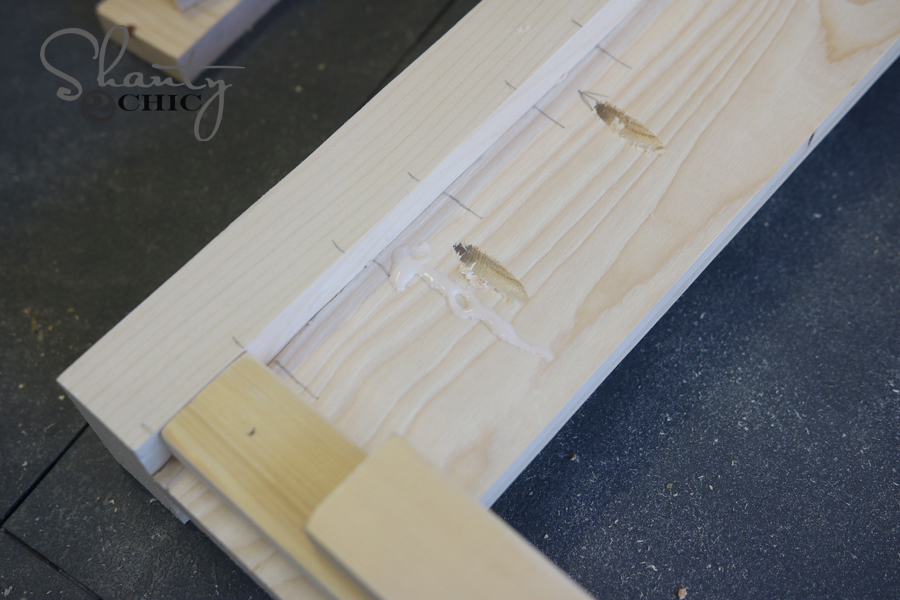
Next, I attached the 1×2 crib slats using wood glue and 1.25″ finish nails. You can see how these pieces cover the pocket holes once they are attached.
Here is one side finished up! You will need to make two of these.
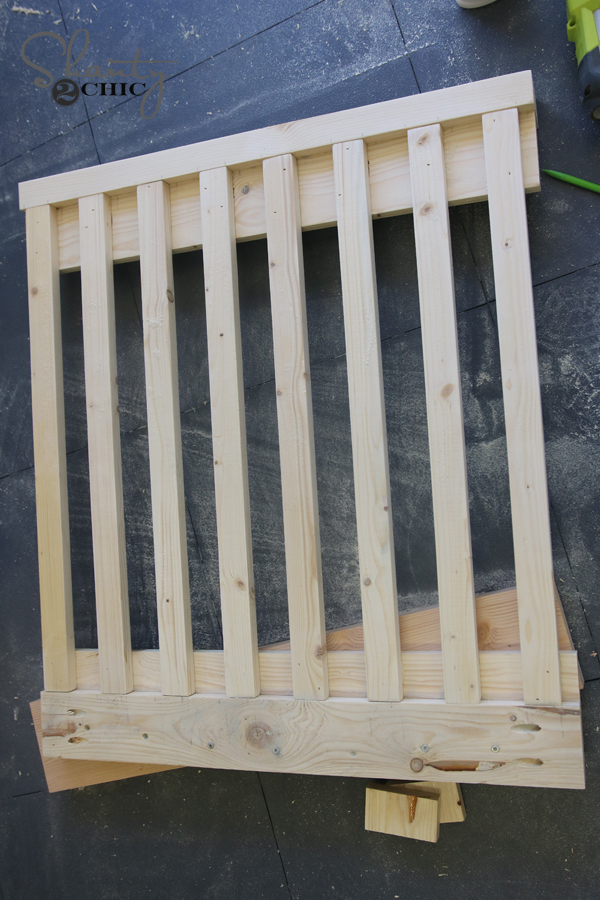
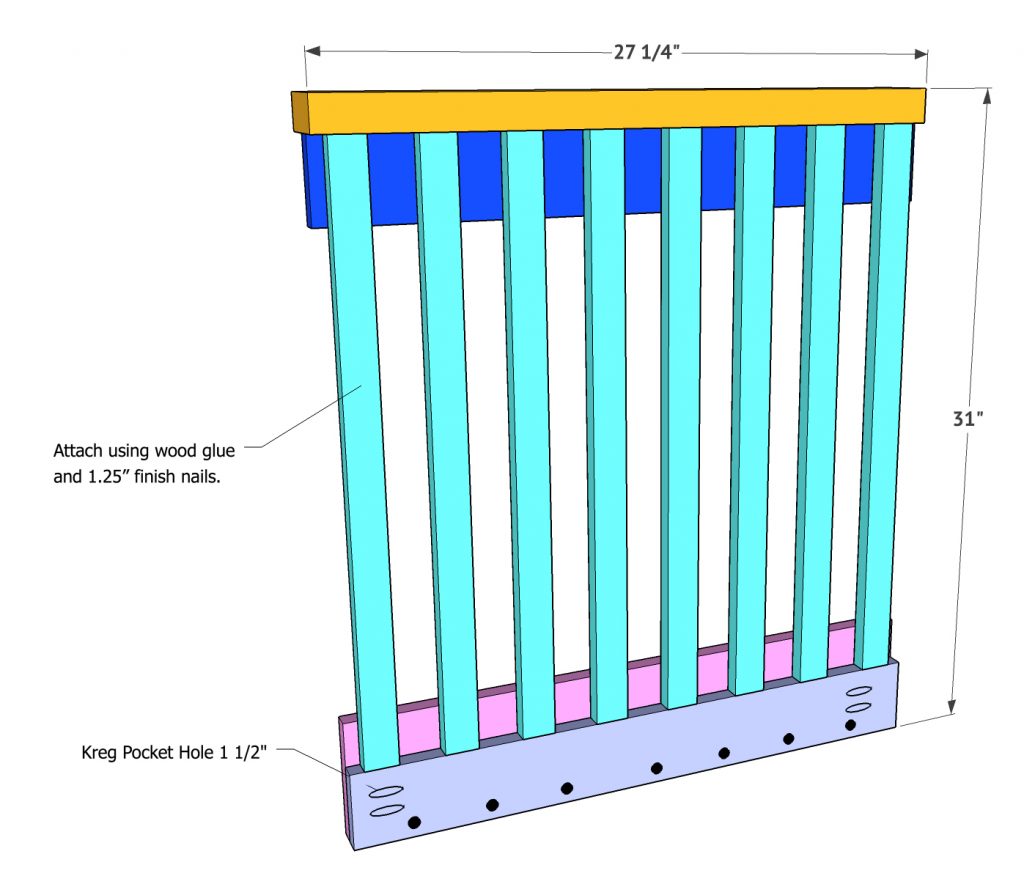
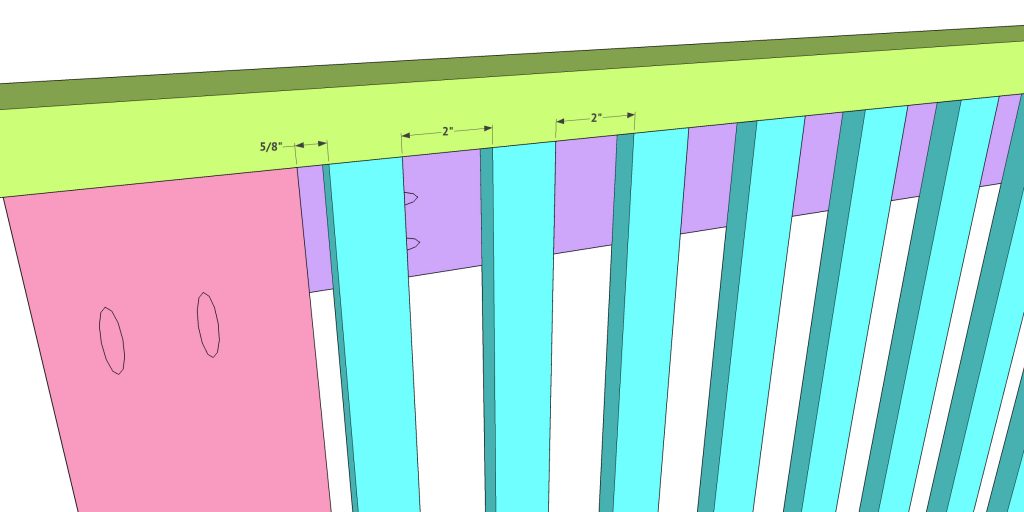
Take your time with the slat placement here. The spacing is an important part of crib construction, so follow the plans carefully and verify the finished crib against current safety requirements.
Build the Front Panel
I built the front basically the same way as the sides, but it also has the frame pieces.
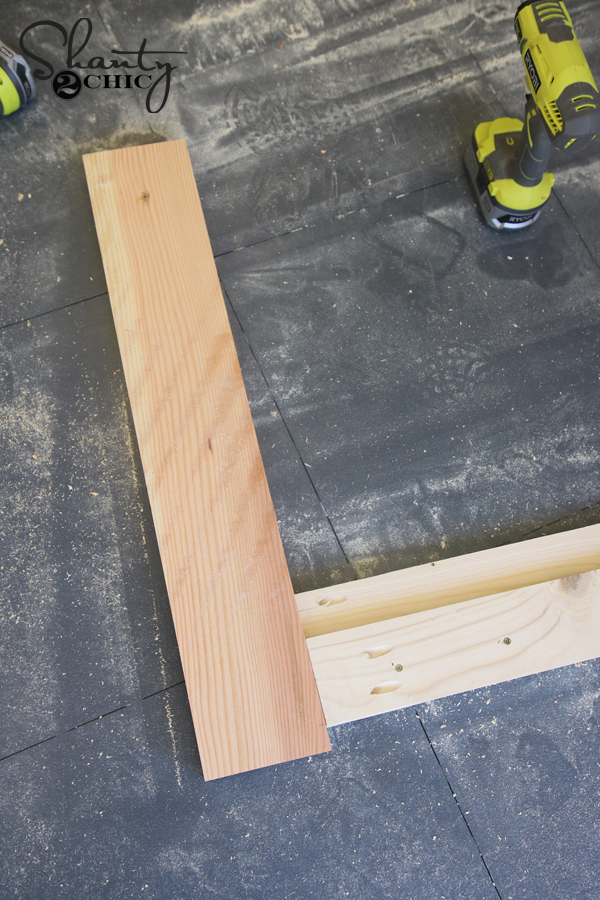
I built the bottom of the front by attaching the two boards just like I did on the sides. Then, I attached the front legs to the bottom boards using pocket-hole screws.
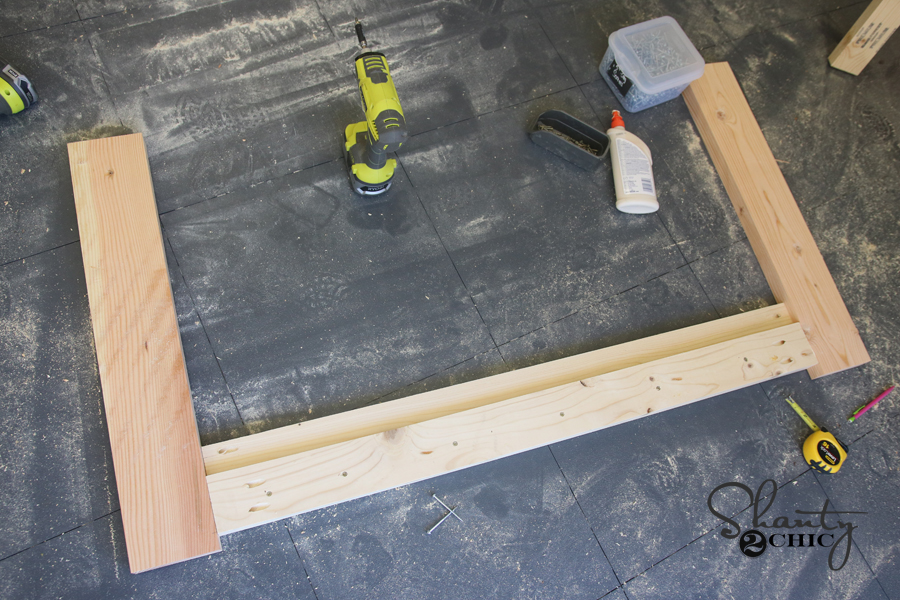
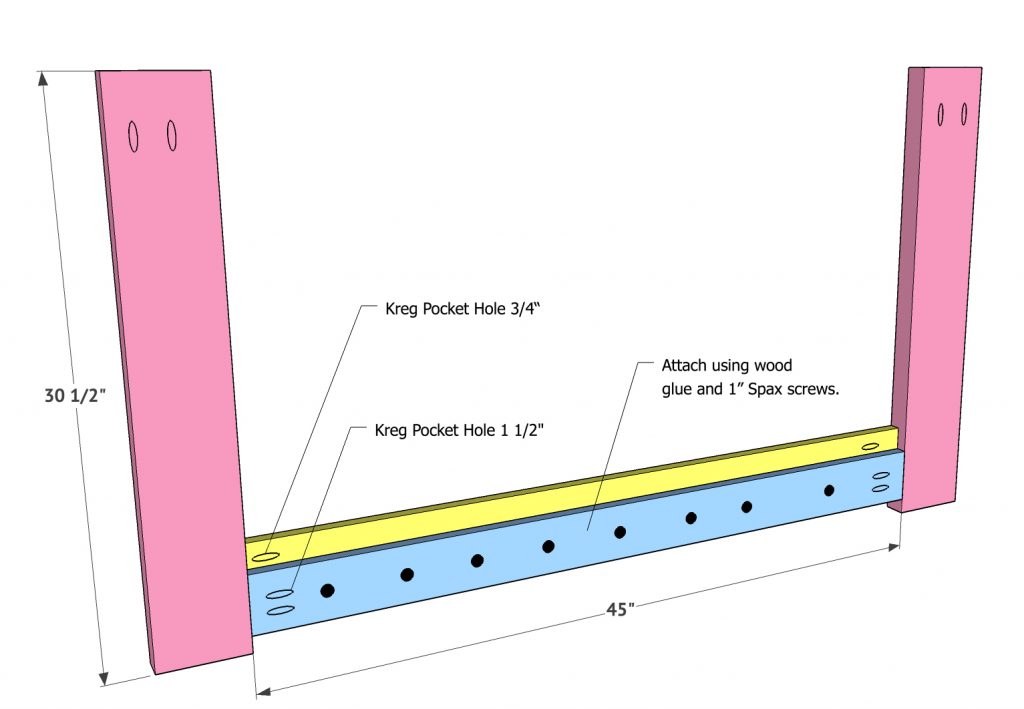
Next, I made the pocket holes in my top board. Again, watch your spacing on this part so the pocket holes will be covered when the remaining pieces are attached.
I attached the top board using 1.25″ pocket-hole screws into the top of each leg.
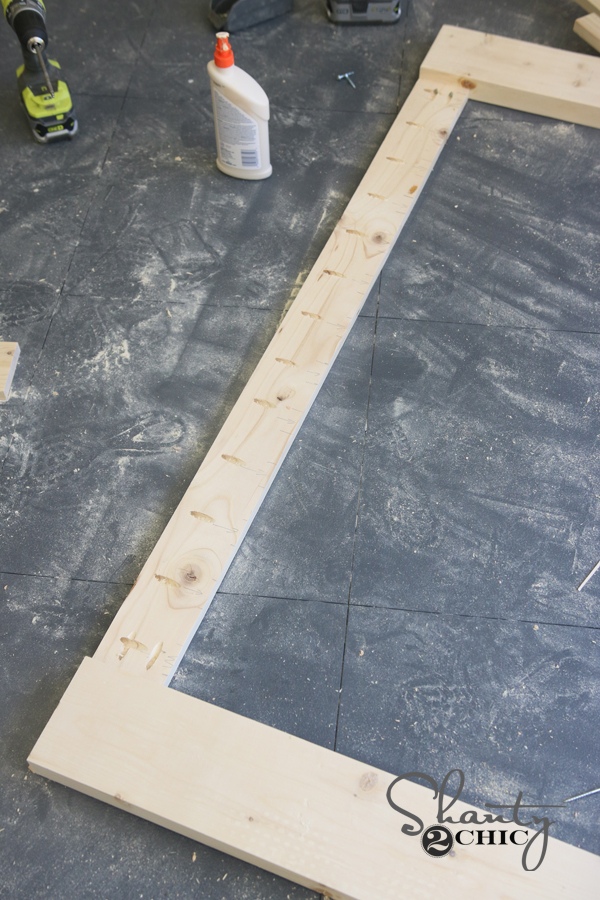
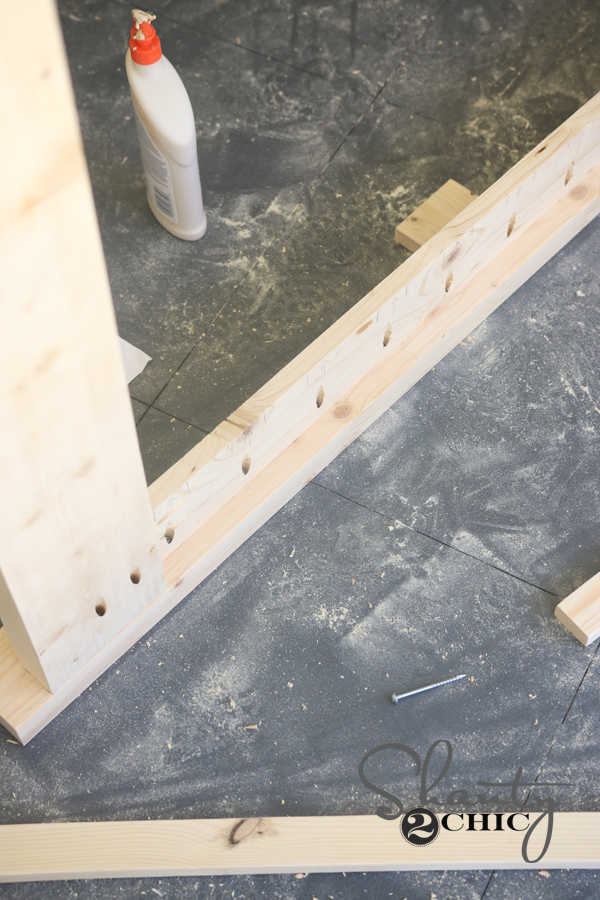
Next, I lined up the whole frame on top of the front rail piece and attached it using wood glue and 1.25″ pocket-hole screws.
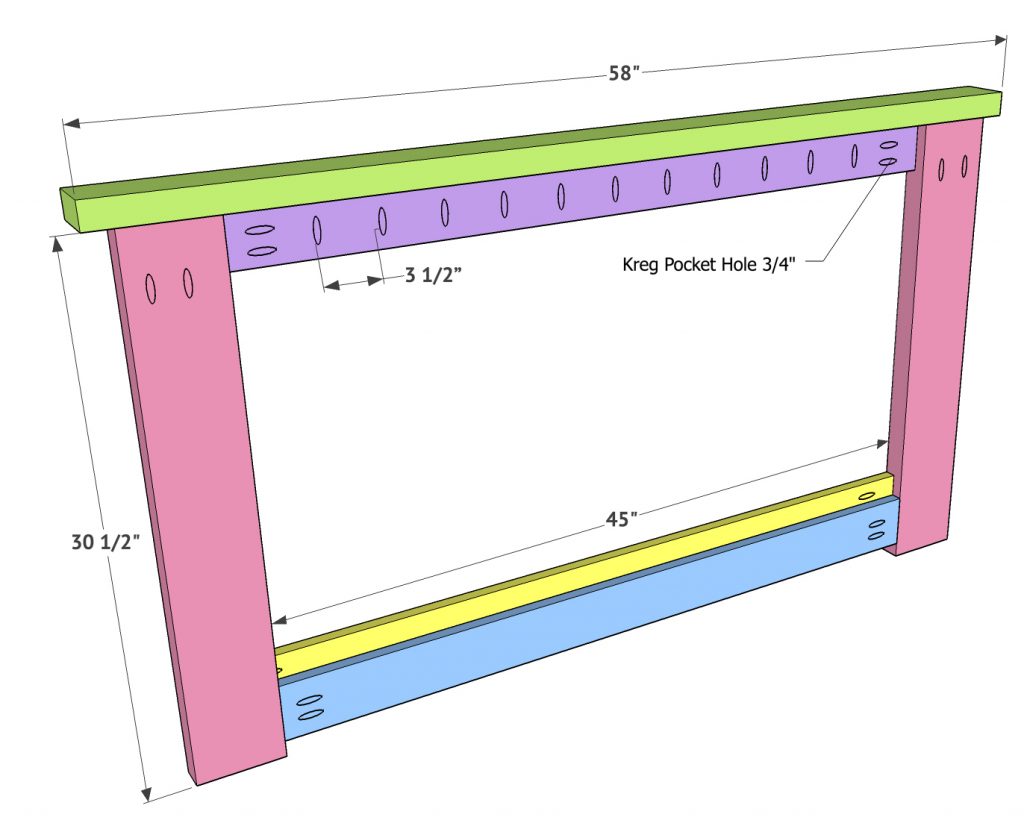
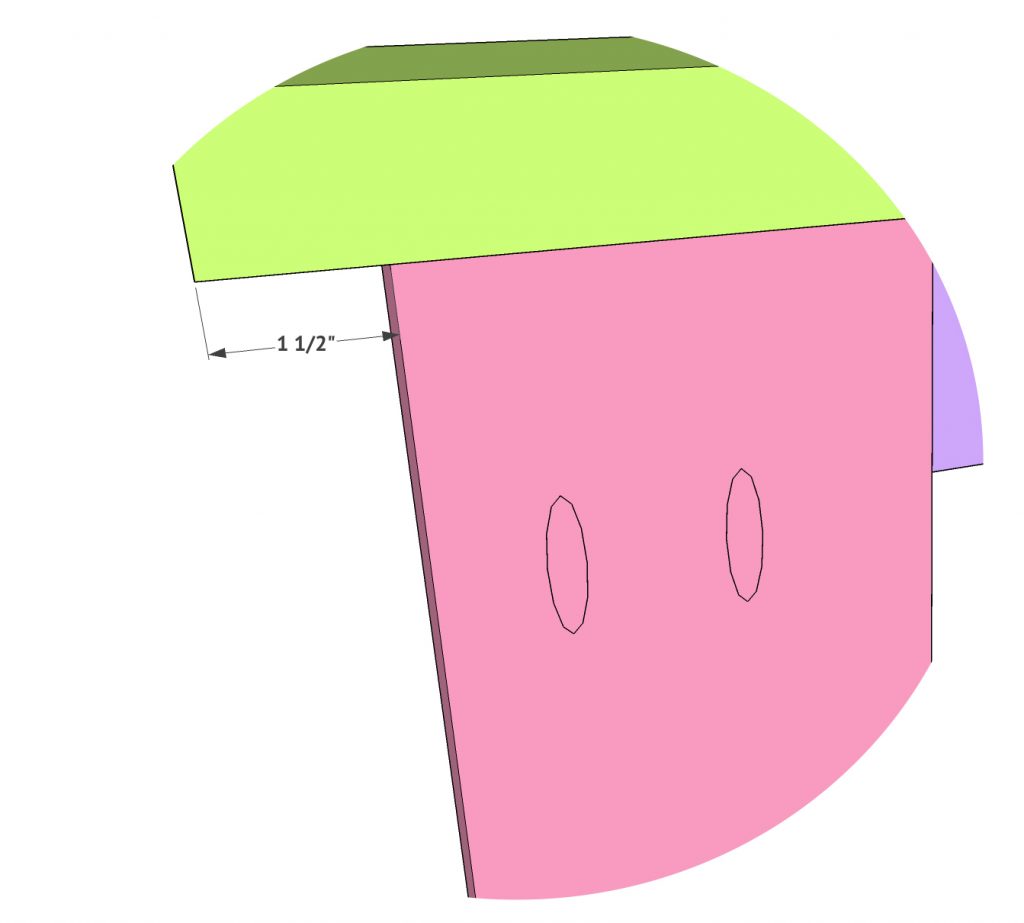
The top rail has a 1.5″ overhang on each side.
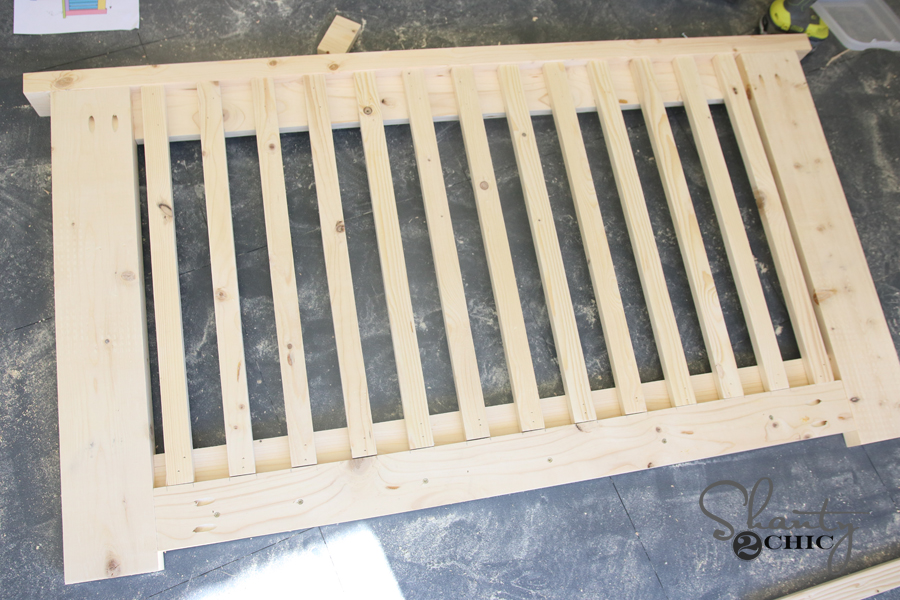
Next, I added the front slats using wood glue and 1.25″ finish nails. Watch your spacing on this part!
Install the Mattress Support
Next, it was time to add the mattress support.
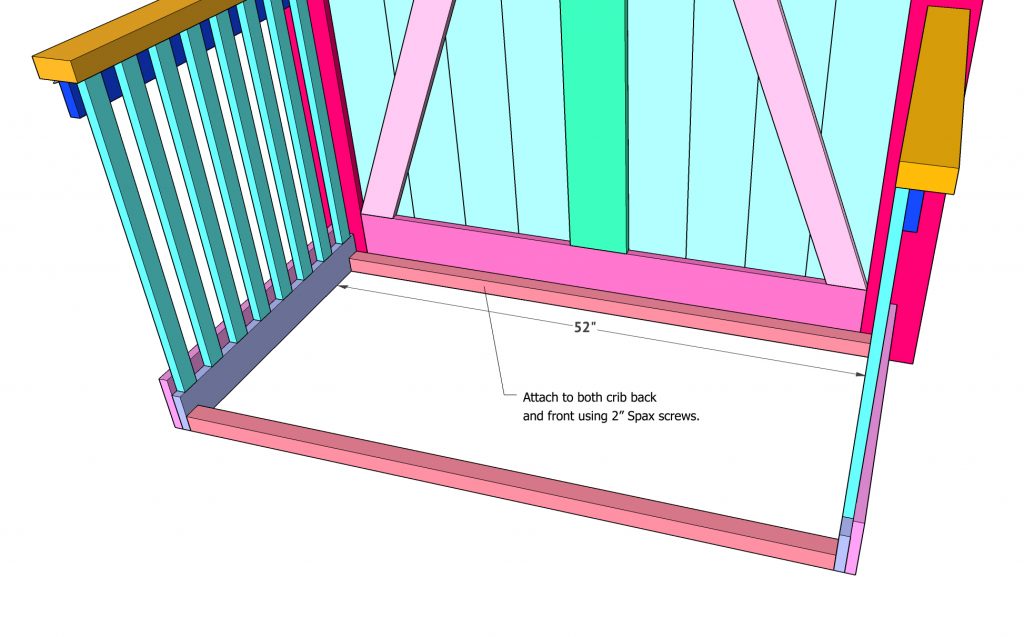
I attached the cleats to the front and back of the crib using 2″ Spax screws.
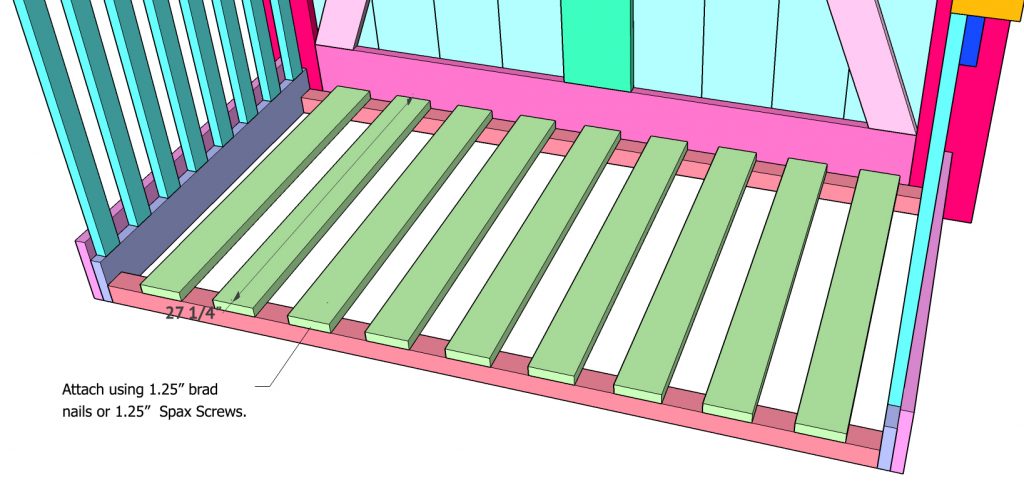
Then, I laid the 1×4 boards across the cleats to create the mattress support according to the layout in the plans.
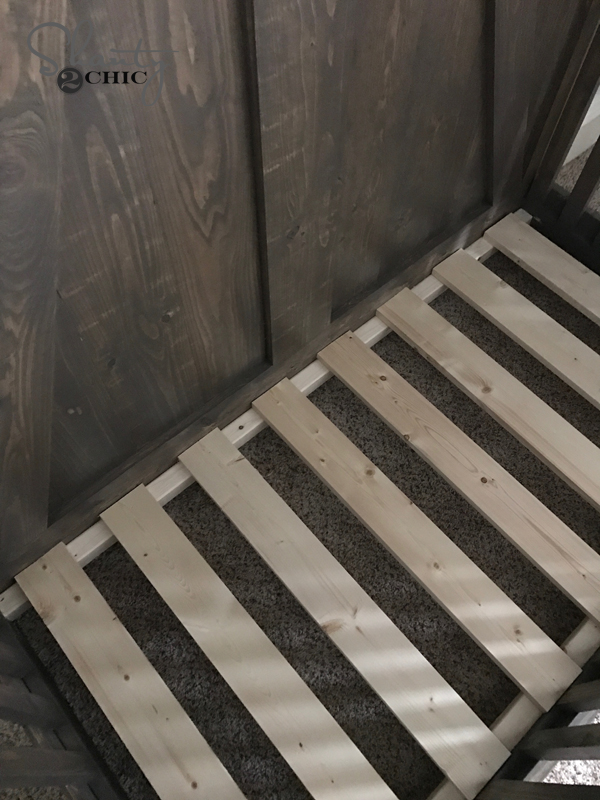
You can see here where the pocket holes attach the sides to the front and back of the crib.
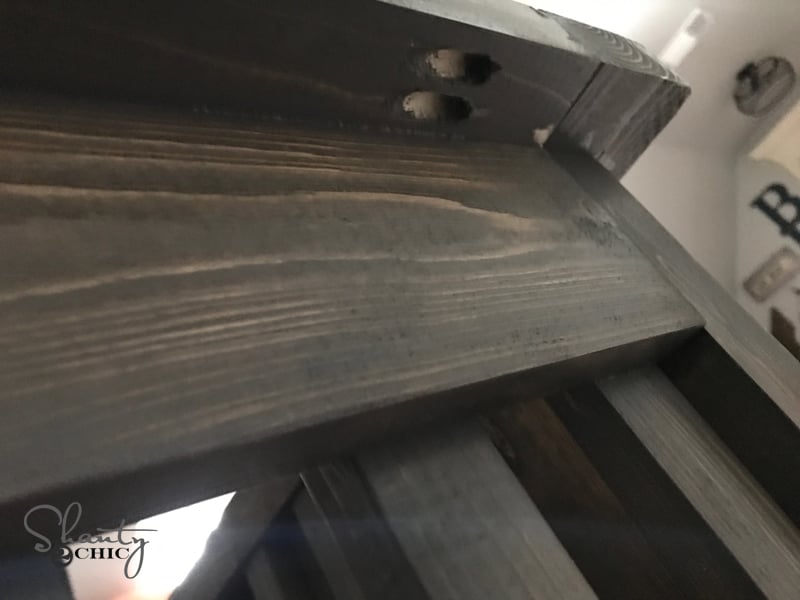
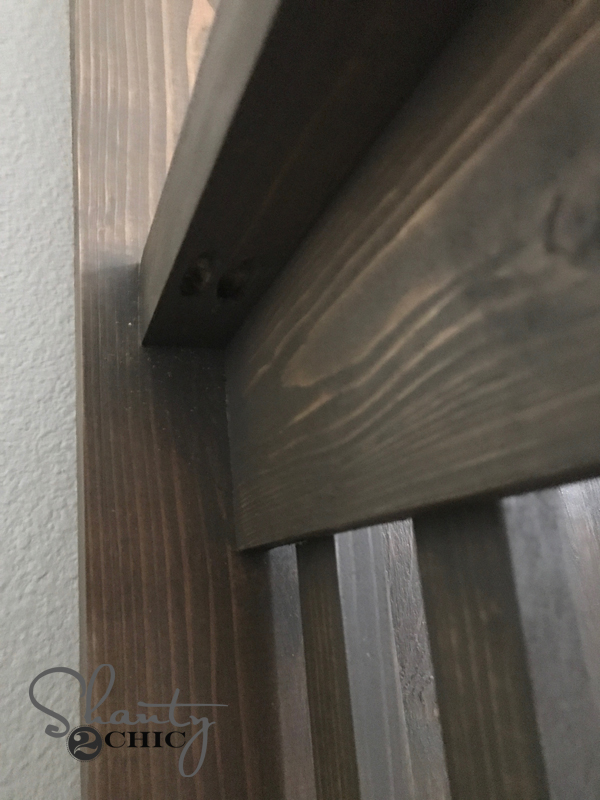
Before using the crib, make sure the mattress fits correctly and verify the mattress support, interior dimensions, openings, slat spacing, hardware, and complete assembly against the current crib-safety requirements.
Sand, Stain and Protect the Crib
After I finished building the crib, my amazing stepdad was kind enough to offer to stain it to keep me from having to do it. I gladly took him up on his offer!
I chose Varathane Briarsmoke, and I was so pleased with the results.
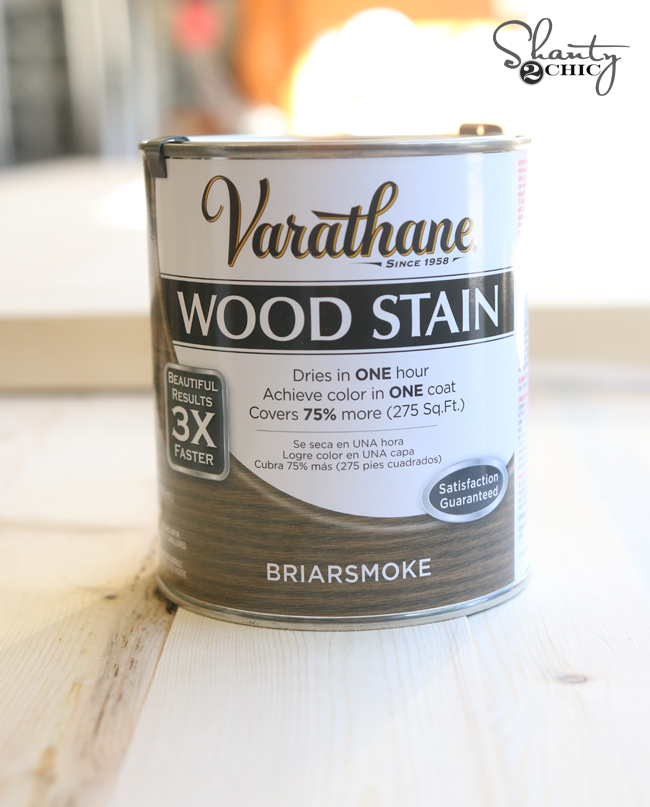
Speaking of stain… Did y’all catch our video on how to stain wood? Here it is!
After the stain dried, he also sprayed the entire crib with polyurethane.
Make sure everything is sanded very smooth before finishing, especially edges and areas little hands can reach. Follow the manufacturer’s directions for the stain and protective finish, including drying and curing times.
Add the Farmhouse Hardware
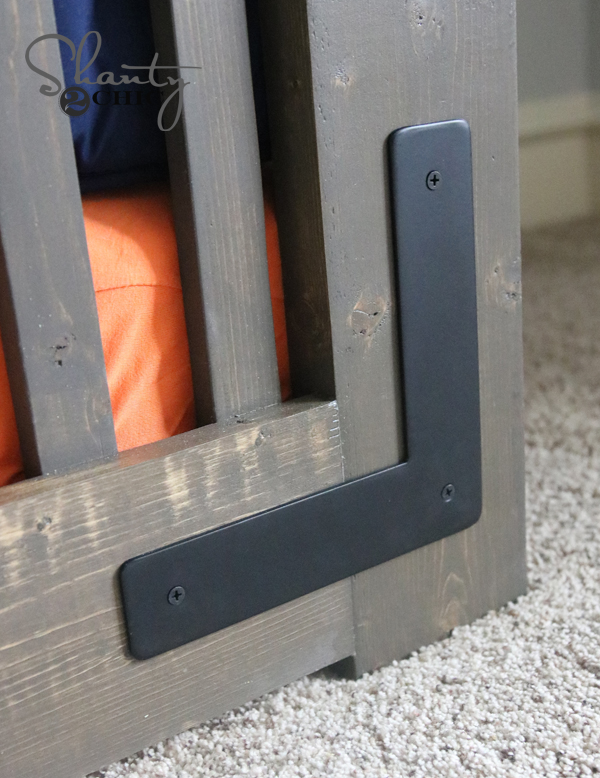
Now let’s talk about that hardware… I die. Love it so much.
I told our good friend Tyler of Wayne Works what I had in mind, and he did not disappoint. He even rounded the edges just a bit, giving them a softer look.
📥 Get the Free Plans
We’ve made it simple! Click below to grab your FREE printable crib plans. They include the shopping list, cut list, measurements, and diagrams you’ll need to follow along with the tutorial.
➡️ Download the Free Farmhouse Crib Plans
Remember that these plans document how I built my crib in 2017. Review the current crib-safety requirements before building or using a DIY crib.
Expert Tips
There are a lot of pieces in this build, so these are the areas where I would slow down and double-check my work.
- Sand everything really well. Pay extra attention to edges, corners, slats, and anywhere little hands could reach.
- Follow the measurements carefully. This isn’t a project where I would eyeball spacing or change structural dimensions as I go.
- Watch your pocket-hole placement. Several of the pocket holes are positioned so another board will cover them later.
- Mark the slat locations first. I marked mine directly on the boards before attaching the slats, which made it much easier to keep them lined up.
- Check the mattress fit and complete assembly. Before using the crib, verify the mattress, interior dimensions, slat spacing, openings, mattress support, hardware, and other applicable requirements against current crib-safety standards.
- Give the finish plenty of time to cure. Follow the manufacturer’s instructions for every stain, paint, or protective finish you use.
❤️ Final Thoughts
This crib isn’t just furniture—it’s a keepsake you’ll treasure for years 💕. Building your own crib means saving money, customizing it to your style, and creating something truly special for your little one.

You’ll probably need a baby gate soon! We have the perfect set of free plans to build your own! Check out our DIY Baby Gate plans!
Frequently Asked Questions
I spent under $300 when I built this crib in 2017. Current cost will depend on lumber, hardware, and finish prices in your area.
I consider this an intermediate woodworking project. There are quite a few pieces and precise measurements involved, so I would be comfortable with a miter saw, drill, Kreg Jig, and furniture assembly before tackling this one.
I wouldn’t change the interior dimensions, slat spacing, mattress support, rail configuration, or other structural dimensions without first checking the current crib-safety requirements. For this project, I recommend following the original plans and verifying the finished design against current standards before building or using the crib.
I used a miter saw, table saw, drill, Kreg Jig, nailer, and sander for this build. The table saw was used to rip some of the boards to the narrower dimensions shown in the plans. If you don’t have experience using these tools yet, I would get comfortable with them on a few simpler furniture builds before tackling a crib.
Full-size cribs are built around very specific interior and mattress dimensions. Use a mattress intended for a full-size crib and check its fit carefully before using the crib. Don’t substitute a different mattress size or change the crib’s interior dimensions without checking the current requirements.
More DIY Bed Plans to Try
If you love building your own furniture, we have plenty more DIY bed plans to keep you busy! Our DIY Platform Bed is a simple, beginner-friendly build that uses many of the same basic tools, or check out our DIY Modern Full Size Bed for a clean, simple design. I also love our DIY Bed Frame and Wood Headboard if you want something with a little more detail. You can find even more sizes and styles in our complete collection of DIY bed plans.
Building this crib while I was pregnant was definitely one of the bigger projects I took on, but I loved how it turned out. My son used it through his toddler years, and I was able to pass it along to a friend when we were finished with it, which made all that work worth it.
If you build one using our plans, we’d love to see it! Tag us on Instagram and use #shanty2chic so we can check out your build.
Happy Building!
🛠️ Printable Tutorial
DIY Farmhouse Crib (Free Plans)
Tools
- Miter Saw
- – Pocket-hole jig (Kreg)
- – Drill/driver
- Brad Nailer
- – Orbital sander + dust collection
- – Clamps, tape measure, square
Supplies
- – 1×6 boards headboard/back panel
- – 2×6 boards trim; rip to ~5″
- – 2×4 boards frame; rip to ~3″
- – 1×4 boards mattress support slats
- – 1×2 boards side/front slats
- – Pocket-hole screws 1¼″ and 2″
- – 2″ brad nails & wood glue
- – 2″ structural screws e.g., Spax for cleats
- – Stain e.g., Varathane Briarsmoke & polyurethane
- – Optional decorative hardware
Instructions
- Instructions:
- Download & review plans — Grab the free printable plans and study the cut list, layout, and pocket-hole locations.
- Build the headboard — Join 1×6s with pocket holes; frame with ripped 2×6 (≈5″) and 2×4 (≈3″).

- Add barn-door trim — Glue and brad-nail the trim pattern for that farmhouse look.

- Assemble side panels — Drill 3/4″ pocket holes; glue and screw frames; attach 1×2 slats with consistent spacing.

- Build the front panel — Construct the lower front frame using pocket holes; add evenly spaced 1×2 slats.

- Install mattress supports — Fasten cleats to side panels with 2″ structural screws; lay 1×4 slats across to form the platform.

- Finish — Sand smooth; stain (Briarsmoke recommended) and seal with polyurethane. Let finishes fully cure.
- Optional hardware — Add decorative hardware. Dry-fit panels, confirm mattress fit, then assemble in the nursery.


Notes

Good morning Ladies
I find you 2 ladies are very talented and smart along with being extremely beautiful.
I know if I was your parent I would be so very proud of what you have accomplished with this web site and what you have and will build.
Please keep it coming and stay safe.
Your friend from Canada
We are making this beautiful crib, and are trying to make it so the cradle board / mattress support is adjustable to different heights based on the age of the baby.
Did you do this also?
When we were trying to figure out how to adjust it up, we noticed there will be a gap between the mattress and the back board, with the design of the Vs on the wood (which we love).
Is there a way to get around this? Or can we just not have an adjustable crib?
Any help is appreciated.
How can this crib be turned into a bed once your little one out grows it?
Hi, I am building the crib for a good friend. I want to trim all the 1×6 boards to 5 inches, however, according to your measurements, with 9 boards it’s 45 inches, but your plans show a 49.5 inch measurement finished size How do I reconcile the difference?
Do you have a materials list for this build?
Is there a cut list anywhere?
I am currently constructing a crib based off of your design and plans. It’s in the finishing stages and needing to be stained. I am very excited and thankful for your helpful instructions.
The crib is finished. My final size is 52×27.25 for those who are worried over a 1/4″, I actually prefer the snug fit of the foam mattress. It’s foam, so it compressed to fit the area of the crib. It feels like there is no room for a baby to slip between the mattress and the walls of the crib.
A standard foam crib mattress will fit. If I had to do it again I would add 1/2 inch on length and width just to give a little more room.
anyone find a replacement decorative corner strap? The link above is sold out.
Thanks, TB
I built this crib and it doesn’t fit a standard mattress. I built it assuming it would fit because that makes sense… it’s about an inch too small in both directions for a standard size if you want a little wiggle room for sheets. Now I’m screwed and will be building something completely different – without pocket holes splitting my wood. Adjust your plan.
I ran into the same problem wish I would have read comments before >:(
Can you now verify the dimensions of the final result? I’m about to begin building this and I believe it’s going to be 52″x27.25″. Is that accurate? I too want to make sure I have a mattress that will fit before putting all the work in. Thanks!
Did anyone ever figure out the mattress size?
No, but crib mattress definitely doesnt fit..
A standard crib mattress we purchased at target fit the crib I made with no issues.
Do you have plans for this crib? Can it also be turned into a bed?
Is this adjustable? I ask because it does not look like it. How to you put a newborn in this?
I’m also curious how to make this adjustable.
my son is almost two now, but when he was tiny we just stacked another crib mattress in there to raise it up
For those inquiring about making it adjustable. You can buy a metal insert and put hooks in the corner of the crib to change the height at you and Babys convenience. Our Uncle Chuck built my sons first crib. This is how he did it. No issues whatsoever. We only ever adjusted it once, but he put multiple steps for us. It was great!
Do you have a picture of your metal inserts and hooks you used?
Same, I am wondering if you have pictures of the metal inserts and hooks?
Where did you buy the metal insert? I’m having trouble finding one.
Anybody have an thoughts on using aerosol polyurethane in a can vs brushing it on or even spraying it with a spray gun?
I’m looking for the easiest way possible that will still yield great results.
They both yield beautiful results of you do it right. The trick is to sand between coats. I usually sand with 400 grit or so between coats. Just enough to knock down any dust particles/any other blemishes from the previous coat
HI how many pieces of each size of wood are needed?
Where can you get the metal hooks and inserts is a picture available of them
How was the conversion for you? Whay modifications did you finish with and what possibility is there to have this crib design grow with child? (3 in 1 crib)
I looked everywhere for an answer to this but couldn’t find one. So I converted my sons crib to a toddler bed myself. I removed the entire front, left the side rails and back. Added a large piece of wood to the bottom of the front to stabilize. Works perfect and looks so cute!!! It doesn’t have a rail, to keep them from rolling off, but I needed a quick fix as my child was overly ready for a toddler bed, so I added a little bumper that goes under his mattress. Works and looks adorable! Then when he’s grown out of that, I plan on converting it to a bed, using the back as the backboard to the bed.